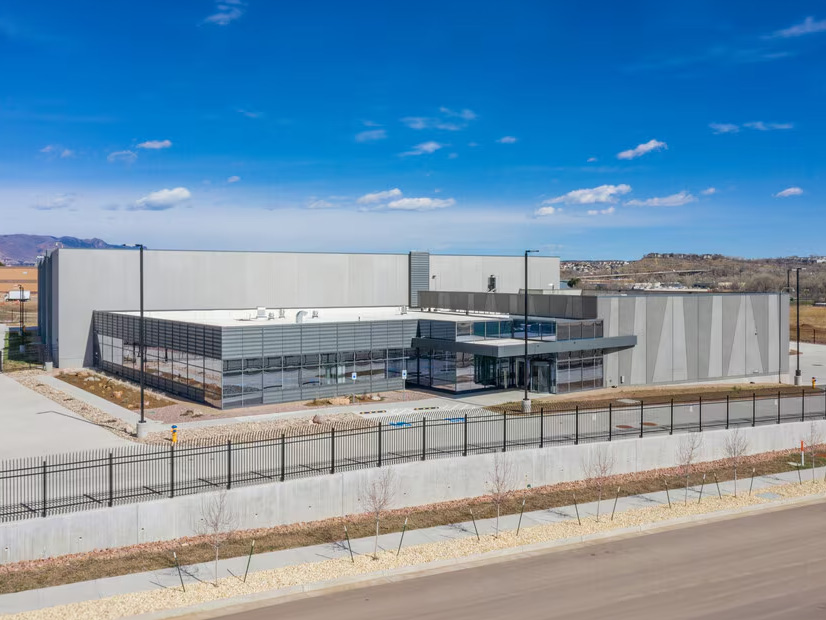
Colorado lawmakers have introduced a bill that would put guardrails around new data center development, including renewable energy requirements and a ban on shifting the cost of electricity and grid investments to other utility customers.
Senate Bill 26-102 is sponsored by Sen. Cathy Kipp and Rep. Kyle Brown, both Democrats. It was introduced Feb. 11 and referred to the Senate Transportation and Energy Committee.
The bill would apply to new data centers with a peak load of more than 30 MW, or a group of new data centers with a combined peak load of more than 60 MW. Additions to existing data centers also would be covered.
Starting in 2031, data center operators would be required to generate or buy enough renewable energy to meet 100% of their annual electricity consumption. Also, an operator would have an hourly matching requirement, in which energy use is matched with purchased or generated renewable resources hourly.
The Colorado Public Utilities Commission (PUC) would determine whether the hourly matching requirement should be 100% or another percentage that is technically and economically feasible. The percentage would be updated at least every three years.
Before connecting a data center customer or supplying electricity, a utility would be required to get an upfront payment from the operator or sign a long-term contract in which the operator would cover costs of building or procuring generation, transmission and distribution infrastructure to power the data center.
Utilities would be banned from offering economic development rates to large load data centers. They’d be required to offer demand response programs or flexible connection tariffs.
The bill is backed by environmental groups including Western Resource Advocates and the Natural Resources Defense Council (NRDC).
Proponents say the bill would make Colorado a leader in adopting consumer and environmental protections for data center development.
“A strong data center policy with clear consumer and environmental guardrails is essential for Colorado to ensure rapid load growth doesn’t lock in higher emissions for decades or leave ratepayers bearing the costs,” Alana Miller, NRDC’s Colorado policy director for climate and energy, said in a statement.
The groups say data center development is booming in Colorado even without subsidies for data center developers.
Tax Incentive Bill
SB 26-102 follows the introduction of a bill in January that would create an incentive program for data center development.
Under House Bill 26-1030, the incentive program would be run by a newly formed Colorado Data Center Development Authority within the Colorado Office of Economic Development and International Trade.
Data center operators that obtain a certification for their project would be eligible for a 20-year exemption from the state’s sales tax on the purchase and use of qualified data center infrastructure and systems.
Requirements for certification include investing at least $250 million in qualified purchases within five years and creating jobs that pay at least 110% of the county average.
Certified operators must work to ensure the data center will not cause unreasonable cost impacts to other ratepayers in the area and implement water stewardship measures. Backup generators must meet EPA standards or use a low-emission power source.
The bill would allow regulated utilities to submit a targeted resource acquisition proposal to the PUC for meeting emerging large-load customer needs.
At least 37 states offer some type of tax incentives for data centers, a fiscal analysis noted.
The bill is sponsored by three Democrats: Sen. Kyle Mullica, Rep. Monica Duran and Rep. Alex Valdez, whose occupation is listed as renewable energy entrepreneur. The bill has been referred to the House Energy and Environment Committee.