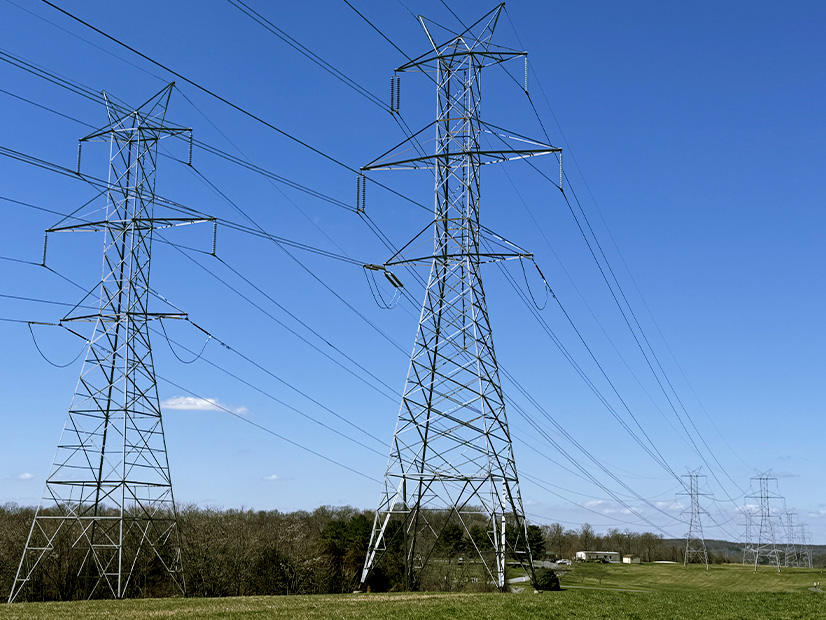
ISO-NE’s initial review of proposals submitted for a first-of-its-kind transmission procurement indicates four of the six proposals do not meet the technical requirements and are not eligible for selection.
The screening narrows an already-limited group of projects eligible for selection in ISO-NE’s first run of its Longer-term Transmission Planning (LTTP) procurement process. This procurement is focused on increasing transmission capacity in Maine and New Hampshire and enabling the interconnection of onshore wind in northern Maine. (See ISO-NE Releases Longer-term Transmission Planning RFP.)
ISO-NE received six responses to its request for proposals (RFP) in fall 2025, less interest than expected. Multiple stakeholders expressed surprise and concern in reaction to the elimination of four of these proposals at the ISO-NE Planning Advisory Committee (PAC) on March 24.
“I don’t think we should sugarcoat this — this is a pretty bad situation,” said Alex Lawton, director at Advanced Energy United, expressing concern about how the elimination of projects will affect the competitiveness of the process.
To submit a commentary on this topic, email forum@rtoinsider.com.
ISO-NE’s initial analysis of the proposals included three components: energy standard testing, capacity standard testing and transfer analysis testing.
The energy and capacity analysis evaluated whether the proposals would adequately enable the interconnection of 1,200 MW of wind energy. The transfer analysis evaluated whether the projects would increase the limits of the Maine-New Hampshire interface to at least 3,000 MW and the Surowiec–South interface to at least 3,200 MW.
Just one project failed the energy and capacity tests. This project “could not accommodate the full 1,200 MW of additional onshore wind in the energy testing or the expected winter output (65%) in the capacity testing due to post-contingency overloads,” ISO-NE noted.
Four proposals failed the transfer analysis, with ISO-NE’s analysis indicating thermal, voltage or stability issues.
The two projects that passed the physical analyses are similar proposals, ranging in cost from $2.14 billion to $2.20 billion. They would consist of two new 345-kV lines and upgrades to existing 345- and 115-kV lines in Maine and New Hampshire. They both have an expected in-service date of late 2032. (See ISO-NE Provides More Detail on Responses to LTTP Procurement.)
Several stakeholders argued that ISO-NE should allow project sponsors to make changes to projects to address minor issues.
“If you cure a minor deficiency and that would lead to a better outcome, why would you not do that?” asked Shadab Ali, senior director of transmission development at NextEra Energy.
But representatives of ISO-NE stressed that its tariff does not allow for material changes to projects after submission. They said the RTO has no intention of making tariff changes midway through the procurement process, as this could undermine the value of the RFP.
Multiple representatives of NextEra asked ISO-NE to provide the data from its analysis to project bidders as quickly as possible to allow sponsors to check for errors. ISO-NE said it would provide the data to sponsors on request, adding that it is open to corrections if project sponsors identify legitimate issues with its analysis.
Michelle Gardner, executive director of Northeast regulatory affairs at NextEra, said it is confusing to see so many proposals fail the initial screening given the amount of effort and investment required to develop a proposal.
“It’s hard to imagine how you would go through all that effort and there’s not enough reactive power and a stability failure based on the testing,” she said.
Brian Forshaw, principal at Energy Market Advisors, said it makes little sense to change the rules mid-process but that there seems to be “a lot of work to do when we get to the lessons-learned phase.”
With the models and the data used in the assessment all defined from the start, “why are there surprises that are coming out at this point in the process?” he asked.
Eversource Energy, the transmission owner with the largest footprint in the region, did not comment during the meeting but wrote in comments submitted to ISO-NE that it is “very concerned by stakeholder suggestions that the ISO allow bidders to modify their proposals during the evaluation phase.”
Allowing such changes “would undermine confidence in the process,” wrote Dave Burnham, director of transmission policy at Eversource.
Following the technical analysis, ISO-NE plans to move forward on additional analysis of the two remaining projects. This will include evaluation of adverse impacts on other parts of the system and a cost-benefit analysis, which will determine whether the remaining projects are eligible for selection as a preferred solution.
ISO-NE will rely on a consultant to evaluate construction feasibility, corollary upgrade costs and the financial health of project sponsors.
It plans to make a final determination on a preferred solution by September.