
ALBANY, N.Y. — Generation industry representatives and their allies united behind a call to loosen New York’s climate law to allow the repowering of old fossil fuel plants with new natural gas turbines at the Independent Power Producers of New York’s 40th annual Spring Conference on March 24.
“I personally love Gov. [Kathy] Hochul’s all-of-the-above energy strategy,” Richard Barlette, IPPNY chair and director of state government affairs for Constellation Energy, said during his opening remarks. Intermittent resources need “firm” support as they continue to grow. “We must remain laser-focused on reliability while continuing to scale clean technologies. Wind, solar, nuclear, storage, natural gas and hydrogen must all be a part of the conversation.”
NYISO CEO Rich Dewey reinforced these points in his keynote address. While he didn’t express specific policy positions, he painted an all-too-familiar picture of New York’s aged generation fleet, thinning margins and the intense balancing act the ISO had to run during June 2025’s heat wave and the late January winter storm. Keeping the grid going in the winter, Dewey said, was harder than in a summer heat wave primarily because of fuel constraints and reliance on older units. (See NYISO Details Late June Heat Wave for Reliability Council and NYISO Provides System Data During Winter Storm Fern.)
“[What] keeps me up most at night [is] the aging generation fleet. Twenty-five percent of capacity is more than 50 years old,” Dewey said. “But on hot days, on cold days, we can’t maintain a reliable system without these resources and increasingly depend on their participation more and more.”
NYISO planning studies have typically assumed that these generators would be online for the foreseeable future, but this is becoming “less and less responsible” when examining the grid, he said.
Since the enactment of the New York Climate Leadership and Community Protection Act, “we’ve deactivated 4,200 MW of primarily dispatchable resources,” Dewey said. Of the 2,274 MW interconnected since then, “almost all of that is renewable intermittent resources. When you think about that, that’s a significant margin.”
Large loads come online much faster than generation as well, he said. A data center has an average build time of about 18 months; generation of all types takes years to get on the grid under the best circumstances.
“There is a recognition through the State Energy Plan that we are going to need to have progress made on some of these repowering proposals,” Dewey said in response to an audience question about lowering energy prices. “Those repowering proposals will yield a generation source that is more efficient, cleaner and more cost-effective in the long run.”
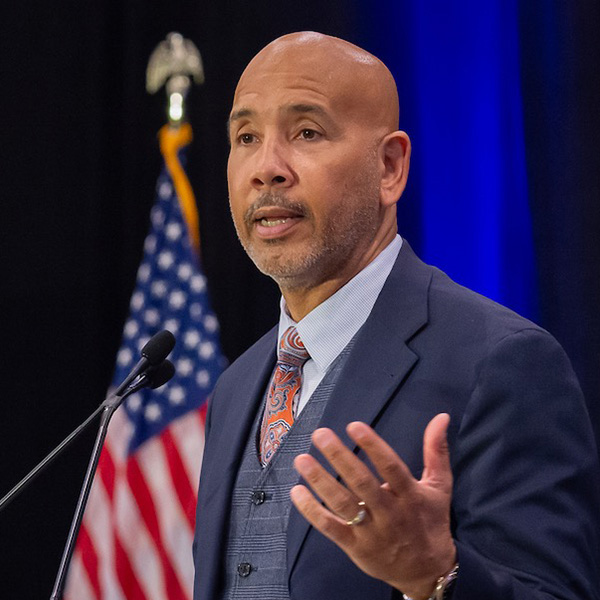
In another keynote address that ended the conference, former Bronx Borough President Ruben Diaz Jr. spoke on behalf of Natural Allies, an industry group trying to make the case for natural gas generation as compatible with environmental justice.
“Energy policy is not theoretical. It shows up on the kitchen table. It shows up in utility bills. It shows up in the cost of groceries. It shows up in the cost of rent,” Diaz said. He said his past environmental justice positions were not at odds with wanting to upgrade old fossil plants. “New York is among the highest electric bills in America, and that is … experienced by working families every single month. When energy policies undermine reliability, it is not the wealthy who feel the pinch.”
Diaz said environmental justice means reducing emissions and that the current law makes it impossible to replace old, dirty plants with cleaner ones. This has knock-on effects, forcing more emissions in poor neighborhoods as reliability margins thin.
‘How to Keep the Damn Lights on’
After Dewey’s keynote, a panel convened to discuss “How to Keep the Damn Lights on.” The panel was moderated by longtime industry analyst John Reese of Morningsidenergy and included Matt Schwall of Alpha Generation; Pallas LeeVanSchaick of Potomac Economics, the NYISO Market Monitoring Unit; Derek Hagaman of Gabel Associates; and Bryan Sixberry of GE Vernova.
Reese opened with a breakdown of federal Energy Information Administration data showing that 50% of generation in New York City was over 50 years old. Roughly 6% of units in the city were 70 years old, around six times the national average of 1.3%. He said that the mechanical wear on a fossil fuel unit made living to 80 almost impossible. The oldest units will either be offline in the next few years because they cannot be maintained affordably or because they “decide not to wake up one day.”

“The data is scary, and we need to do something,” Reese said.
Hagaman said running the old peaker plants was “not the most affordable option”. He said it was hard to sell the idea for repowering because any investment on the system is going to cost money.
“Frankly it’s a matter of making it more affordable than the alternative,” Hagaman said. He pointed to Arizona and Colorado as states that were embracing repowering as elements of an all-of-the-above strategy.
Schwall said replacing old, inefficient natural gas plants with new units that could also burn alternative fuels was compatible with an environmental justice message. He pointed to his childhood growing up on Staten Island, where it took over 25 years for the Fresh Kills Landfill to be remediated.

“Environmental progress does not happen overnight. … Environmental progress is not always perfect,” he said. Using natural gas generators is not a perfect solution in the context of our environmental goals, but in the near and medium term, especially in New York City it is a necessary solution for the environment and for reliability.”
AlphaGen, which owns and operates the Gowanus and Narrows floating power plants in New York City, has proposed replacing the six peaking units with three lower-emitting ones. (See AlphaGen Proposes Repowering Peakers to Meet NYC Reliability Need.)
Sixberry said the main stopping blocks for getting a generator on the grid were transformer and breaker backlogs. Repowering projects could take advantage of transformers and breakers that are already in place, effectively swapping out an old generator for another.
In response to a question about local communities not wanting repowering projects because of emissions, Schwall said that while repowering is “not a perfect solution,” it is very difficult to get enough renewables on the grid to maintain reliability.
“Installing technology that is cleaner, that is capable of running on zero-emissions fuel … it’s not a zero-sum game,” he said. “It does not mean that the state should not be pursuing solar energy or storage.”
Fighting the Headwinds
In another panel, renewable energy advocates discussed how local government could help in the face of unprecedented federal interference in state climate policy.
Most of the panelists said New York needed to reduce permitting time and expedite construction. Longer lag times for permits create uncertainty for project financing, which can lead to canceled projects.
“The biggest issue we’ve been facing prior to this administration, and writ large, has been that it takes too long to develop. It takes way too long to do anything, not just renewable energy,” said Alicia Gené Artessa, director of the New York Offshore Wind Alliance. “When you have a set contract price and it takes 10 years to build a project, the price doesn’t match up anymore.”

Jeffrey Escobar, a partner at Sheppard Mullin, concurred, saying that he has had clients drop out of the development cycle in New York after buying up build sites because it was too difficult to build.
Other panelists said the state needs to make contracts with renewable energy developers more flexible so they could withstand supply issues or federal policy shocks while also making development smoother.
Ryan Stanton, executive director of the Long Island Federation of Labor, said more effort has to be put into communicating with local communities and local stakeholders when developing renewables. He cited Citizens United as a major contributor to enflaming local discourse.
“They have a ton of money to back doing nothing,” Stanton said. “It’s a lot harder to communicate effectively, to have an honest conversation about making policy decisions for the long term.”
He pointed to the success of renewable development in the Republican-controlled town of Brookhaven, on Long Island. He said the town is on track to link 900 MW of offshore wind to the town because the labor movement, local government and community leaders had coordinated and communicated effectively.
Artessa agreed, saying communication is the “backbone” of their industries. She said she hoped the state would work with local governments to make it clear to developers where they were welcome, and to coordinate planning across municipalities.