ALBANY, N.Y. — Energy and transmission development in New York can be an exercise in patience and persistence, with supportive policy messages counterbalanced by complex regulations, high costs and long timelines.
The annual New York Energy Summit often is a showcase of this dichotomy, a chance to catch up on the latest developments in the Empire State and share thoughts on how to build on those changes or get around them.
The 2025 edition of the event could have been more of this, given the important policy decisions being hashed out a block away in the state Capitol. But they often seemed overshadowed by national developments — a brewing global trade war, trillion-dollar hourly swings in the financial markets and murmurs of a recession or stagflation bearing down on the U.S. economy.
Clearly the need to expand and modernize New York’s grid persists regardless of who is in the White House, and the timelines will extend beyond the term of any one president, or any three.
But as recent weeks have shown, a president can change the landscape markedly in much less than a single term — or even worse, shroud the landscape in a fog of uncertainty.
As New York Public Service Chair Rory Christian noted in a keynote address: “Difficult times lie ahead.”
“Inaction is not an option,” he said. “I encourage you to lean into this moment, not despite the uncertainty, but because of it.”
New York’s grid is like most others — it needs extensive and expensive modernization and expansion as it faces potentially huge load growth. The state also has some of the most ambitious plans in the nation to decarbonize the power portfolio feeding that grid, as well as some of the highest costs and most rigorous processes for carrying all these plans out.
Rapid-fire directives coming from the White House since Jan. 20 have made the prospect more daunting.
Inflation and interest rate fluctuations have created new financial risks, as have President Donald Trump’s repeated tariff threats. Previously committed grants and tax incentives remain under threat.
An executive order issued on Day 2 of the New York Energy Summit targets key policy decisions in climate-focused states and calls out New York by name.
State officials speaking at the Infocast event acknowledged the uncertainty facing everyone in the room but said it has not changed New York’s vision.
“If there’s one message to take away today it is that the state of New York is fully committed to our clean energy goals,” said Georges Sassine, vice president of large-scale renewables for the New York State Energy Research and Development Authority, which is leading the efforts to decarbonize the state, particularly its generation portfolio.
Christian heads the Department of Public Service, which leads regulatory efforts to put the infrastructure in place to accomplish these policy goals.
“[The goals] require, above all, a modernized grid,” Christian said. “We’re entering an era where our history of flat demand and flat load growth is no longer the norm. We’re in an era where need for interconnecting multiple resources in a short period of time is no longer a luxury but a necessity.”
Christian laid out some of the steps being taken toward this Grid of the Future, as the proceeding is named, and toward the flexibility needed to make it meet the needs at an affordable cost.
Like any long-running process with thousands of stakeholders, there is not unanimous agreement on the details, nor universal satisfaction with the pace.
The state has seen slow buildout of renewables in the nearly six years since passage of its landmark climate law mandated the transition, and multiple panelists said state regulators need to adjust their approach accordingly — fossil fuels will be needed longer than the state hoped.
Matt Schwall, director of regulatory affairs for Alpha Generation, said all six of his company’s plants in New York are operating with Title Five state air permits that are expired and awaiting renewal.
“And that’s not just unique to us; that’s every generator in the state. It’s tough to convince an investor to put money in the state when you don’t know if you can even get a permit.”
Independent Power Producers of New York President Gavin Donohue, whose members produce much of the state’s electricity, said reliability concerns are growing.
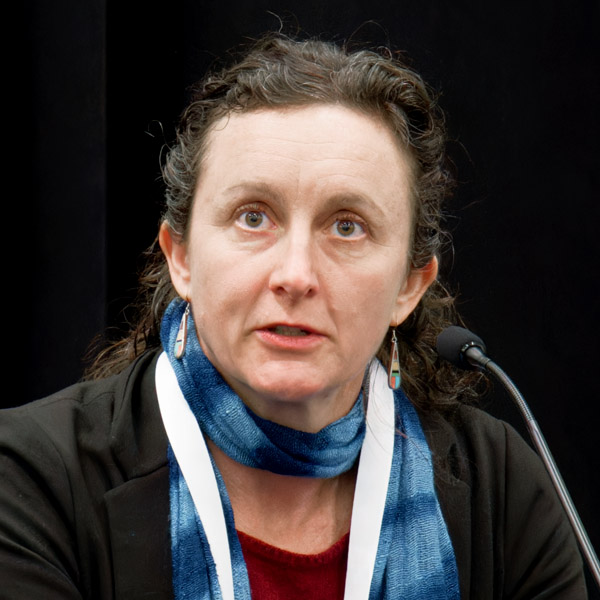
“The state needs to be realistic about what it takes to keep the lights on, on a day-to-day basis, and there needs to be a recognition that permits need to be issued in an effort to maintain that reliability,” he said.
NYISO Vice President of Market Structures Shaun Johnson said: “Particularly in some areas of the state, we have razor-thin margins. We, at the moment, don’t have a lot of flexibility to be able to ramp up new generation quickly and meet those future demand needs.”
The solution, he added, is not simple; it is a mix of load demand, market signals and state policy that will attract investors. “Because at the end of the day, they can choose — am I going to come to New York? Am I going to go to Virginia? Am I going to go to Texas? Where am I deploying my capital? And in some ways, we’re all competing against each other for that capital.”
New York has had some very visible problems adding generation — 88 renewable projects canceled their offtake contracts after cost escalations swept the industry in 2023. Those projects would have provided sizable progress toward the state’s clean energy goals and toward meeting the need for more gigawatts of capacity. The contracts are gone but the projects themselves are not necessarily dead, and the state will try to draw them and others back into its portfolio.

Sassine said more requests for proposals are in the works, along with requests for information (RFI) to shape those RFPs.
“We very much look forward in these RFI processes to get feedback from all stakeholders on how we should be thinking about risk-sharing, going forward in light of all this federal uncertainty,” he said.
The state-owned New York Power Authority has begun working in its new role as a renewables developer, and the vice president leading the effort, Vennela Yadhati, said renewables have a key advantage over the fossil fuel generation that suddenly is in favor in Washington: speed of deployment.
Multiple speakers at the summit noted the yearslong wait for a newly built gas turbine. Yadhati contrasted the relative speed with which solar and onshore wind generation are being built and cited the resilience those industries have developed.
“The renewables industry has been through administration changes in the past,” she said. “We have been through uncertainty in the past, but we continue to strive and thrive, actually, in this market.”
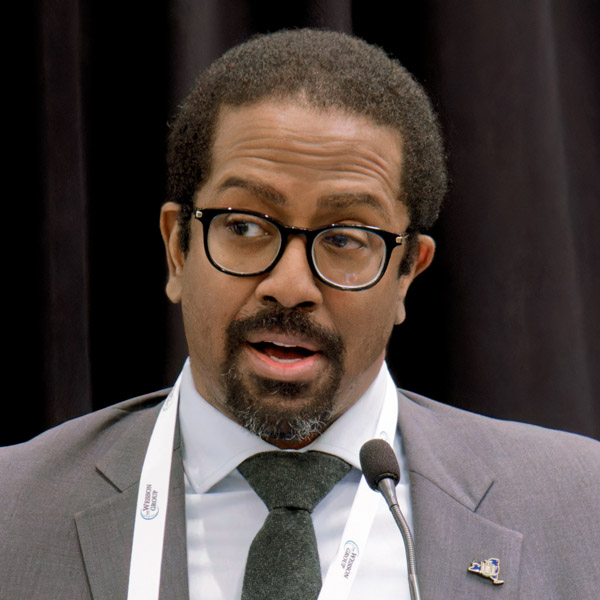
Marguerite Wells, executive director of Alliance for Clean Energy New York, placed some of the onus for moving ahead on the renewable energy developers themselves.
Some developers, she said, have submitted “tire kicker” proposals they were not fully committed to, contributing to the sluggish nature of the NYISO interconnection queue, and others have cut corners on their community outreach efforts — a potentially serious mistake in a home-rule state where local opinion can slow or block a proposal.
As the level of public opposition and concern around projects and politicization of renewables grows, it is more and more incumbent on developers “to do a better and better job with community relations and stakeholder work,” Wells said. “I think that often gets short shrift.”
New York’s infamously slow timelines, she added, are getting better, through the state’s streamlined regulatory processes and through NYISO’s newly revamped interconnection process.
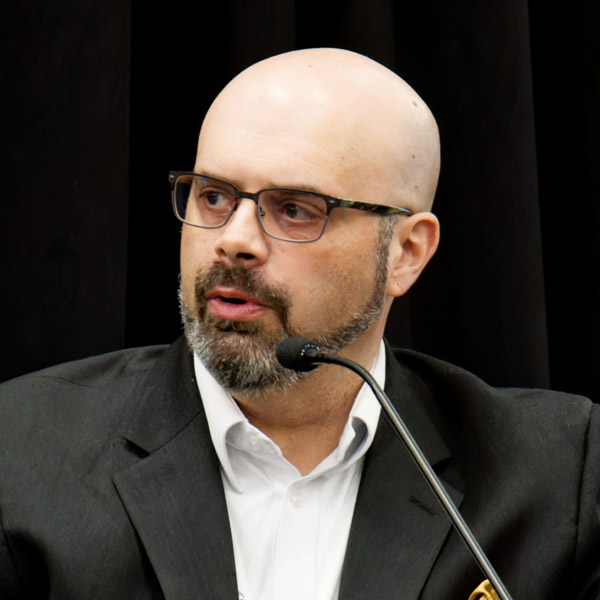
“I think we can see that the new process is doing what it’s supposed to do,” Wells said. “It’s painful to go through it now. It’s much more expensive and it’s faster, and it’s more technically challenging to get all that work done in a shorter period of time. But the end goal is to have an interconnection process that more similarly mimics what Texas has done, which is get a project through in a year or two. Used to be five to seven in New York, and that’s not necessary.”
U.S. Rep. Daniel Goldman (D) conceded that his opinions hold no sway with Trump and that he is worried about the fate of renewable projects both present and future.
But he said the country’s need for electricity and the benefits renewables have provided for red congressional districts will be more influential than the opinions of a congressman representing a deep-blue New York City district.
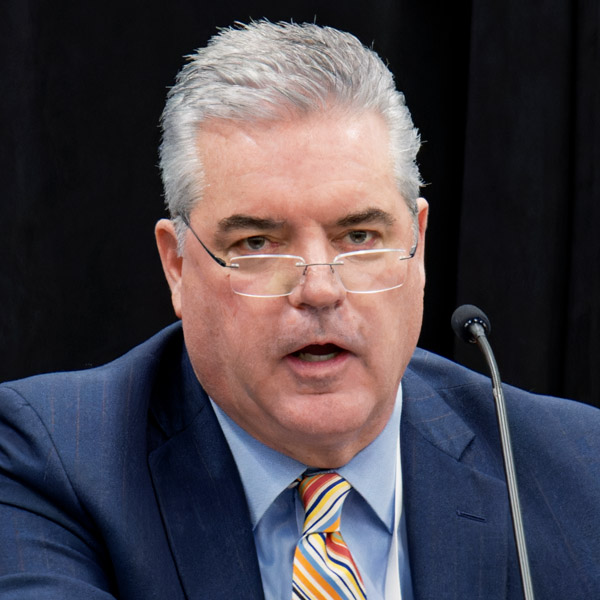
Goldman urged listeners to stick with the approach that most of the renewable energy community seems to have adopted the day after Election Day, emphasizing the good of the nation rather than the good of the planet.
“Let’s set aside the climate benefits as we are making this case right now, because the economic and national security case for clean energy is stronger than ever.”
He added: “We absolutely cannot give up with this administration — even if those wind turbines are unattractive.”

Sergio Garcia, executive director of project finance at Rabobank, counseled patience and a longer view. Financial planning is difficult until budget and policy negotiations produce a firm picture of the tax incentives that grew from the Inflation Reduction Act.
“Right now, we’re all distracted with the IRA,” he said. “It’ll change — in what form, I have no clue. Until we have visibility in there, it makes your jobs a lot harder, because you need to deploy capital.”
Garcia added: “It’s a reality check, right? It did work before the IRA, and it’ll work again in one form or another, and renewables will continue to strive because it is the lowest levelized cost of energy. So I think there’s plenty to do. I think that banks are all active, and we’re all like looking for projects to finance.”