The Louisiana Public Service Commission abruptly pulled the plug on its long-awaited, statewide energy efficiency program weeks after selecting a contractor to measure savings.
The commission voted 3-2 along party lines at an April 16 meeting to “cease working toward” its statewide energy efficiency program that was more than a decade in the making. A companion vote that would have directed commission staff to draft new energy efficiency rules for a public entity program failed, with Commissioner Jean-Paul Coussan flipping his vote for the second roll call due to what he called confusing language. Commissioners Foster Campbell and Davante Lewis voted against cutting the statewide program and the new rule directive.
The commission terminated its contracts with APTIM to administer the program and Tetra Tech to measure savings of the program. The decision came less than a month after commissioners selected Tetra Tech’s bid for measurement and verification of energy savings. (See Louisiana PSC Leaves Statewide Energy Efficiency Program As Is For Now.)
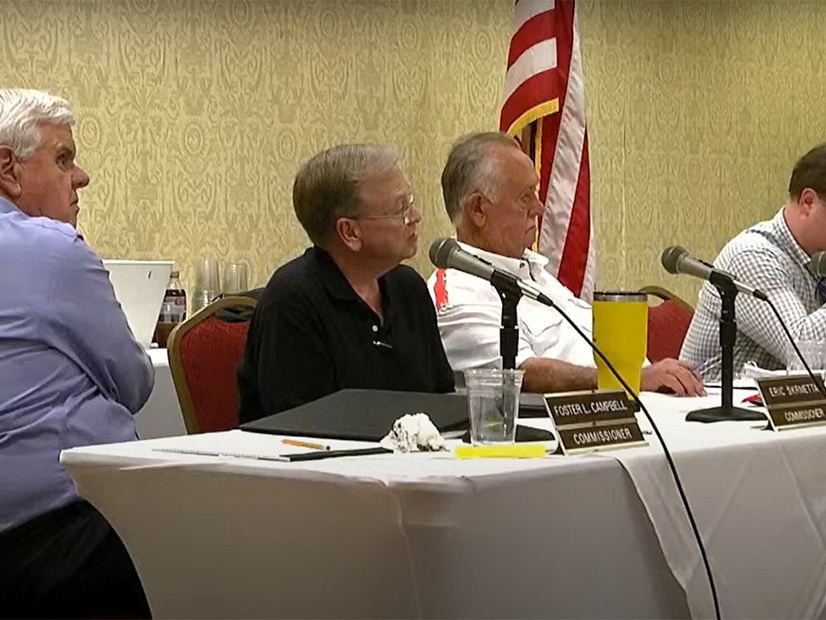
Chair Mike Francis, who introduced the motion to end the program through a supplemental agenda published fewer than 48 hours prior to the meeting, said an independently operated energy efficiency program appeared to be too confusing and too expensive.
The meeting took place at a golf resort in Many, La., a more than three-hour drive from the PSC offices.
Lewis pointed out the commission was cutting the program before even receiving APTIM’s proposal or modeling. The contractor would have submitted details on its program design May 1.
The third-party, statewide program had been in the works at the PSC since 2010, when the commission retained a consulting firm to draft rules. The PSC finally authorized the program in April 2024.
Logan Burke, of consumer watchdog Alliance for Affordable Energy, said it’s illogical for the commission to cancel a statewide program when “residential utility bills are unaffordable for hundreds of thousands of people in our state.” Burke pointed out that Louisiana households on average use 46% more electricity than the average American household.
“Why would the commission consider ending the only program that residents and businesses have to manage their bills and keep the lights on?” she asked rhetorically at the meeting. “We are decades behind on addressing energy waste. And so, it doesn’t matter how low the rate is if we’re just throwing our money out of the cracks around our doors and windows.”
Burke said the “rational” thing to do is to finishing standing up the energy efficiency program.
“When will we acknowledge that what we’ve been doing isn’t working?” she said. “What is a more conservative value than eliminating waste?”
“Don’t vote to end the program that you barely got started,” Lake Charles resident James Hiatt urged. He said the vote seemed emblematic of a “backwoods, back deal, good ol’ boys” system. Hiatt added that utilities may have their “thumb on the scale” when it comes to designing programs, suggesting it’s not in their interest to help ratepayers lessen usage.
After the meeting, Burke called the vote “a betrayal of the process and the people.” Burke said a third-party model could have delivered six times the savings of utilities’ programs at about half the cost per kilowatt hour.
The alliance called on the public to contact their commissioners to reverse the vote.
Cleco Power counsel Mark Kleehammer requested that the commission continue allowing utility-led programs, saying they’re the most inexpensive means of implementing energy efficiency. Kleehammer estimated about 5% of customers participate in Cleco’s in-house energy efficiency program.
Larry Hand, vice president of regulatory and public affairs at Entergy Louisiana, estimated that 5 to 8% of customers participate in the utility’s energy efficiency program. Entergy Louisiana uses APTIM to supervise the program.
Louisiana’s utility-led program is set to expire at the end of 2025. The current program allows utilities to recoup revenue when sales volume drops due to efficiency measures.
Commissioner Eric Skrmetta suggested it’s not fair that most customers are paying for the efficiency efforts of such a small slice of ratepayers.
Skrmetta also said the commission was merely canceling the third-party administration model, not eliminating an efficiency program altogether.
“We are going to have an energy efficiency program, but we’ve got to look at what we’re going to do,” he said.
Lewis said the utilities’ low participation rates reinforce the need for a standardized, statewide program that’s better publicized and understood.
At one point, Commissioner Campbell referred to the motion as “gobbledygook” because it wasn’t clear whether the vote also would terminate Louisiana’s current utility-led, quick-start program. Commissioners ultimately separated the failed directive into its own motion and amended it to make it clearer that utility-led programs would remain an option as the PSC worked toward a different program.
Campbell repeatedly asked for a monthlong stay on the vote to better understand what he was voting for.
Lewis pointedly asked Kleehammer and Hand whether they would recommend a public entities program model nationwide. The question led to a heated exchange over whether the directive motion as written would exclude utility-led efficiency programs from consideration under whichever new paradigm the commission adopts. Other commissioners cut off Lewis’ line of questioning.
“I understand the night is late, but this is what we get when we add an agenda item 48 hours before that’s extremely important. So, I mean if that’s the way we’re going to start doing business around here, it’s going to be a different game. Because I have issues … and I’m not going to be disrespected just because I have questions,” Lewis said of the five-and-a-half-hour meeting.