Texas Public Utility Commission staff are drafting a rule to codify a process for exemption requests from ERCOT reliability requirements and allow owners of generation, load or energy storage resources to appeal the grid operator’s decisions to the PUC (57374).
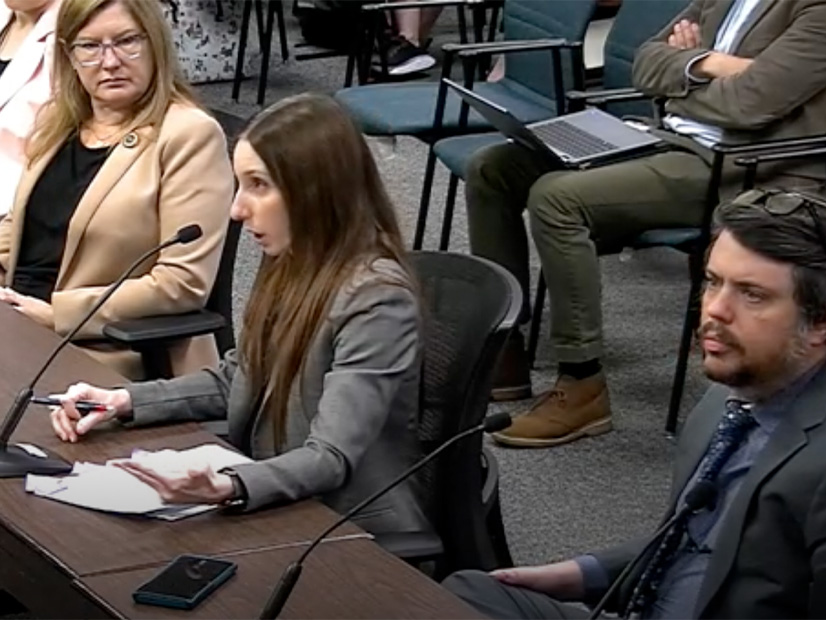
Allison Fink, a staff attorney, told commissioners at their open meeting May 8 that ERCOT does not have a process for market participants to request exemptions. She said the proposed rule would not affect any existing exemptions or future provisions in ERCOT’s protocols, operating guides or other binding documents unrelated to reliability.
Staff are drafting the rule after ERCOT’s Board of Directors and stakeholders and the PUC approved a change to the grid operator’s Nodal Operating Guide (NOGRR245) that imposes voltage ride-through requirements on inverter-based resources. The revision was bifurcated so a subsequent rule change could address more details around the exemption process, a sticking point during the stakeholder process. (See “Bifurcated NOGRR245 Approved; 2nd Change to Add Details,” ERCOT Board of Directors Briefs: Aug. 19-20, 2024.)
Resource entities had until April 1 to request exemptions if they can’t meet the new requirements.
ERCOT General Counsel Chad Seely told the PUC that staff are processing more than 90 exemption requests. “I think we’re going to have quality issues with the data that’s going to take some time to work out with the individual resource entities,” he said.
Seely and PUC Chair Thomas Gleeson agreed cost should not come before reliability when evaluating the requests. “Costs can have a role in how we evaluate the overall risk,” Seely said. “What we don’t want is to be required to consider costs when there’s an unacceptable reliability risk.”
“I think [cost is] useful information to [entities] if they’re trying to figure out how to mitigate these risks,” Gleeson said. “But under no circumstance do I want ERCOT making the tradeoff between the value propositions on cost and reliability. Their focus should be on reliability.”
Staff Working on EOP Compliance
Staff from the PUC’s Division of Compliance and Enforcement (DICE) told commissioners they are handling about 130 violation findings for entities that have not filed either an initial emergency operations plan (EOP) and executive summary, or annual updates (53385).
The commissioners directed staff in September 2024 to investigate about 300 entities that were not compliant with filing their EOPs. The directive came following a report on the power sector’s weatherization preparedness and companies’ EOPs after a review of 691 electric entities. (See “PUC Adopts EOP Report,” EHV Tx Lines Coming into Focus for ERCOT.)
DICE opened investigations into 262 entities but were able to identify 76 that had met an April 2022 deadline or filed at least one of the annual reports due in March every year. Using a “corrective action plan” — essentially deferred adjudication, staff said — DICE closed out all but three of the cases.