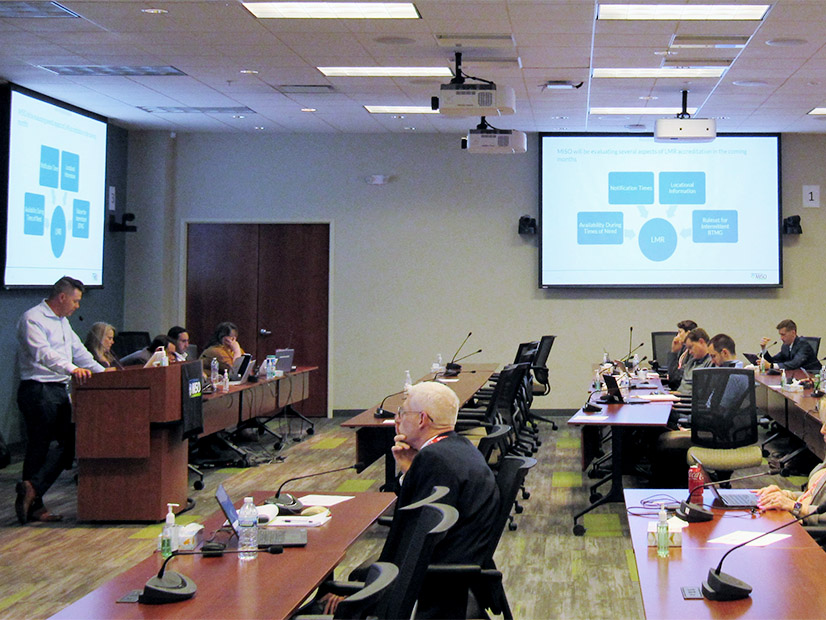
MISO debuted a code of conduct for its stakeholder meetings that forbids rude or callous language, deliberate meeting disruptions or disregarding committee chairs’ instructions.
MISO said that by attending stakeholder meetings, all participants agree to maintain professional conduct, identify themselves and organizational affiliation before speaking, take turns speaking and make sure everyone has the chance to talk, stay on topic according to meeting agendas and minimize distractions caused by electronic devices.
The RTO added that it would not tolerate disruptive or disrespectful behavior, including name-calling or personal attacks; “dismissive, sarcastic or demeaning remarks,” speaking out of turn and repeated interruptions, not following the meeting chair’s direction and “conduct that impedes discussion or intimidates participants.”
MISO said participants’ failure to follow the rules and “repeated or egregious violations” could result in restricted participation or being refused entry into stakeholder activities. The code applies to participants attending meetings virtually or in-person.
In response to RTO Insider’s questions, MISO did not elaborate on whether a specific incident prompted the new rules, if the RTO noticed a pattern of troubling behavior in meetings or whether the rules were in the works for a while.
“MISO values stakeholder input and we want to ensure our stakeholder process reflects that,” spokesperson Brandon Morris said in an emailed statement to RTO Insider.
MISO said reliable operations, competitive wholesale markets and collaborative transmission planning requires “engagement built on a foundation of mutual respect, professionalism and fair debate and dialogue to solve complex regional issues.”
The code states that MISO’s proposals and presentations and reports from staff delivered during meetings are “often works in progress meant to promote discussion, negotiation and consensus-building.” It also said meeting participants are expected to describe the contents of meetings “accurately and contextually” — with the understanding that opinions evolve — when sharing meeting information in news reports, social media posts, blogs or the like.
In a July 9 letter to stakeholders introducing the code, MISO CEO John Bear said he valued stakeholders’ diverse perspectives but said MISO stakeholder forums “also demand professionalism and mutual respect.” He asked the stakeholder community to keep engagement “constructive” and treat fellow stakeholders with courtesy.
“Every comment should further respectful, solution-focused dialogue that fosters trust, encourages collaboration and upholds the high standards we hold at MISO, and you hold as representatives of your organizations,” Bear wrote. “Disagreements are natural in these forums, especially when things are changing so quickly, but we all must remember that our engagement must be grounded in professionalism and respect, which, in turn, encourages fair debate and dialogue.”