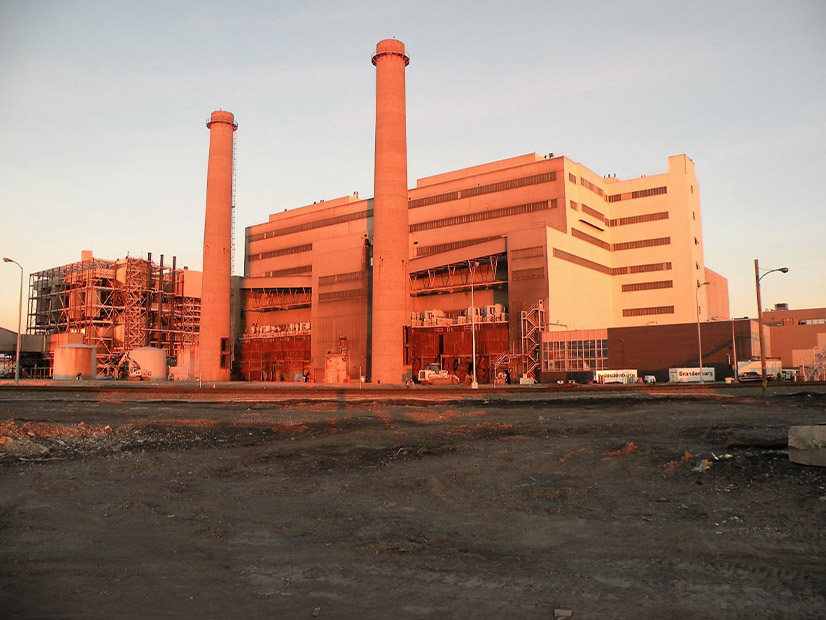
The U.S. Department of Energy has issued another emergency order keeping Units 3 and 4 of the Eddystone Generating Station in Pennsylvania in operation.
The dual-fuel, 380-MW subcritical steam boiler-turbine generator units are 55 and 58 years old, and Constellation Energy had scheduled them for retirement May 31.
But Energy Secretary Chris Wright on May 30 issued an emergency order keeping them in operation to minimize the risk of energy shortfalls in the Mid-Atlantic region.
That order was to expire the evening of Aug. 28. Wright issued the follow-up order to Constellation Energy and PJM the evening of Aug. 27.
In an Aug. 28 news release, he said keeping Units 3 and 4 operational has improved energy security in the PJM region. He pointed to the June and July heat waves, when PJM called on the two units to generate electricity. And he said the emergency conditions that led to his first order persist.
The new order continues until Nov. 26.
PJM spokesperson Jeff Shields described the order as a “prudent, term-limited step” to keep Eddystone operational.
“PJM has previously documented its concerns over the growing risk of a supply-and-demand imbalance driven by the confluence of generator retirements and demand growth. Such an imbalance could have serious ramifications for reliability and affordability for consumers,” he wrote in an email. “PJM supports the U.S. Department of Energy’s extension of its order, originally issued May 30 pursuant to Section 202(c) of the Federal Power Act, to defer the retirements of certain generators operating in PJM’s footprint, which spans all or part of 13 states and the District of Columbia.”
FERC approved a PJM filing to allocate the costs across all RTO load that Constellation incurs keeping Eddystone operational. But that proposal was effective only until Aug. 28. Stakeholders are working toward a longer-term solution for addressing cost allocation for DOE emergency orders through the DOE 202(c) Cost Allocation Senior Task Force. The RTO did not answer questions about whether another Critical Issue Fast Path (CIFP) process is expected to be required for costs under the latest DOE order. (See FERC Approves Cost Allocation for Eddystone Emergency Order.)
President Donald Trump, Wright and other administration officials have been pushing to halt retirement of gas- and coal-burning power generation facilities as part of their pro-fossil, anti-renewable campaign for American energy dominance, saying a power generation crisis is developing.
Wright also blocked retirement of the J.H. Campbell coal-burning plant in Michigan in May and issued a follow-up order Aug. 20 extending its potential operation for another 90 days.
Wright also lifted annual run-hour restrictions on the H.S. Wagner Generating Station Unit 4 in Maryland in July.
In both cases, Wright cited a shortage of generation capacity.
Constellation said it is prepared to continue operating Eddystone into the fall.
“Constellation is continuing to work with the Department of Energy and PJM in taking emergency measures to meet the need for power at this critical time when America must win the AI race. Constellation will continue to operate Eddystone Units 3 and 4 during the fall,” Constellation said in a statement about the order.
These orders and others issued by Wright are under authority of Section 202(C) of the Federal Power Act, which historically has been an obscure provision but is seeing more frequent use in the second Trump administration.
The Biden administration issued 11 emergency orders under Section 202(c) in four years, all weather-related. With the Eddystone order, the Trump administration has issued eight orders and two extensions in a little more than four months.
Environmental groups and others have railed against the orders, calling them unnecessary, expensive and causing further pollution.
The DOE order “undermines our energy security and endangers public health and the environment,” Tracy Carluccio, deputy director of the Delaware Riverkeeper Network wrote in a statement.
FERC decided that “the cost of keeping the plant open can be charged to consumers, compounding the harm to our communities who have to now pay to be polluted,” Carluccio added.
“The order should be rescinded and the company should rightly refuse to comply with it,” Carluccio wrote. Pennsylvania Gov. Josh Shapiro (D) “should intervene to stop this egregious order to protect the public and the environment from any further pollution from Eddystone. Anything less makes Pennsylvania and the company complicit with the human health and environmental harms being caused.”