ERCOT has told the Texas Public Utility Commission it has prioritized a project in 2026 to gather information from the more than 200 GW of large loads in the interconnection queue, a 227% increase in a year’s time.
Data centers account for nearly three-fourths of the queue, ERCOT said. Crypto mining, which constituted half of the queue last year, is down to 1.3%.
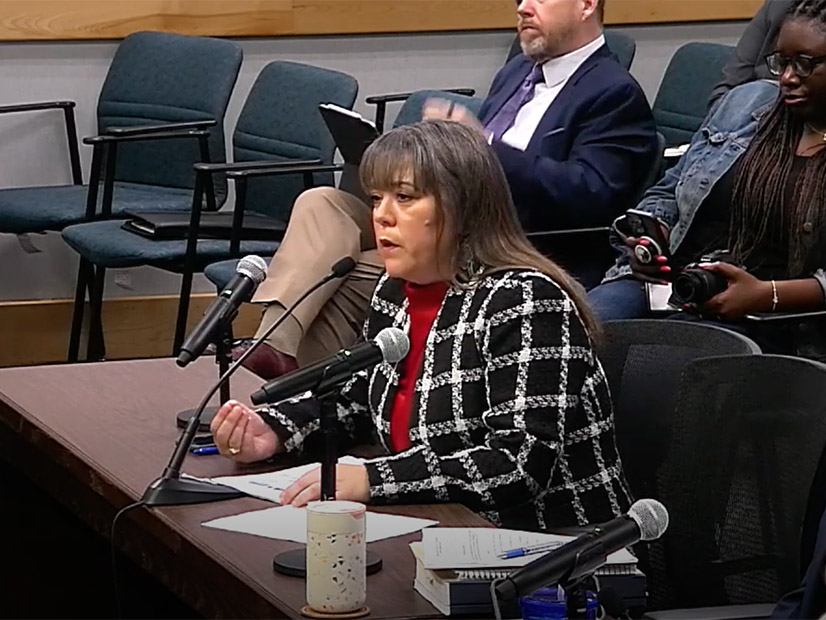
ERCOT staff told commissioners during their Oct. 23 open meeting that the industry’s developers and customers are stating their needs for certainty and transparency. The concern is two-way, as most everyone realizes all 200 GW will not show up.
The project will begin after real-time co-optimization is deployed in the market in December.
“That’s just going to help the [interconnection] process in moving forward and giving us clear information,” Kristi Hobbs, vice president of system planning and weatherization, told PUC commissioners.
To that end, Hobbs said the grid operator wants to re-evaluate whether large loads should have a direct relationship with ERCOT. She said staff proposed a protocol change in 2022 that would increase their relationship with the end-use customers but said it received pushback during the stakeholder process.
“We pivoted to the utilities having the relationship,” Hobbs said. “We work with the utilities and what we find is that it hampers transparency … [for] the large loads and the developers being able to understand where ERCOT is in the process.”
She said having better relationships with the end-use customers would help with their concerns.
“At the end of the day, I don’t think there’s one solution. It’s going to be a combination of all of these things,” Hobbs said, referring to updated ERCOT operating procedures as the bridge between grid improvements and changes to large loads’ systems and operations.
“In the middle, there’s us improving our operating procedures and our planning processes so that we can all meet that same goal for reliable power in the state,” she said.
First up is ensuring the large loads can meet voltage ride-through requirements.
“When you had several thousand megawatts of large loads on the system, it was not as much of a concern,” Hobbs said. “In recent years, we’ve continued to see the number of events where you see faults on the system. We’ve got to be able to protect the system from that, especially as we look ahead to hundreds of gigawatts of potential load on the system. We need to make sure we have the right requirements in place and we’re taking the proper precautions to protect their businesses as well as their neighbors.”
PUC Chair Thomas Gleeson said his foundational issue is to provide certainty to loads in the interconnection process. He provided anecdotal evidence of one large load that entered the process in the first quarter of 2024.
“As of yesterday, it still was kind of in limbo about where they were and how long the process might take,” he said. “I think it’s incumbent on us to talk through that and see if we can improve upon that to give these customers some sense of how long the process may take, understanding that there are a number of variables and unknowns.”
Hobbs responded by saying ERCOT has looked at how its neighboring grid operators’ processes. She said large loads must show a commitment before they’re included in a study.
“The study process is really just a short part. It’s the transmission build and physics doesn’t change that,” she said. “Here in Texas, we can do it in three to five years, where in other regions, it’s six to 12. I think Texas is well positioned to be able to welcome those loads in the future.”
CenterPoint Settlement Corrected
The PUC signed off on CenterPoint Energy’s settlement with Houston and other cities for nearly $1.1 billion in system restoration costs eligible for recovery and securitization after Hurricane Beryl and other storms in 2024 (58028, 58252). The commission approved the order during its Oct. 2 open meeting but held off from signing it until the requested legal consulting and non-consulting expenses could be corrected. The settlement estimated those costs at $2.2 million when they were nearly $2.9 million. Gleeson authorized the expenses to be recovered in CenterPoint’s next ratemaking proceeding.