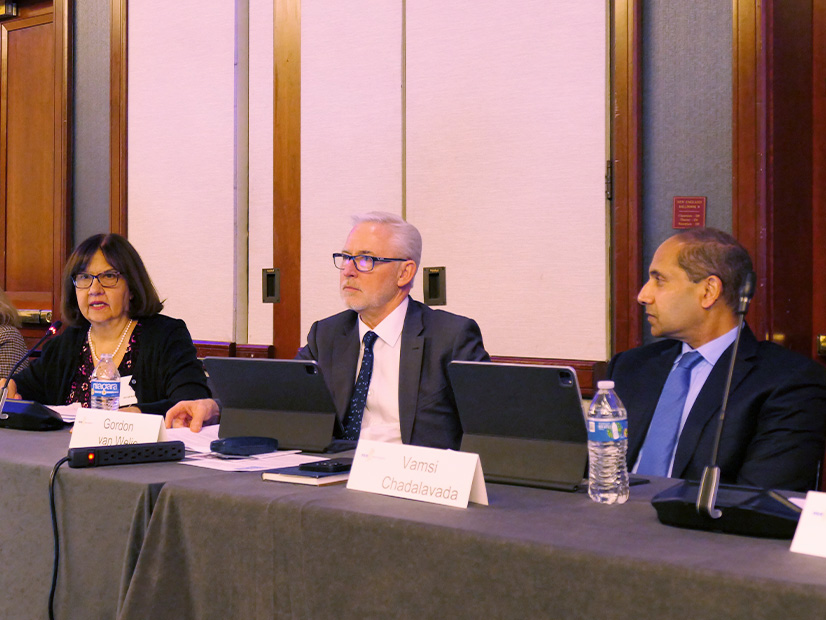
BOSTON — Incoming ISO-NE CEO Vamsi Chadalavada emphasized the importance of innovation and a forward-looking approach to prepare for the future grid in his remarks at the RTO’s annual open board meeting.
Discussing the RTO’s 2027-2030 road map, Chadalavada said ISO-NE must continue to lay the groundwork for the incorporation of increasing amounts of inverter-based generation, storage, retail demand resources, grid-enhancing technologies and increasingly advanced software.
“It’s really important for the ISO not to be a barrier” for the incorporation of new technologies on the grid, said Chadalavada, who has served as COO since 2008. He added that he remains “very mindful that our core mission is to maintain reliability through efficient wholesale markets.”
Chadalavada, who will replace Gordon van Welie as CEO in 2026, joined ISO-NE in 2005. (See Retiring ISO-NE CEO van Welie Reflects on 25 Years at the RTO.) The change in leadership comes at a critical point for the RTO, which faces the simultaneous, interrelated challenges of accelerating load growth and increasing levels of intermittent renewable generation.
With demand and supply likely to become increasingly variable, ISO-NE is working to develop “a foundation of new probabilistic forecasts to manage grid uncertainties,” he noted.
Earlier in 2025, ISO-NE announced its plans to develop a “dynamic, real-time probabilistic forecast of the system’s energy ramping needs,” which could be used to determine how much reserves the RTO procures on a given day. These changes are aimed at more efficiently managing operational uncertainties, ISO-NE has said.
“Everything we do has to make sure that the existing grid is optimized to the greatest extent possible,” Chadalavada said. “We don’t want to wait for the day when we have 25 GW of inverter-based resources; we want to lay the groundwork now.”
Chadalavada also said ISO-NE likely will increase its investment in artificial intelligence to help speed up the development of several initiatives. Citing one example, he said ISO-NE operating guides can take an “extraordinary amount of time” to develop, and the RTO hopes to put “innovation and AI to great use” to expedite these processes.
He said speeding up markets or operations projects at ISO-NE should have a positive effect on innovation within the wholesale markets. He also stressed the importance of integrating the RTO’s internal models, studies and processes.
“To address operational uncertainties over the coming years, ISO markets and operations initiatives will be tightly interwoven, in practice and purpose,” he said.
Also speaking at the Nov. 5 meeting, van Welie reflected on his long tenure leading the RTO. He said the implementation of wholesale markets has had widespread positive effects, including attracting more investment, reducing consumer costs and lowering emissions.
“One of the big points of these markets was to have the risk of investments stay with investors, rather than be passed onto consumers,” he said.
He also said the region has benefited significantly from forward-looking transmission investments that enabled gas generators to replace dirtier and less efficient coal and oil resources, and ultimately “gave us the foundation for introducing the first grid-scale renewables onto the fleet.”
He expressed optimism that ISO-NE’s ongoing Longer-term Transmission Planning procurement “is going to help us open a path into Maine, where there is a lot of land-based wind potential.”
Van Welie said he is disappointed that demand-side resources have not advanced as quickly as he hoped but that these resources will be a critical component of the future grid.
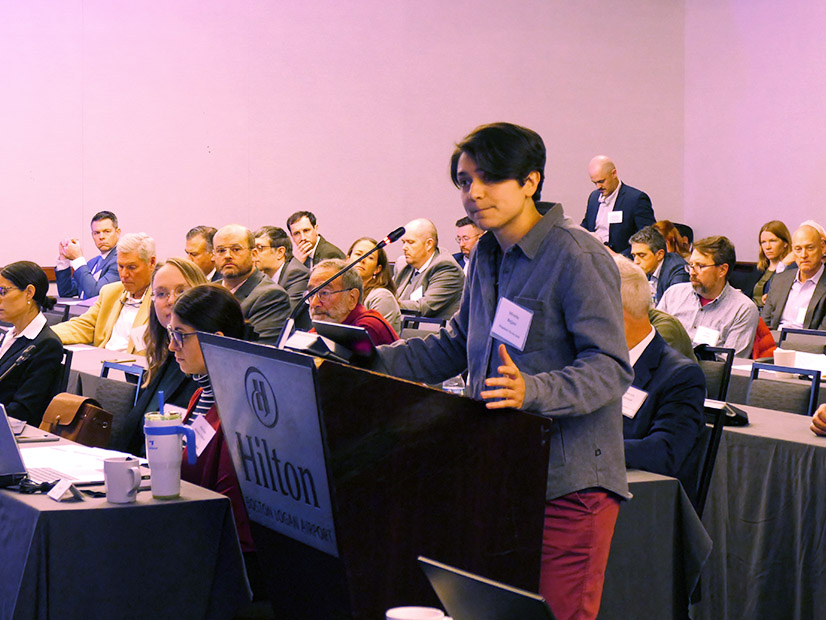
Several members of the public spoke at the meeting, emphasizing the urgency of decarbonizing to minimize the effects of manmade climate change and urging the RTO to take bolder steps to help cut emissions.
“The window for preventing the worst climate outcomes is rapidly closing,” said Lilly Worthley, a member of Fix the Grid.
The group, which is supported by climate and environmental organizations, distributed a statement that included a series of recommendations aimed at increasing ISO-NE’s accountability to the public. It called on the RTO to:
-
- improve its community engagement processes;
- add state representation to the Board of Directors;
- increase opportunities for public participation; and
- add climate and affordability priorities to its mission statement.
Activists applauded some of the steps taken in recent years by ISO-NE, including the establishment of the annual open board meeting, the creation of a community affairs policy adviser position and the RTO’s advocacy for offshore wind at the federal level.
But more work needs to be done to increase transparency, accessibility and accountability, Fix the Grid wrote in its statement.
“We believe the upcoming leadership transition provides a real opportunity for a new chapter at ISO-NE, to steer the region toward a cleaner, more just energy future,” the group said.