LITTLE ROCK, Ark. — SPP state regulators have approved several motions related to FERC Order 1920’s mandate for long-term, scenario-based planning to ensure the system can meet future needs and be fairly compensated.
The Regional State Committee endorsed the continued use of SPP’s highway/byway cost allocation for long-term regional projects during its Nov. 3 quarterly meeting. It also approved the Cost Allocation Working Group’s recommendation to allocate long-term projects with public policy benefits to the state they benefit.
Under the grid operator’s highway/byway methodology, one-third of the cost of byway projects — lines rated at 100 to 300 kV — are allocated to the RTO’s full footprint, with customers in the transmission pricing zone in which the project is built being allocated the rest. “Highway” projects, those larger than 300 kV, are allocated RTO-wide.
The RSC offered several amendments to the motions brought forward by a CAWG sub-group, but both failed. Both would have established a $150 million threshold for projects to be cost allocated, provided that a simple majority of affected committee members vote to initiate the process.
However, separate votes to require alternative ex post cost allocation methodology be approved by either a two-thirds or simple majority both failed with deadlocked ballots.
John Krajewski, a consultant for the Nebraska Power Review Board who led the CAWG sub-group, said SPP has never identified a project or issued a notification to construct (NTC) out of a 20-year study.
“So, in some respects, this was an academic exercise,” he said, “but I also think it was important because we’re required to do it under Order 1920, and it’s possible in the future this may be an issue.”
Order 1920 requires transmission providers to plan for at least 20 years, create at least three different long-term scenarios to identify future needs and evaluate potential solutions for cost-effectiveness. The order also incorporates a landowner bill of rights, tribal impact reports and engagement plans with environmental justice communities. The compliance filing is due in June.
Nickell Recaps ‘Transformational’ Year
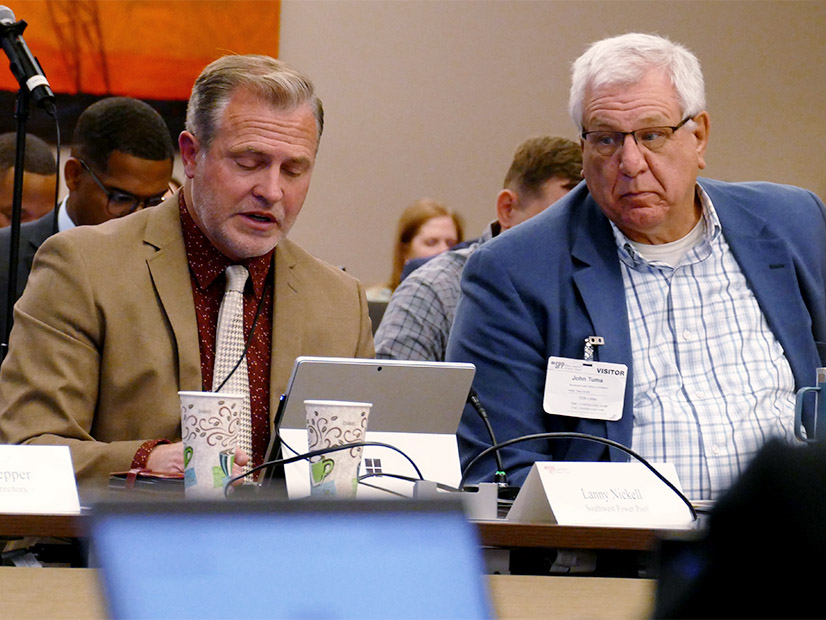
SPP CEO Lanny Nickell thanked the RSC for the “key role” it played in helping the grid operator move initiatives related to resource adequacy and cost allocation that made 2025 a “transformational” year.
Nickell name-checked the one-time expedited resource adequacy study (ERAS) to fast-track qualified projects and a provisional load process, both approved recently by FERC. He also mentioned the Consolidated Planning Process that would combine transmission planning and generator interconnection studies; it was filed with FERC on Nov. 3.
“That, in and of itself, is going to be revolutionary,” he said of the CPP.
Nickell said SPP received 36 submissions as part of the ERAS process, totaling 13.2 GW of capacity. About 73% of that is gas generation, with solar and batteries accounting for the rest. Generator interconnection agreements will be made during the first quarter of 2026, he said.
“That’s the kind of generation we’re going to need to help us with our accreditation and to help load-serving entities meet their requirements,” he said.
The RTO expansion into the Western Interconnection remains on track, Nickell said, with a Dec. 2 go/no go date fast approaching to determine whether to open the transmission congestion rights market in the West on Jan. 1, 2026. The next key decision comes Feb. 2, he said, when SPP will decide whether or not to stick with the April 1 go-live date.
The grid operator’s other Western market, Markets+, has 41 entities that have committed to fund the development of the market’s systems development and hardware. SPP is targeting a go-live date in late 2027.
“We’re in a time of change, and I think it’s just important to realize and to show and to demonstrate what can be done when you put your heart to it and put your mind to it,” Nickell said.
JTIQ Funds Remain in Limbo
General Counsel Paul Suskie told the committee that SPP has yet to receive “official word” about the status of the U.S. Department of Energy’s $464 million grant for the grid operator’s Joint Targeted Interconnection Queue initiative with MISO.
“Fingers are crossed that the funds will still be there,” Suskie said. “I’m personally an optimistic person. I’m optimistic the current administration will see the value that JTIQ will have for the region to get new generation online.”
The DOE loan under its Grid Resilience and Innovation Partnerships (GRIP) program would account for more than 27% of the $1.7 billion portfolio, comprising five 345-kV projects along SPP’s northern seam with MISO. Each grid operator is responsible for two projects in its footprint, and they share the fifth.
The funds were awarded in 2023 to the Minnesota Department of Commerce, the lead applicant in the JTIQ initiative that also involves the Great Plains Institute and the two RTOs. However, the department in early October included the $464 million grant on a list of projects that it intended to terminate. (See DOE Terminates $7.56B in Energy Grants for Projects in Blue States.)
Suskie said conversations continue between DOE and parties to the initiative. NTCs have been awarded to Omaha Public Power District and Evergy for the JITQ projects, he said, giving them the obligation to move forward with their portions of the projects and making them eligible for cost recovery.
FERC has approved the RTOs’ request to allocate the portfolio’s costs 100% to interconnecting generation assessed on a per-megawatt basis. In doing so, it cited the GRIP funding as one of the “unique set of facts and circumstances of the proposed JTIQ framework.” (See FERC Upholds MISO and SPP’s JTIQ Cost Allocation over Criticism.)
RSC Selects New Leadership
The RSC approved the Nominating Committee’s slate of officers for the 2026 term, with Nebraska’s Chuck Hutchinson succeeding New Mexico’s Patrick O’Connell as president.
Oklahoma’s Kim David will serve as the RSC’s vice president, while Arkansas’ Justin Tate and Missouri’s Kayla Hahn will take the secretary and treasurer positions, respectively.
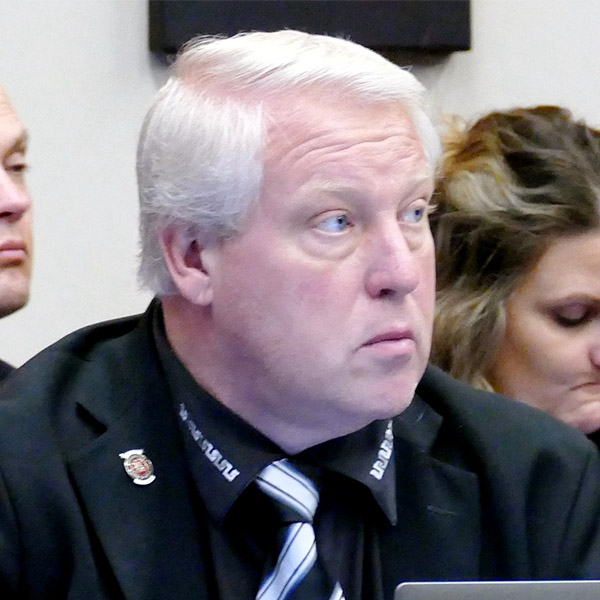
O’Connell said it was an honor to have led the committee and its differing points of view.
“We work together to try to get to consensus and focus on the region first,” he said. “That’s not always true in daily life in general, especially these days. This isn’t just professionally a great experience; it’s also kind of a respite from the real world sometimes. I really, on a personal level, really appreciate how the RSC works together, and then I appreciate that SPP allows us to work together in that way.
“So, thank you all for that,” O’Connell said. “Dry your eyes, OK?”
The RSC’s roster grew to 13 with the addition of Montana’s Randy Pinocci. Observing from the audience were Wyoming Public Service Commission Chair Mike Robinson, another potential new member, and New Mexico’s Greg Nibert, who will replace O’Connell on the RSC in 2026.