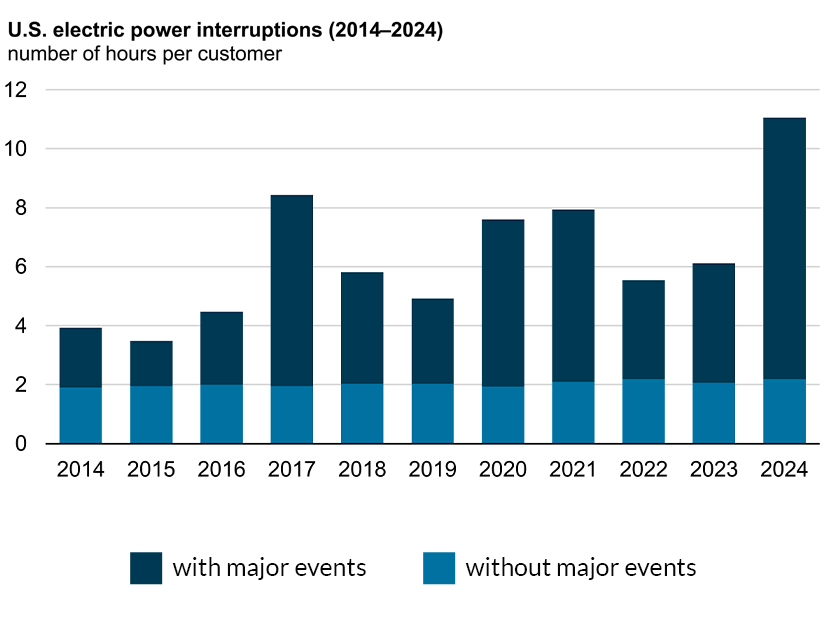
U.S. electricity outage hours reached their highest levels in a decade in 2024 due to the impact of Hurricanes Beryl, Helene and Milton, the EIA reported.
From 2014 to 2024, electricity customers averaged around two hours of outages a year unrelated to major events such as hurricanes or storms, interference from vegetation near power lines or “atypical” utility operations, EIA said.
Interruptions attributed to major weather events averaged four hours, the agency said.
In 2024, the major hurricanes added another seven hours to that figure — meaning the average customer experienced 11 hours of outages.
Outages are categorized by two metrics in the industry: The system average interruption duration index (SAIDI) measures the total duration of non-momentary outages, and the system average interruption frequency index (SAIFI) measures the number of outages in the year.
Nationally, customers averaged 1.5 outages last year. Hawaii led the country on the SAIFI, being the only state to see its power customers average more than four outages in 2024 — but the overall time they were without power was well below the national average. Hawaii had a high number of outages due to bad weather, volcanic activity, unexpected outages at oil companies and issues connecting new power plants.
Maine and Vermont took second and third place, though Mainers averaged nearly 30 hours in SAIDI and Vermonters just under 15 hours. Utilities in both states often have to deal with treefalls knocking out power, EIA said.
Maine customers averaged longer outages than customers in Florida, North Carolina and Texas, despite not being hit by any of the major hurricanes that drove the spike in SAIDI in those three states and nationally. Those Southern states saw customers average between 25 and 30 hours of SAIDI, about half the duration of South Carolina customers who averaged 53 hours of outages.
Hurricane Beryl knocked out power to 2.6 million customers in Texas in July 2024 while September’s Hurricane Helene left 5.9 million customers across 10 states without power, with 1.2 million of those in South Carolina. In October, Hurricane Milton knocked out power to 3.4 million customers in Florida.
Arizona, South Dakota, North Dakota and Massachusetts experienced less than two hours of outages in 2024, while South Dakota, Maryland, Illinois and Massachusetts all averaged less than one outage that year.