Responding to opposition from suppliers, IESO said it will not include a termination option in its procurement for long lead-time resources.
Bowing to opposition from suppliers, IESO said it will not include a termination option in its procurement for long lead-time (LLT) resources.
“There has been much discussion on this item. I’ll skip to the punch line: We have heard you, and we have decided not to include any kind of optional termination provisions in the LLT contracts,” Dave Barreca, IESO’s supervisor of resource acquisition, said during an engagement session Dec. 18. “This is … our assessment of balancing the risks and the benefits of such a provision … assisted by your feedback. So this item is now closed, and we can move on.”
The ISO had said it would seek to reduce risks in the procurement by allowing the ISO and generation developers to cancel deals in the first two or three years after the contract date.
But suppliers said the termination option would increase developers’ risk, make financing more expensive and reduce participation levels. They also said it could discourage participation by Indigenous communities that seek to invest in projects with a high likelihood of reaching commercial operation.
IESO officials said they have reduced the minimum security from suppliers from $350,000 to $300,000.
“That is probably not as low as some are asking for,” Barreca acknowledged.
In a presentation, the ISO said it recognized that even the reduced security might prove an obstacle for small hydro projects. But it said the amount needs to be “significant enough” to ensure the proponent has the financial backing to complete the project on schedule and operate it in accordance with contractual requirements.
Potential Delay
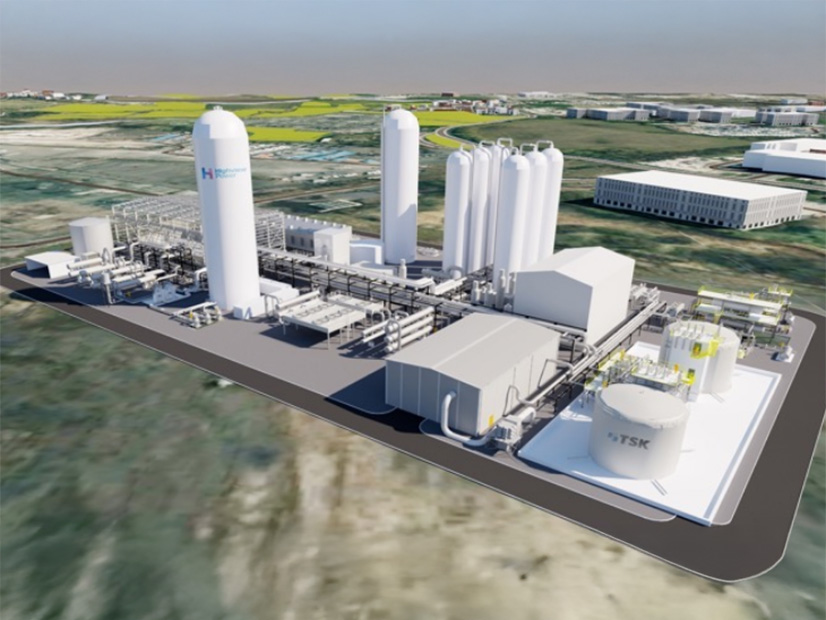
IESO plans to seek 600 to 800 MW of capacity and up to 1 TWh of energy from resources requiring at least five years of lead time. The ISO created the long lead-time procurement because energy storage resources such as compressed air and pumped hydro require longer planning cycles than the four-year lead times for resources offering in the pending Long Term 2 (LT2) procurement. (See IESO Open to Broader Range of Storage Technologies in Long Lead-time Procurement.)
The energy stream of the LLT RFP will be open to new build hydroelectric facilities with a nameplate capacity of at least 1 MW that do not include pumped storage. Long-duration energy storage (LDES) projects will be eligible for the capacity stream.
The ISO had hoped to issue a final request for proposals and contracts by the end of the first quarter of 2026, with the solicitation expected in the fourth quarter.
IESO’s Ben Weir said the “biggest risk” to that timeline is uncertainty over whether the ISO will be required to incentivize the use of Ontarian or Canadian components and services under Bill 5 (Protect Ontario by Unleashing Our Economy Act).
“The rest of the stuff that remains under consideration, from a design perspective, I think is well in hand,” he said.
“What we’re doing at this stage … is seeking feedback for these technologies — hydropower and long-duration energy storage,” Weir said. “What are you expecting to do in terms of capital spend on product within Ontario and/or Canada? [And] what would you be capable of doing within Ontario and Canada, and how you expect any of those changes … to affect project costs?
“This is going to be super helpful for us to inform those discussions about … what’s in the realm of the possible.”
Team Member Experience
IESO is revising its proposed requirements for team member experience for the energy and capacity streams.
All projects must have at least two members with experience in planning, developing, financing, constructing and operating at least one “qualifying” project: a generation or storage facility that reached commercial operation in the past 15 years in Canada or the U.S. (minimum 1 MW for energy stream projects and 10 MW for capacity).
Proposed Class II LDES capacity projects must have two team members with experience planning and developing a project with the same technology (minimum 1 MW) that is expected to reach commercial operation in Canada, the U.S., the U.K., Italy, France, Australia, Germany or Japan by the end of 2029.
Midterm Extended Outages
IESO said it will consider allowing more flexibility for midterm extended outages but said it needed more information on their timing, frequency and duration.
The ISO had proposed a single outage of up to 12 months after the 20th anniversary of the contract. Stakeholders said they would prefer the ability to take multiple outages beginning after Year 10 that add up to 12 months.
“What is it that you want to use these outages for? Just give us some details,” Barreca asked. “You can give us this feedback confidentially.”
Must-offer, Regulation Requirements
In response to stakeholder feedback and internal data from the real-time and day-ahead energy markets, ISO officials said they will not include a real-time component to the must-offer provision in the LLT capacity contract.
They said they still are considering the merits and potential costs of expanding the qualifying hours in the LLT(c) contract to include weekends and holidays.
They also are considering stakeholders’ proposal to require all energy projects to be ready to offer regulation services. IESO had planned to make readiness a rated criteria category (non-price factors used to evaluate proposals).
“Rated criteria points and percentage impact on the evaluated proposal price will be established once all rated criteria are determined,” IESO said.
Other Considerations
ISO officials highlighted several other decisions on the procurement:
-
- In contrast to the Long Term 2 RFP, the LLT procurement will not offer incentives for projects to locate in the north. Recognition for projects located outside of Prime Agricultural Areas will be applicable only to capacity projects.
- IESO proposes that municipal support confirmations be dated no later than Aug. 21, 2026, to avoid periods during municipal election years in which municipal actions are restricted.
- The ISO proposes to award rated criteria points for projects offering more than the minimum eight hours of continuous energy. “The corresponding reduction to evaluated proposal price for a 12-hour duration relative to an eight-hour [duration] will be commensurate with internal IESO studies on the impact of longer durations on effective load-carrying capacity for storage technology,” the ISO said.
Boom-bust Concern
Paul Norris, president of the Ontario Waterpower Association, said he was surprised and alarmed that the ISO is considering only one LLT procurement.
“You’re going to create what we try to avoid, which is a boom-and-bust approach to energy procurement,” he said. “There’s got to be an LLT 2 and an LLT 3.
“The whole point of a cadenced procurement is to line up … partnerships with Indigenous communities; to work with municipalities; to work with suppliers,” he continued. “A one-shot deal … doesn’t serve anyone well, in my mind.”
Weir noted the ISO previously said it had a government directive for only the initial procurement.
“New-build hydropower hasn’t been procured in Ontario in quite a while. … LDES has not been procured at the scale that we’re procuring it in Ontario ever. So there are a lot of unknowns from a cost-effectiveness perspective as to these resources,” he said. “I think that the outcomes of the LLT will heavily inform what the government wants to do on subsequent rounds.
“Certainly, if we get another directive in the future to run subsequent rounds, we’ll run subsequent rounds,” he added.
Next Steps
The ISO asked stakeholders to provide feedback on its latest refinements by Jan. 15 via engagement@ieso.ca.