Some MISO stakeholders said an extreme events analysis from the 2025 transmission planning cycle potentially raises a red flag and deserves more attention.
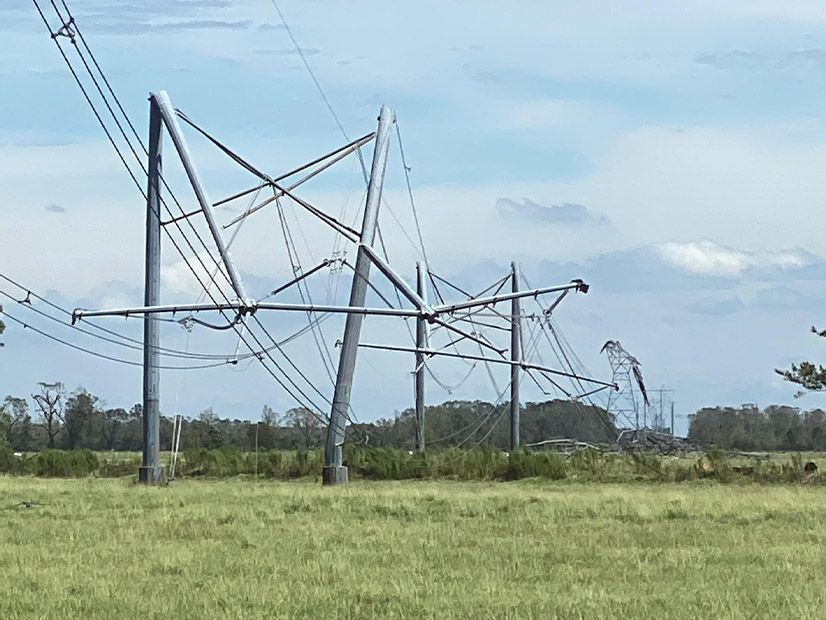
MISO found the possibility for cascading outages in all four of its planning regions in its annual extreme events analysis for its 2025 Transmission Expansion Plan (MTEP 25). The grid operator said its South region contains the most potential for cascading, extreme contingencies.
MISO completed the analysis in late 2025. The analysis contemplates several failures, including loss of large generators, transmission elements, load centers and failures brought on by hurricanes, wildfires, cyberattacks and other catastrophes.
However, there’s not much to glean beyond that. Results are shielded from the public in the confidential appendices of the annual MTEP report and protected by nondisclosure agreement requirements and a Critical Energy/Electric Infrastructure Information designation.
Sustainable FERC Project’s Natalie McIntire asked where stakeholders can go to view a list of transmission solution ideas or remedial action schemes that might be designed because of the findings.
To submit a commentary on this topic, email forum@rtoinsider.com.
Clean Grid Alliance’s David Sapper seconded the ask. He said 2025’s “concerning results” warrant more discussion, not simply an agenda item without a presentation from MISO staff.
MISO published the analysis results in a “post-only” format without dedicated discussion time at a Jan. 28 Planning Subcommittee meeting.
“‘It is what it is’ suggests too much indifference,” Sapper said at the meeting.
Minnesota Power’s Tom Butz asked if the extreme events analysis findings could be discussed in MISO’s Resource Adequacy Subcommittee.
Butz said the analysis seems to deserve a larger conversation on “system reliability, not just a localized version of reliability” for transmission owners.
“It seems like this is a source for this to come from,” Butz said of a discussion on how to tackle some cascading failures. He said MISO should “connect the dots between the two worlds,” meaning local planning versus regional preparation.
“We’d be more than willing to have more conversations,” MISO engineer Scott Goodwin said.
But Goodwin reminded stakeholders that loss of load is at times an acceptable form of mitigation, according to MISO’s planning standards.
Planning Subcommittee Chair Patrick Jehring, of GridLiance, said he understands the “difficulty” of trying to publish findings while working around privileged information.
“What we heard today is kind of lacking. … It doesn’t really help drive a conversation about ‘what do we do about this?’ What can you show to form a discussion about these extreme events?” Jehring asked MISO staff.
Senior Expansion Planning Engineer Amanda Schiro said she would evaluate what insights MISO might be able to share.
McIntire said MISO might consider sharing aggregated data or “themes of analysis.”