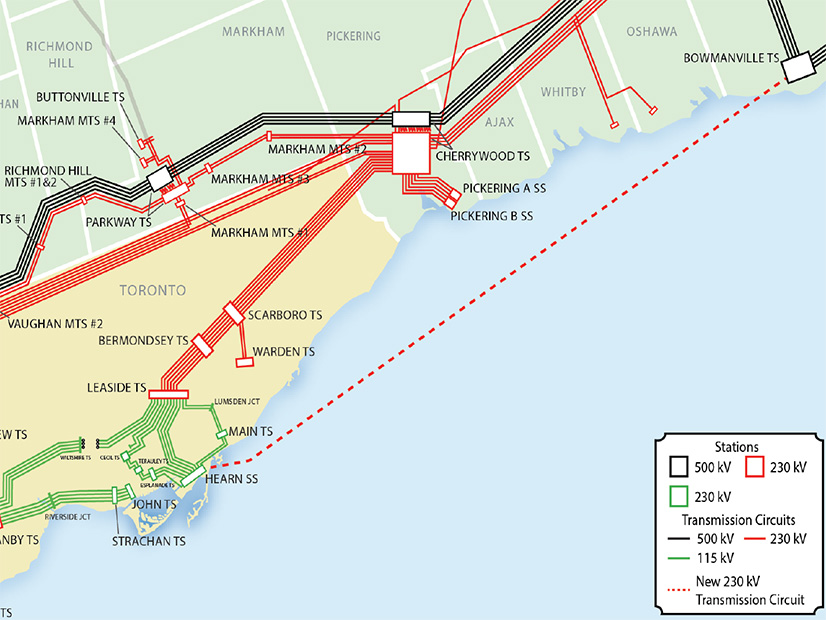
IESO is seeking stakeholder input on its first competitive transmission solicitation: a $1.5 billion HVDC line under Lake Ontario that will become the third major supply line for Toronto.
The ISO recommended the 65-kilometer, 900-MW Toronto Third Line (TTL) in September 2025, saying it would be more “future proof” than two cheaper options. Planners say the line, which was approved by Ontario’s Minister of Energy and Mines in January, is needed to meet a potential doubling of Toronto’s electricity demand by 2050. (See Ontario OKs Underwater HVDC Line to Toronto.)
In July, IESO opened enrollment in its Transmitter Selection Framework (TSF) Registry, a prequalification mechanism for competitive procurements. (See IESO Removes Credit Requirement for Transmission Registry.) As of Dec. 12, two transmission companies — Fortis and Emera — were approved for listing in the registry.
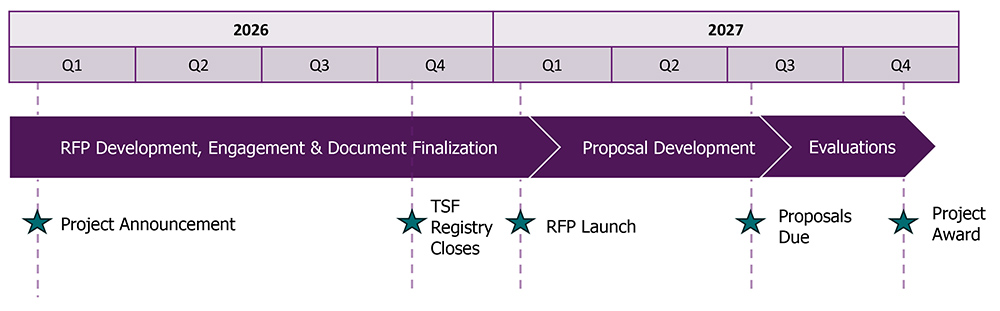
The ISO’s tentative procurement plan, outlined in a Jan. 28 stakeholder engagement, calls for closing the TSF registry in the fourth quarter and opening the request for proposals in the first quarter of 2027, with proposals due in the third quarter and an award in the fourth. The projected in-service date is 2037 “or sooner,” IESO said.
Electricity demand is expected to exceed the capacity of the two transmission lines currently supplying Toronto by 2038. Closure of the 550-MW gas-fired Portlands Energy Centre would accelerate that “reliability need” to 2034.
Design Elements
Although the TTL will be the first HVDC and underwater line in Ontario, similar projects have been built elsewhere in Canada, as well as in the U.S. and Europe.
Under IESO’s standard competitive model, the winning bidder would receive a contract covering all costs for the transmission line’s first 10 years of commercial operation, with the contract transitioning to traditional rate regulation under the Ontario Energy Board in Year 11.
But IESO said the TTL’s “unique technical, environmental and delivery risks [are] not well suited to a contractual model that only allows limited cost adjustments over a longer contract term.”
The ISO said schedule commitments and costs that proponents can reasonably scope and price will be subject to an IESO contract. Uncertain or “externally influenced” costs will be subject to review by the OEB under its “just and reasonable” prudency standard. The OEB’s cost of capital parameters and deemed capital structure also will apply.
“We are seeking input on potential appropriate cost adjustment mechanisms to reduce unnecessary risk premiums while protecting ratepayer value,” the ISO said.
IESO also asked for comments on how prescriptive its technical requirements should be at the RFP stage.
Experience, Indigenous Engagement
Bidders will be required to have experience developing, constructing, operating and mitigating environmental impacts of underwater transmission projects as well as engaging with Indigenous communities, “including undertaking rights-based consultation within treaty and traditional territories.”
IESO is seeking feedback on how to define experience and whether it should be demonstrated at the corporate level or through individual team members, including partners and subcontractors.
All bidders will be required to submit an Indigenous Engagement & Participation Plan (IEPP) to “ensure Indigenous communities are provided with meaningful opportunities to participate” in the project. IESO’s evaluation of the IEPPs will include proposed equity participation structures and non-equity opportunities, including employment, contracting, supply chain participation, training and scholarships.
It asked for input on how it should weight the importance of equity and non-equity participation and how it can ensure early Indigenous community engagement without “inundating communities with requests for engagement from prospective bidders.”
“We’re not setting up a system that rewards who can get a signature [from communities] first,” IESO’s Andrew Lee said.
The Ministry of Energy and Mines says dozens of Indigenous communities have rights or interests in the project area, including the Mississaugas and Chippewas. The ministry’s delegation letter will identify the Indigenous communities to be consulted and the level of consultation.
Aaron Detlor, a lawyer for the Haudenosaunee Development Institute, which represents the Haudenosaunee Confederacy Chiefs Council (HCCC) in the development of lands within areas of Haudenosaunee jurisdiction, questioned the legality of the IESO’s RFP.
“We haven’t had any engagement with the Crown on this RFP process, and that itself is a breach of the honor of the Crown,” he said. “You’ve excluded all kinds of Indigenous people from even bidding on this. So, what you’re doing is you’re creating an RFP process to exclude Indigenous people.”
Amy Gibson, manager of the ministry’s Indigenous Energy Policy unit, said the ministry has not delegated any consultation duties to IESO and is “directly consulting with communities,” including the HCCC.
The ISO is “separately having early engagement around design features because of the timelines associated with this project, but we have not given the direction to the IESO yet on the specific criteria that they will proceed with. So, this is information gathering,” she said.
Detlor declined officials’ offer to continue the discussion offline.
“I’ve written you dozens of times on different IESO hearings and meetings, and I’ve never gotten an answer back,” he said. “I’ve written to the ministry, and I’ve written to IESO … 60 times.”
Engagement Sessions
IESO plans to hold engagement sessions on the procurement every two or three months through 2026, with a March session on RFP and IEPP design considerations.
The ministry is seeking comments on the RFP until Feb. 21 through an Environmental Registry of Ontario posting.
Comments on the Jan. 28 engagement are due Feb. 18 to engagement@ieso.ca using the feedback form posted on the engagement webpage.
IESO is pausing engagement on the competitive process while the TTL procurement is under development. However, it continues to develop recommendations for upcoming transmission projects and determining which ones would also be suitable for competitive procurements.