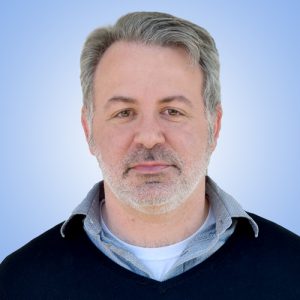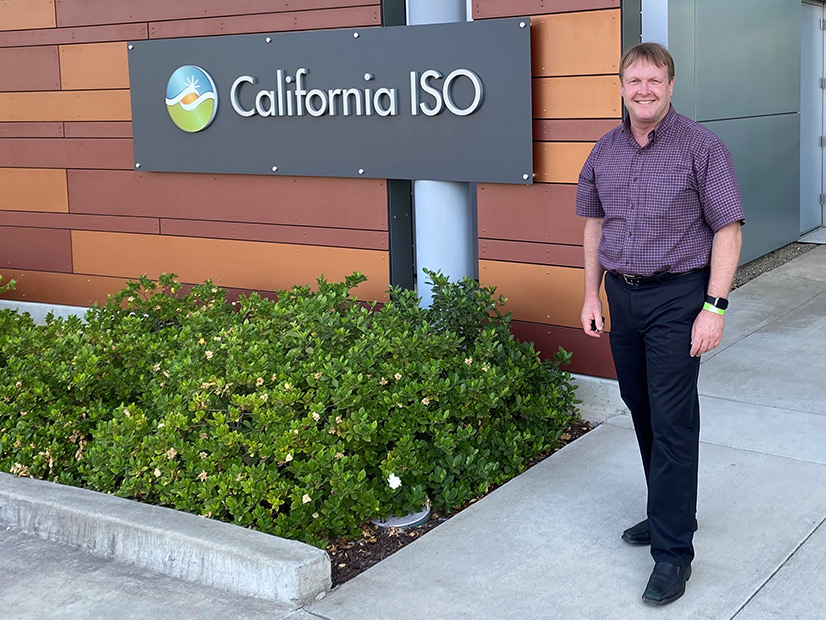
It was a love of international travel that put CAISO CEO Elliot Mainzer on the path to working in the power sector.
“During college, I spent a semester in India, where I was exposed to the social and environmental challenges associated with large‑scale energy development. That experience sparked my interest in the electricity industry,” Mainzer said in an interview with RTO Insider.
While pursuing a master’s degree at Yale University’s School of Forestry and Environmental Studies, Mainzer spent a summer working at the Energy and Development Research Center at the University of Cape Town in South Africa.
“My research there led me to study the deregulation of the U.S. electricity industry and the potential for clean technologies to play an expanding role,” he said. “By the time I finished graduate school in 1998, I was ready to fully commit, and I have spent the past 25 years working to advance reliability, affordability, innovation and environmental sustainability in the power sector.”
Mainzer is one of the featured speakers at the Yes Energy EMPOWER 26 conference Feb. 26, where he will share the stage with SPP CEO Lanny Nickell.
Mainzer’s entry into the industry was as manager of power structuring and then renewable power trading at Enron, the now-infamous company that would become synonymous with the manipulation of California’s partially deregulated electricity market, actions that precipitated the Western energy crisis of 2000/01 and its accompanying blackouts. The crisis resulted in the bankruptcy of Pacific Gas and Electric and the near bankruptcy of Southern California Edison, while costing California and its ratepayers more than $40 billion. Enron itself declared bankruptcy in December 2001.
“I joined Enron as an associate in 1998, directly out of graduate school, and like many others, I was hopeful it would lead to a path of opportunity and success,” Mainzer said. “That dream ended when I was laid off — along with many others — on Pearl Harbor Day in 2001. The lessons from Enron’s collapse have stayed with me for many years.”
Those lessons included “the importance of integrity, honesty and transparency in business — principles I have tried to uphold throughout my career.” But Mainzer said he also took away “some elements of Enron’s business model, such as innovation, creativity and a willingness to challenge conventional thinking.”
“I continue to feel empathy for the many people who lost their livelihoods at Enron and its subsidiaries. It was a very sad chapter. However, I believe I have been able to move forward and make meaningful and lasting contributions to the industry by working hard and staying true to my values,” he said.
From Enron to BPA
Shortly after, Mainzer landed at the Bonneville Power Administration, where he rose through the ranks before assuming the top job — administrator — in January 2014, a position he held for six-and-a-half years.
“Working at BPA taught me two critical lessons that I’ve applied consistently at CAISO. The first was the importance of robust stakeholder engagement — whether in rate cases, fish and wildlife activities, or energy‑efficiency program development. We also used that approach to bring BPA into the [CAISO] Western Energy Imbalance Market,” which the agency joined in 2022 after signing an implementation agreement in 2019.
Mainzer said the second lesson “was the importance of collaborative working relationships in achieving reliability, affordability and environmental sustainability goals.”
He noted that while many people associate BPA with the Columbia River hydroelectric dams, the agency actually owns and operates a grid that constitutes about 70% of the grid in the Northwest, while the Army Corps of Engineers and the Bureau of Reclamation operate and maintain the dams for which the agency markets the generation.
“Numerous state and local entities also influence policy and operations on the Columbia River, so building constructive relationships and strengthening coordination were essential to keeping the lights on while meeting environmental responsibilities. That collaboration model at BPA proved to be excellent training for CAISO,” where he took over as CEO in 2020.
“From Day 1, it was clear that I needed to work effectively with the governor’s office, the CPUC, CEC, CARB, local regulators, public and private utilities, and independent power producers to achieve resource adequacy and transmission planning goals. I’ve also worked closely with organizations across the West to expand the footprint of the Western Energy Imbalance Market and the Extended Day-Ahead Market (EDAM).”
Challenges Ahead for CAISO
Asked about the biggest challenges and tasks facing CAISO over the next few years, Mainzer pointed to “continued progress on resource adequacy and transmission energization,” citing the 33 GW of new resources California has brought online over the past five years, which includes more than 15 GW of battery storage.
Mainzer said CAISO will continue to refine how it manages its interconnection queue and transmission planning, “which will help maintain momentum on resource onboarding and transmission energization.”
“We are particularly excited about continued progress on major interregional transmission partnerships, including the SunZia line into New Mexico/Arizona and the TransWest Express line into Wyoming — both of which are being developed under the Subscriber Participating Transmission Owner model — as well as further progress on the SWIP-North line, following approvals from the Idaho Public Utilities Commission and the Public Utilities Commission of Nevada,” he said. (See Nevada Regulators Approve SWIP-North Construction Permit.)
And CAISO is focused on the launch of EDAM on May 1, with PacifiCorp coming on as its first member, followed by Portland General Electric in the fall. Mainzer said the ISO is committed to expanding EDAM and “demonstrating its significant reliability and economic benefits,” while continuing to support the development of the Regional Organization for Western Energy (ROWE) — the new body established to provide independent governance over EDAM and WEIM. (See Pathways Takes Key Step Toward Establishing ROWE.)
Over the longer term, he said the ISO “will work closely with load‑serving entities to ensure sufficient power and transmission capacity for large loads — especially data centers — while also pursuing innovative solutions, including AI applications, to make better use of existing resources and expedite interconnection processes.”
‘Clear Opportunity’
2025 offered a climax in the competition for participants between EDAM and SPP’s Markets+, with EDAM winning the larger share of load in the Western Interconnection, while Markets+ still earned significant commitments — most notably from BPA. (See BPA Chooses Markets+ over EDAM.)
While that outcome appeared to dash the hopes of industry stakeholders who’ve long advocated for development of a single Western market aligned with CAISO’s markets, Mainzer still expresses hope on that front.
He thinks passage in 2025 of the California law allowing the ISO to engage with the ROWE provides a “a clear opportunity to operate a largely seamless Western electricity market under fully independent governance … an opportunity that policymakers, utilities and other decision‑makers across the West should carefully evaluate in the months ahead, given what is at stake for regional reliability and affordability.”
With EDAM launching in May, Mainzer said he remains “hopeful that entities across the West will closely watch our progress and ultimately conclude that a single market is in the best interest of their ratepayers. In the meantime, we will continue to keep communication channels open across the region.”
‘Woodshedding’
Asked about his alternative dream job if he weren’t working in the electricity sector, Mainzer again pointed to his love of travel — alongside a “passion” for photography.
“If I were to pursue an alternative career, it would likely be as a photojournalist, with the dream assignment being an opportunity to work for National Geographic,” he said.
A saxophonist and “dedicated student of jazz theory and history,” Mainzer said he might also enjoy a part-time gig as a professional jazz musician.
“Though I would have a lot of woodshedding to do before that became possible!”
Mainzer’s appearance with SPP’s Nickell, “The Race to Shape Western Power Markets,” will occur Feb. 26 on the main stage at Yes Energy’s EMPOWER 2026 conference in Boulder, Colo. To learn more about EMPOWER visit yesenergy.com.