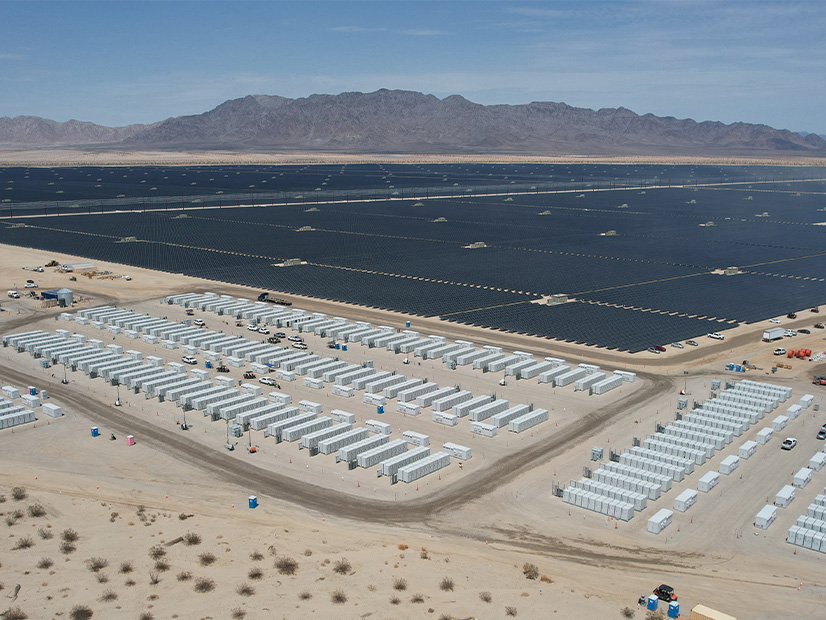
At a meeting held about 260 miles away from its headquarters, the California Public Utilities Commission ordered 6 GW of new capacity to meet forecasted data center and electric vehicle loads — among other new demand — in the state.
More than half of the 6 GW will come from Pacific Gas and Electric and Southern California Edison, according to the final decision approved by the CPUC on Feb. 26.
“Over 800 pages of comments on the proposed decision alone is a testament to how seriously stakeholders take this work,” Commissioner John Reynolds said at a voting meeting held in Santa Maria City Hall.
The original proposed decision issued in January said no more than half of the 6 GW could come from energy storage resources, but the revised final decision threw the requirement out.
“The imposition of a cap on the amount of storage to be procured would be unwise,” the decision says, “because we have no wish to discourage the development of longer-duration storage beyond four-hour lithium-ion batteries, which imposing a cap could do.”
Instead, the revised proposed decision mandates at least one-quarter of the new capacity must come from long-duration energy storage or clean, firm power.
“This change was partly driven by the fact that these resources have value that may not always be captured by our existing renewable portfolio standard and resource adequacy compliance,” Reynolds said.
However, Commissioner Matt Baker said he is “weary of any kind of carve out for specific technologies. The integrated resource planning process really is designed to say how do we get to zero carbon emissions at the lowest possible costs.”
Most of the stakeholders supported the 6 GW procurement order, except for Protect Our Communities Foundation (PCF), the final decision says.
The CPUC should analyze and report on the expected data center load in the utilities’ service areas before requiring costly utility-scale resources and corresponding transmission expenditures, PCF said in Feb. 6 comments. It also said the commission should determine how much of that load — as well as load from future adoption of EVs and building electrification — can be met by facilitating customer-sited generation instead of requiring ratepayers to foot the bill.
The CPUC acknowledged it lacked sufficient evidence regarding its asserted bases for requiring procurement of an additional 6 GW, PCF added.
“The commission should not burden ratepayers with the costs of additional procurement unless and until the commission has first established with reliable evidence that such a need exists in the first place,” PCF said.
Some stakeholders questioned other assumptions in the decision, such as VoteSolar, which said data centers could be built in lower-cost states such as Oregon and Arizona, thereby lowering the CPUC’s assumed future data center load. Drought conditions could lower the amount of hydropower available to California as well, the organization added.
“I find that like many stakeholders there is a lot of uncertainty surrounding the medium-term forecast,” Baker said. “I think it would be pragmatic to reevaluate the medium-term forecast…in the next couple of years to make sure we right-sizing things.”
In Feb. 11 comments, CAISO said if only 2 GW of procurement is required in 2030 and no more until 2032, then the electric system could be potentially vulnerable to reliability risks in 2031.
“Issuing a procurement order well ahead of the identified need will provide LSEs and developers with the necessary lead time to complete procurement processes and navigate potentially long development timelines,” CAISO said. “This proactive approach is critical to avoid capacity shortfalls in 2029- 2032.”
Commissioner Darcie Houck added it is “critical that we closely scrutinize procurement amounts and that we should all be concerned about any excess procurement that could needlessly add to ratepayer costs.”