
TORONTO — Canada should expect turbulent relations with the U.S. to continue under the Trump administration, speakers said at the Ontario Electricity Distributors Association’s ENERCOM 2026 conference.
In 2020, President Donald Trump hailed the United States-Mexico-Canada Agreement, which replaced the North American Free Trade Agreement, as the “largest, fairest, most balanced” trade deal in history. But as the agreement comes up for review in July, its renewal is anything but certain.
With “President Trump, anything is possible,” former diplomat Gitane De Silva said at the conference March 23. “I think we have to prepare for any outcome.”
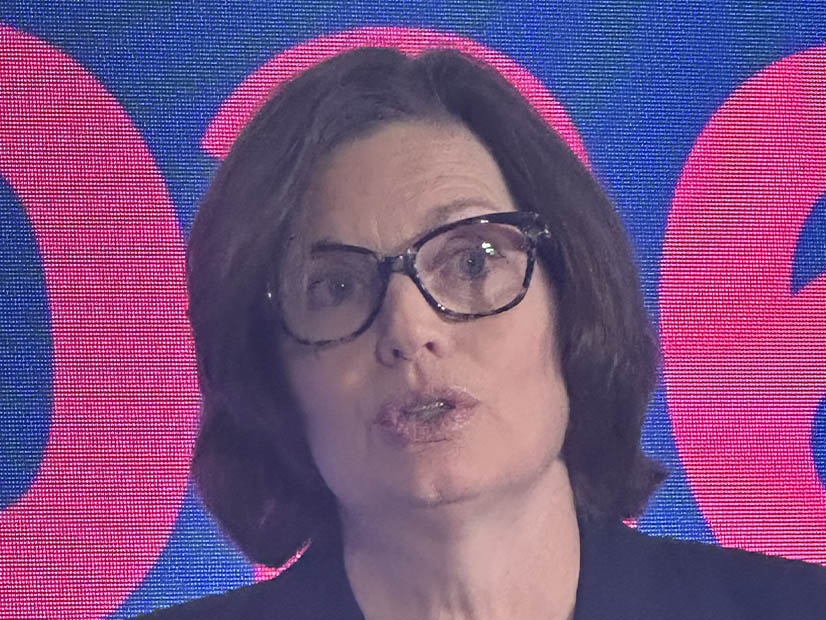
The most likely outcome is that Canada and the U.S. will fail to extend the agreement, triggering annual reviews until a new pact can be reached, said De Silva, former CEO of the Canada Energy Regulator, which oversees international and interprovincial pipelines and electric transmission.
“It’s not to President Trump’s perceived advantage to get to ‘yes,’ because he likes the chaos. He likes uncertainty. He feels that makes him more powerful,” De Silva said. “So, I think we just have to become accustomed to the fact that that trading relationship is not going to be as stable as it was” before Trump.
Jeff Rubin, former chief economist of CIBC World Markets, was more blunt about prospects for the agreement, known as CUSMA in Canada.
“Prime Minister [Mark] Carney pretends that other than a few little tweaks, CUSMA will be renewed. CUSMA is a dead man walking. There is a 0% chance of President Trump renewing CUSMA,” Rubin said. “Whatever bilateral agreement [that is developed] will involve U.S. tariffs on Canadian exports.”
Already, Rubin said, car manufacturers are relocating operations in the U.S.
Rubin said it was President Joe Biden who began undermining the World Trade Organization and the global trading system with his “pervasive use of sanctions and tariffs.”
“But whereas Biden’s policy of friendshoring targeted America’s enemies — China and Russia — Trump’s policy of reciprocal tariffs makes no distinction between friend and foe. And, as Canadians have discovered to their horror, Canada is as much a target of economic warfare as is America’s enemies … perhaps in some sense even more so.”
De Silva said Canada will have some leverage in the negotiations because of the U.S. need for Canada’s heavy oil and fertilizers.
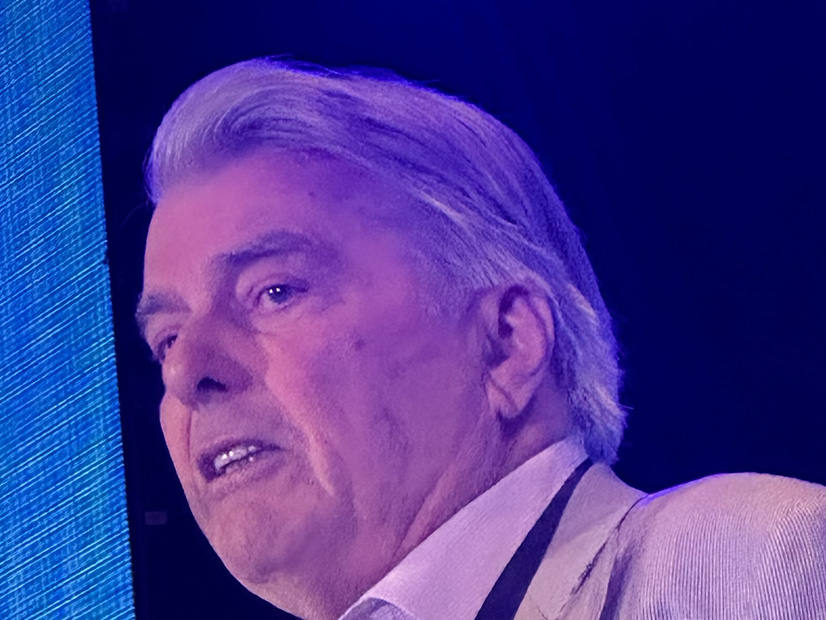
But Rubin said Canada — with the third-largest oil reserves and fifth-largest natural gas reserves in the world — has failed to maximize its resources.
“Prime Minister Carney often refers to Canada as an energy superpower. … But what Prime Minister Carney does not seem to recognize is it takes more than natural endowments to be an energy superpower,” he said. “Real energy superpowers like the United States and Russia do whatever is necessary to get the energy out of the ground and get it to markets that value it the most.
“While Canada’s geology has bestowed upon it considerable resources, the country has consistently lacked the political will to develop. That is why Canada’s oil production is less than half of Russia and Saudi Arabia and a third of America, and what Canada does produce is way below prices that other oil exporters get for their product.”
Alberta Tie Line, Secession Vote
De Silva said that in addition to considering dairy, poultry, eggs, automobiles and lumber trade, U.S. negotiators may also seek to resolve a dispute over the Montana-Alberta Tie Line.
In 2024, Berkshire Hathaway Energy (BHE) Canada, owner of the intertie, filed a complaint with the Alberta Utilities Commission alleging that the Alberta Electric System Operator’s restriction of imports was discriminatory and jeopardizing renewable power investment in Montana. U.S. Trade Representative Jamieson Greer raised the issue with the Senate Finance Committee during a presentation on CUSMA in December.
Alberta has denied discriminating against the U.S., saying it is merely managing grid congestion and protecting reliability. It says BHE’s complaint is an effort to increase its earnings from the merchant intertie facility.
De Silva noted that Montana Gov. Greg Gianforte is a close ally of Trump. “Given that, I think the potential is that it rises higher on the list of irritants than something of this magnitude normally would,” she said.
Rubin said he expects Trump to attempt to influence an October referendum on whether Alberta should leave Canada. “I’m sure he’s prepared to offer Alberta statehood and throw in the Keystone XL pipeline as a sweetener,” Rubin said.
Benefits of Gridlock
Democrats could seek to restrain Trump if they win back at least one house of Congress in this year’s midterm elections, De Silva said.
“It’s actually an advantage for Canada to see that power be split,” she said. “So, it will become more dysfunctional for Americans … but in a way, that gridlock — dragging the puck — might be beneficial at this point in time.”
The long-term fate of U.S.-Canada relations will depend on who succeeds Trump as president, she said.
“The studies will show you that when you break trust, it takes at least twice as long to build it back than it did the first time,” she said. “We don’t have to like the Americans, but we’re going to be neighbors forever.”
‘Island of Stability’
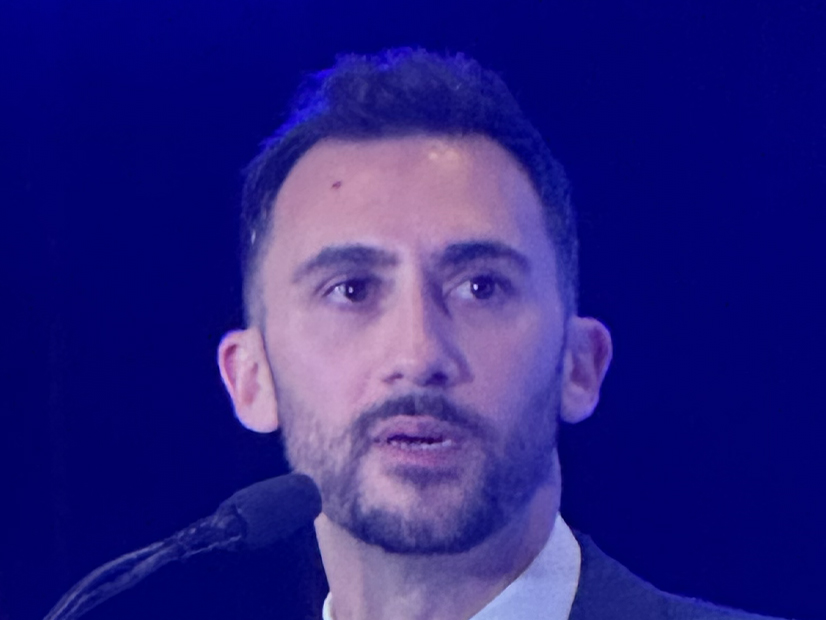
Stephen Lecce, Ontario’s minister of Energy and Mines, highlighted Canadian leaders’ cooperative response to U.S. pressures, saying he wants Carney to succeed even though they are in different parties.
“This country is an island of stability in a sea of chaos,” Lecce said. “We’re working with the federal government in good faith on these matters, because in this moment, frankly, we’re on the same team. … You don’t hear [that] when I’m traveling the world. I will tell you, many of these subnational and national governments of different parties, they’re not on the same page. … That’s a Canadian value and something I’m proud of.”