Texas
AEP
The Trump administration announced billions of dollars in investments from a deal it struck with Japan, which will help build natural gas plants to serve hyperscale data centers, including at a defunct uranium production site owned by DOE in Ohio.

AdminMonitor
The Texas Public Utility Commission filed a proposed rule change that would establish interconnection standards for large load customers and support business development while maintaining system reliability.

Patrick Rhode Strategies
Texas Gov. Greg Abbott has appointed former infrastructure developer Patrick Rhode to the state’s Public Utility Commission, bringing the agency to its full five-person complement.

© RTO Insider
Figures in the energy industry are casting doubt on the White House’s proposal to shield ratepayers from the costs of interconnecting large loads, saying it ignores the jurisdictional responsibility between regulatory authorities.
ACI
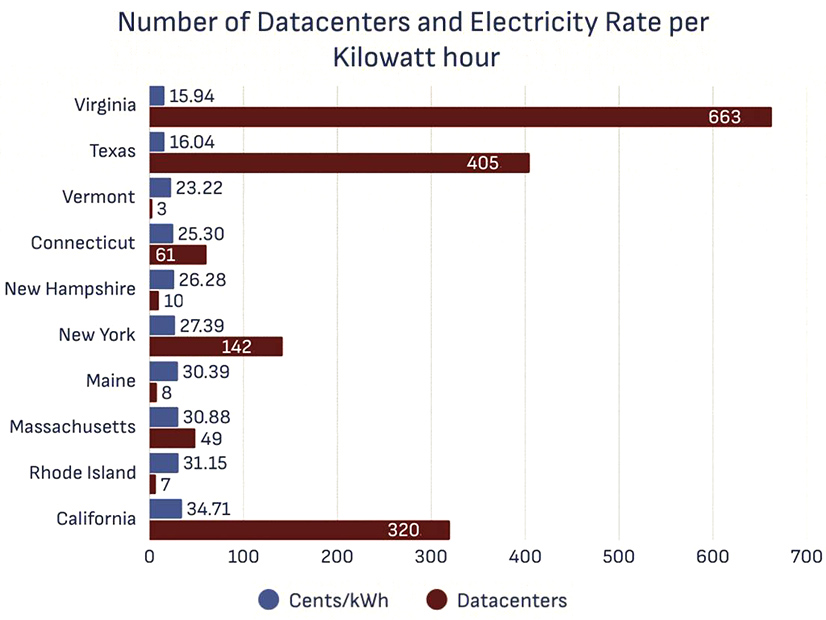
Data centers have become the whipping boy of high electric bills; consumers believe they are paying higher rates because of these power-hungry server farms. However, it is not that simple, writes Kristen Walker of The American Consumer Institute.
ERCOT
ERCOT plans to use a third workshop to inform the discussion with stakeholders on the Dispatchable Reliability Reserve Service, which faces a June deadline to be brought before the Board of Directors.

AdminMonitor
ERCOT staff have promised more clarity on the link between the initial batch study process for large loads and the subsequent studies and existing planning structure during an upcoming workshop.

© RTO Insider
ERCOT says the critical path for a successful Batch Zero NPRR relies on a series of approval votes in May before the changes go to the board in June.

AdminMonitor
ERCOT says it leaned on Texas’ 15 mobile generating units and an RMR unit during the state’s first major cold-weather event since 2021’s disastrous Winter Storm Uri.

AdminMonitor
ERCOT says there is “broad agreement” from stakeholders that the grid operator’s batch-based approach for interconnecting large loads is necessary.
Want more? Advanced Search