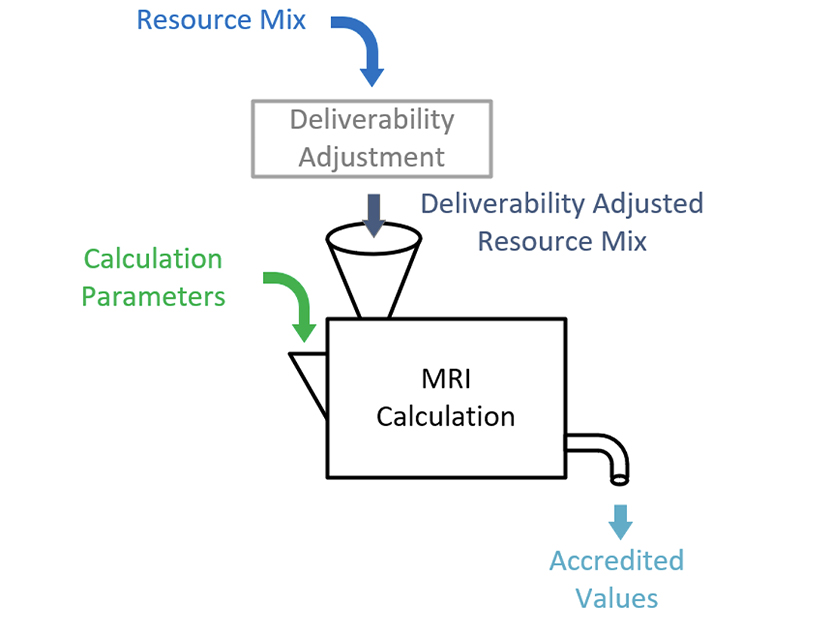
ISO-NE presented a high-level overview of how it plans to account for resource deliverability in its updated capacity accreditation framework at the NEPOOL Reliability Committee on Oct. 22.
Resource deliverability calculations are intended to reflect system constraints that limit a resource’s output during key periods.
“Final capacity accreditation values must consider resource megawatts and the capability of the transmission system to deliver megawatts from resources to the load,” said Alex Rost, director of transmission services at ISO-NE.
He noted that the capacity auction reform (CAR) project will not change the process of determining deliverability through the interconnection process.
However, the new accreditation process will need to update how it accounts for deliverability, which will be used as a model input instead of an “ex-post adjustment,” Rost said.
“The ISO proposes to account for resource deliverability in accreditation calculations through an ex-ante adjustment to the size of a resource to be modeled in the RAA [resource adequacy assessment],” said Marianne Perben, director of planning services at ISO-NE.
ISO-NE proposes to rely on a scaling factor to account for deliverability limits, which would equal the lower value of either 1.0 or the ratio of deliverability value to “dependable capability,” Perben said.
Dependable capability “is an audit-based value reflecting a resource’s expected energy contribution under high load conditions,” Perben said. “The greater a resource’s deliverability value is above its DCap value, the more likely it will be able to provide its capacity to the system without transmission limitations.”
Each resource’s DCap value will be calculated based on its median performance during peak hours, which ISO-NE plans to define as the top 500 load hours from the relevant season from the prior year.
The value will be calculated for all resources except “demand capacity resources participating with energy efficiency measures,” said Jennifer Engelson, supervisor of resource qualification at ISO-NE. She added that energy efficiency resources “report a single seasonal performance estimate and therefore, hourly performance values are not available.”