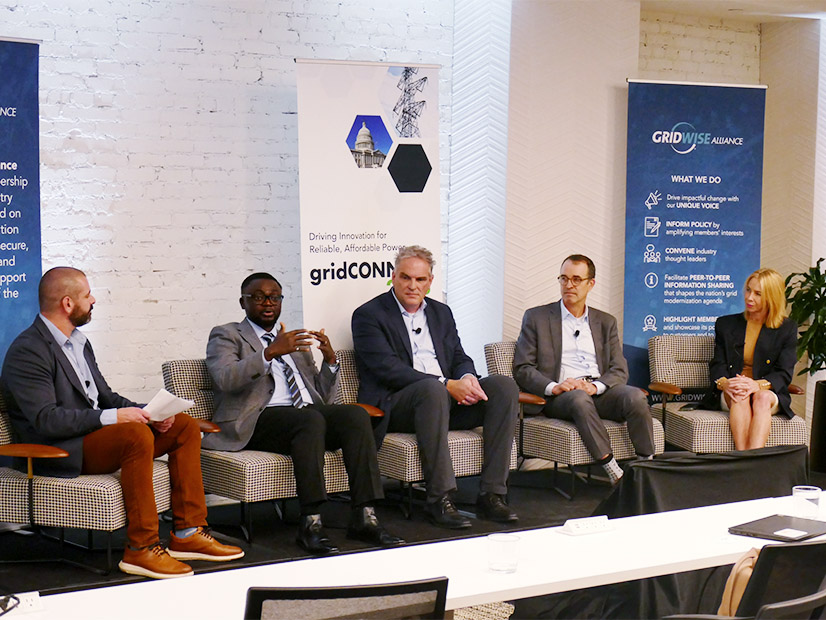
WASHINGTON — The Department of Energy is working to avoid additional generator retirements and bring new units online as the grid sees demand spiking because of new large loads coming online, acting Under Secretary of Energy Alex Fitzsimmons said at this year’s gridCONNEXT conference.
“We’re seeing a precipitous decline in resource adequacy across virtually every region, every RTO and ISO, over the next 10 years,” Fitzsimmons said at the event, held by the GridWise Alliance on Dec. 9-10. “We cannot allow that to happen if we’re going to deploy the generation we need to win the AI race and reshore manufacturing. And so, a big part of that is stopping the premature retirement — in many cases, the policy-driven premature retirement — of reliable assets that we need.”
DOE has used Section 202(c) of the Federal Power Act to keep several plants running this year. Fitzsimmons said that a number of utilities also have delayed retirements after the department’s actions.
“We understand the urgency of the moment, and so a big part of our strategy is to optimize the existing system,” Fitzsimmons said.
Secretary Chris Wright told attendees of a natural gas conference that DOE was considering ways to leverage backup generation that many large power customers, from big box stores to data centers, use to help balance the grid. Fitzsimmons confirmed that work.
“This has been a fascinating thought exercise,” Fitzsimmons said. “There was not one big, beautiful list of backup power like behind-the-meter generation of data centers and large industrial customers, unfortunately, and no one really knew where it was. And so, we’ve been working to compile a list of backup generators, because we know there are tens of gigawatts of backup generators, diesel, natural gas, batteries and others.”
That backup generation should not be used most of the time, but it could help to shave down peak demands on the grid and be used to avoid blackouts, he added.
Making the grid more efficient is part of that work, with DOE looking to use advanced transmission technologies to help meet load growth.
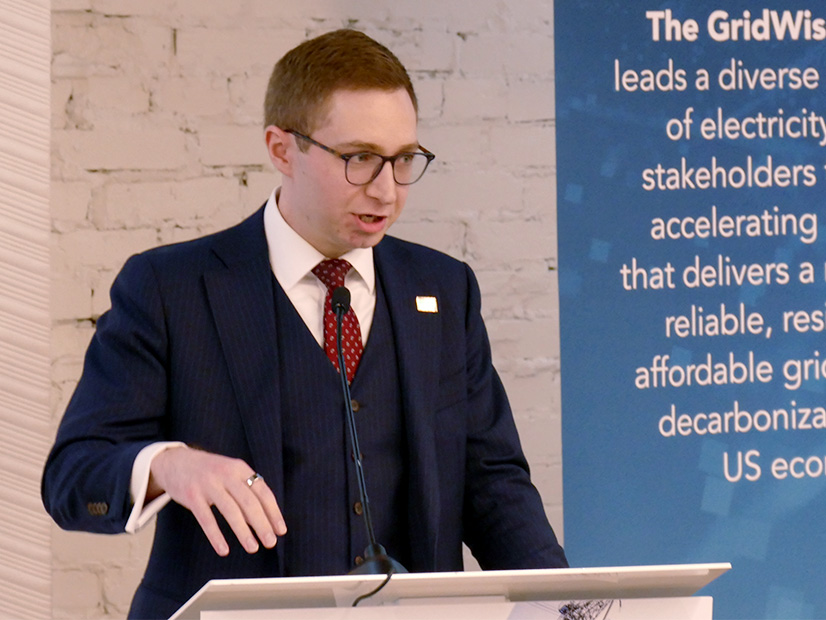
“The criteria that we’re applying to transmission buildout, and especially reconductoring, is targeting specific areas that have significant load growth; that have sufficient existing generations,” Fitzsimmons said. “If you reconductor a line and don’t have enough megawatts to push through it, then you haven’t done anything so that we can increase incremental load-serving capability. That’s our target.”
Rep. Julie Fedorchak (R-N.D.) said she is focused on transmission issues in Congress after a year running the National Association of Regulatory Utility Commissioners as its president. The conference came a couple of days before Fedorchak introduced the High-Capacity Grid Act, which would require FERC to establish a best available transmission conductor standard and then make it so utilities get guaranteed cost recovery when using that technology.
“Forecasts indicate the United States will need at least 100 GW of new power in the next five years — more than we’re anticipated to bring online,” Fedorchak said in a statement. “To meet this record demand, we need to optimize our existing infrastructure, which is exactly what the High-Capacity Grid Act does.”
Another bill Fedorchak recently introduced on transmission is the FAIR Act, which she said would prevent ratepayers from paying for transmission projects built to meet clean energy goals in other states. The bill follows a complaint filed at FERC that North Dakota signed onto over MISO’s long-range transmission plan. (See Five Republican States File FERC Complaint to Undercut $22B MISO Long-range Tx Plan.)
“Transmission is really valuable, but not all transmission is needed,” Fedorchak said at gridCONNEXT. “And if we don’t set the right signals to the market, we’re going to end up building a grid that is far more expensive than we need.”
As a member of the North Dakota Public Service Commission, Fedorchak had argued in MISO stakeholder forums that renewable generators should have to pay for transmission that brings them to market, but many such lines were included in its recent long-term plans with postage stamp cost allocations that applied to North Dakota and other states without renewable mandates.
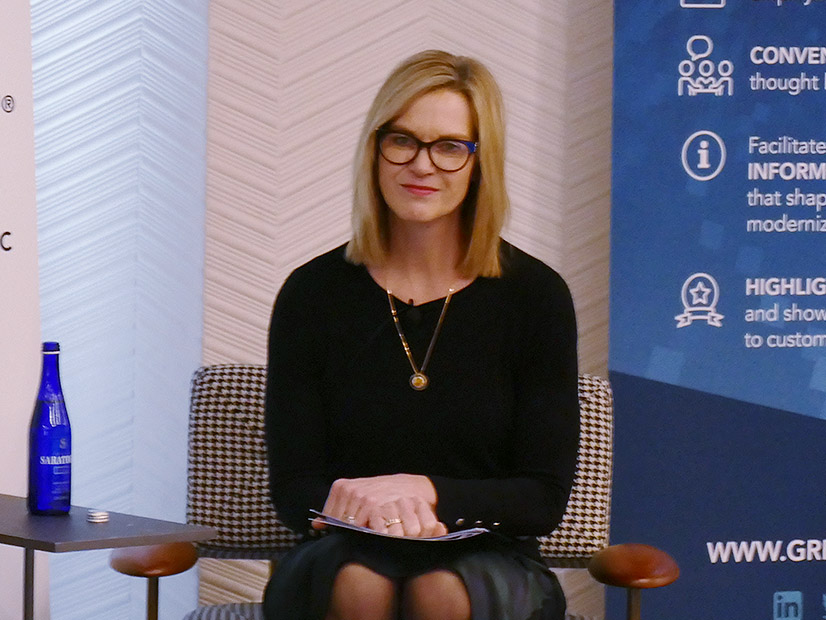
“Other states have very aggressive climate goals; lines are being built to meet those, to bring on the power to help them meet those goals, and my ratepayers and many others are paying the same prices,” Fedorchak said. “It’s not fair.”
Rep. Sean Casten (D-Ill.) said many of the actions of the Trump administration were working against energy development: Permits have been slow walked or pulled at the last minute; load guarantees have been revoked; and funding has been pulled for many programs. He said the private sector is taking note.
“A company came to me early on in this term, and they said, ‘We’re trying to figure out with our lawyers whether we need to rewrite the standard force majeure language in our contracts, because we get a force majeure out of acts of war, civil disobedience [and] change in law. We don’t have any language in there about what happens if the U.S. federal government refuses to enforce the law.’”
Congress could have done more to defend its own powers and the rule of law, but Casten said Republican leadership has declined to do so.
He also argued FERC could do more with its authority than it has, specifically noting that it has been authorized to do performance-based ratemaking for a decade and has not yet.
“FERC could exercise more authority than they have on being a permanent backstop for transmission,” Casten said. “We could push them to do that, but they’ve been a little bit reluctant to go into that. … FERC needs to be a totally independent agency, because any conversation about rate equity and cost allocation goes sideways.”
Since former Sen. Joe Manchin (I-W.Va.) declined to support former Chair Rich Glick for a second term, commissioners have had to pay more attention to politics, Casten said. That trend is likely to continue if the Supreme Court overturns a key precedent on agency independence. (See Supreme Court Justices Seem Skeptical on Agency Independence.)
The policy debates in Washington come as power prices have become part of an affordability crisis, Brattle Group Principal Peter Fox-Penner said. Part of his talk at the conference explained a study Brattle did with Lawrence Berkeley National Laboratory on what has driven power price increases in some states. (See LBNL Study Examines Drivers Behind Higher Power Prices in Some States.)
While the study generally predates the boom in demand growth because of new large load customers, it found that states benefited from spreading the costs to a growing customer base, leading to lower rates for all. Adjusting for inflation, states on the coasts had prices rising more during the study’s timeline of 2019-2024.
“I think this picture is changing going forward,” Fox-Penner said. “As the data centers kind of look for cheaper power, they are gravitating to the center of the country. We see that quite a bit in our retail practice, and that is going to reduce regional disparities going forward, even though I think they will remain quite large.”
That means the affordability issues are going to be felt in more states, and consumers on the lower end of the income scale are facing tough choices. A quarter are behind on their bills; 20% set their thermostat at a temperature that is unhealthy; and 34% have to choose between which necessities to pay for: energy, food or medicine.
“These numbers are as high and as tragic as I have ever seen them in my practice, going back quite a few decades,” Fox-Penner said.
The energy poverty numbers have looked bad in the past, whether it was 2008’s great recession or the oil crisis in the 1970s, but now they are part of a broader affordability crisis facing Americans.
“That has implications for us,” Fox-Penner said. “On the one hand, we have to do as much as we can to help the situation out, because all the sectors that are experiencing these price increases have their own particular causes and their own work to do and to bring them down. But at the same time, we have to recognize that this problem is bigger than us, and we can’t solve it alone.”