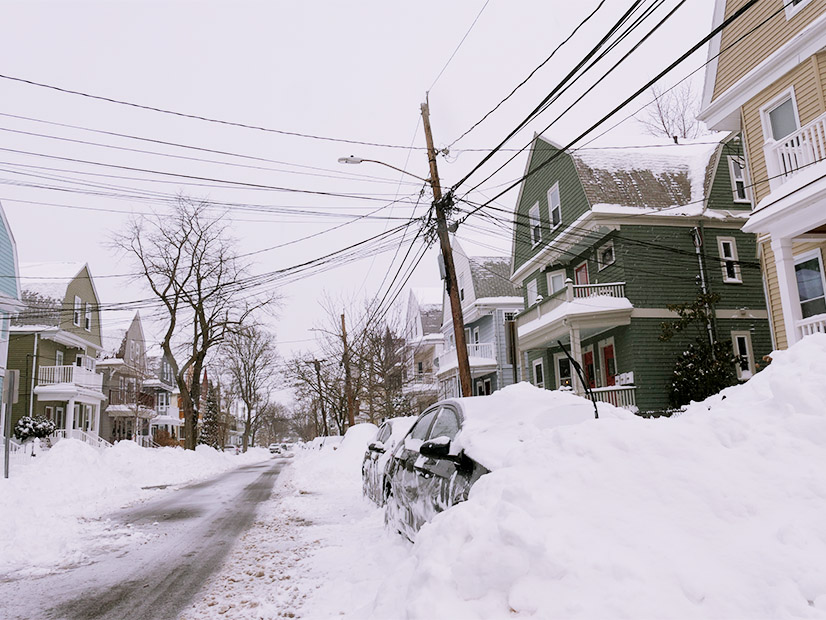
The winter of 2025/26 was the most expensive winter in the history of ISO-NE’s wholesale markets, driven by the lowest average temperatures in 20 years.
Energy market values totaled about $6 billion in December, January and February, more than twice the total value of the past two winters combined, according to ISO-NE data. Energy costs hit monthly records in both December and January, and the RTO experienced its second-highest energy market costs for February.
Total winter energy use reached its highest level since 2014, while the winter peak load hit its highest level since 2018.
The RTO’s announcement of record winter prices comes amid significant uncertainty about potential future price spikes triggered by the war on Iran.
Asked at the NEPOOL Participants Committee on March 5 about potential impacts of the war, ISO-NE CEO Vamsi Chadalavada said, “The markets are not expecting there to be a big disruption to the New England markets over the next 18 months, but that could change as events unfold.”
The war has spurred global concerns about oil and natural gas prices, as about a fifth of all LNG is shipped through the Strait of Hormuz, largely to meet demand in Asia.
In New England, wholesale electricity prices are highly correlated with gas prices, and much of the Massachusetts gas system relies on LNG imports.
In 2022, Russia’s invasion of Ukraine was a “large factor” in a major spike in New England gas prices, according to the ISO-NE Internal Market Monitor. Annual average natural gas prices in the region more than doubled in 2022 relative to the prior year, the IMM reported.
Regarding cybersecurity, Chadalavada said ISO-NE has seen a “sharp uptick in attempts to penetrate infrastructure” since the war began. He said the RTO has not been able to pinpoint from where these cyber threats are originating.
He said ISO-NE is working to be “as vigilant as we can” and hopes that “all the preparation that we’ve done is sufficient.”
Also at the meeting, Stephen George, vice president of system and market operations at ISO-NE, provided additional details on the extended cold snap the region faced in late January and early February.
Between Jan. 23 and Feb. 10, temperatures in New England averaged 11.3 degrees Fahrenheit below normal, he said. Over this period, gas generation accounted for 34% of energy, followed by oil at 22%, nuclear at 19%, net imports at 13%, renewables at 8% and hydro at 4%.
To allow generators to operate at their maximum capabilities, ISO-NE obtained a waiver from the Department of Energy enabling specified units to exceed emissions limits. Twenty-six units reported exceeding limits while the waiver was in place, he said.
The elevated reliance on oil-fired generation was driven by record gas prices during this period, causing dual-fuel units to switch to burning oil.
He noted that the region’s generators burned about 111 million gallons of fuel oil during the cold stretch, more than the total consumption for any entire winter since ISO-NE started tracking in the winter of 2015/16. This caused significant depletion of the fuel oil inventories, which dropped to about 20% of total regional storage capacity, the lowest recorded level by the RTO.
Inventory levels have risen following the event and are on track to rebound to pre-winter levels by mid-March, he said.
Wind power accounted for 54% of renewable generation, while solar accounted for just 5% of renewable production. Solar was significantly inhibited by snowfall and sustained cold weather during this period.
ISO-NE has noted that behind-the-meter solar in the region produced just 41% of its forecast potential during this period because of the impact of snow cover.