The New Jersey Board of Public Utilities is looking into the feasibility of building a new nuclear electricity generator as a way to meet the expected chronic energy shortfall over the next decade.
A May 6 request for information says the state is looking to “explore the role and opportunity to develop new nuclear energy resources to advance the state’s affordability, resource adequacy and clean energy goals.”
The state’s draft Energy Master Plan, released March 13, predicts a 66% increase in electricity demand by 2050 if the state pursues current policies and a far greater increase if the state uses a more aggressive strategy of electrification.
Public reaction has been intensified by a 20% increase in the average electricity bill starting June 1, stemming from the state’s basic generation services (BGS) auction in February. State officials say the auction outcome largely was shaped by the PJM capacity auction in July 2024, which concluded with prices in some cases 10 times higher than in the previous auction.
New Jersey officials, and those in other states, have blamed PJM for failing to ensure the pipeline of new generating plants is sufficient to meet growing demand. PJM argues the expected shortfall stems from a sudden surge in demand — due to the needs of artificial intelligence data centers, EVs and other uses — that the RTO could not have foreseen. In addition, state decisions have closed fossil fuel plants at a faster rate than new, mainly clean energy plants have opened.
Christine Guhl-Sadovy, president of the New Jersey Board of Public Utilities (BPU), in a statement announcing the request for information plan, said “New Jersey, and the region, need more electricity, and since Day 1 of the Murphy administration, our commitment to supporting our existing nuclear fleet has never waned.”
“As we work to push PJM to improve [its] interconnection queue to allow more resources like solar and storage to be built in the short term, expanding our nuclear fleet offers the Garden State an opportunity to add new generation to our resource mix, improving reliability and affordability for ratepayers in the long-term,” she said.
Exploring New Sources
The PJM 2025 Long-term Load Forecast predicts electricity demand in the region will grow by nearly 40% in the next 14 years.
Gov. Phil Murphy (D), said in a press release that “as part of my administration’s all-of-the-above energy strategy, we continue to explore ways to bring online new sources of electricity generation and improve and expand our nuclear fleet to grow the supply of resources as the U.S. faces increasing demand.”
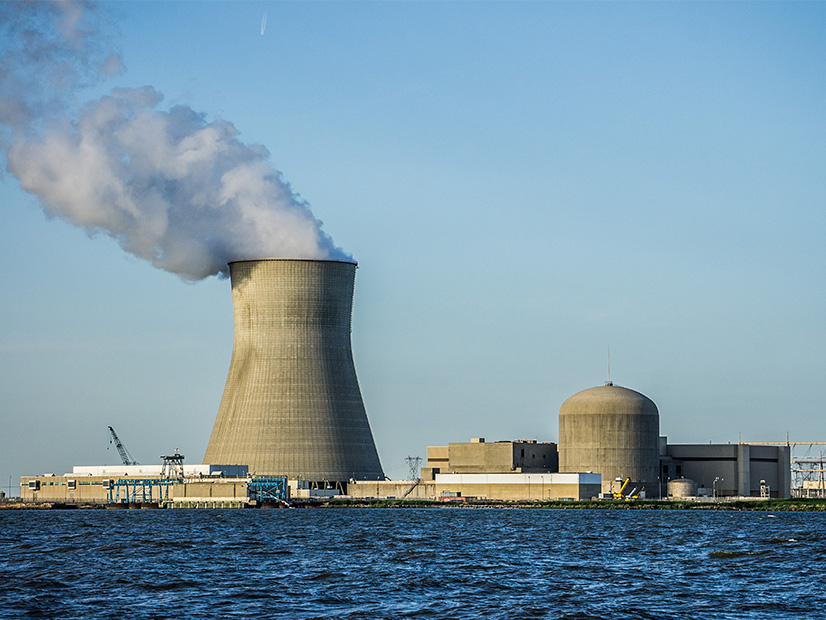
Nuclear-generated electricity accounts for about 40% of the state’s power and 85% of the state’s emission-free power. The state has three existing nuclear generators — Hope Creek, Salem 1 and Salem 2 — in South Jersey. The state has paid $100 million a year since 2019 under the zero-emission certificate (ZEC) program to ensure they remain open. Hope Creek is operated by Public Service Enterprise Group (PSEG), which operates the other two with Exelon. (See NJ Legislators Consider $300M for Grid Upgrades.)
The state closed the ZEC program in February 2024 after PSEG and Exelon, the only nuclear plant operators in the state, opted to apply for more lucrative subsidies under the federal Inflation Reduction Act. (See NJ Closes Nuclear Subsidy Process as PSEG Looks to Feds.)
Questions on Location, Size, State Role
The RFI asks respondents to answer questions in six categories, ranging from “the role of nuclear in New Jersey’s electricity production” to “nuclear safety and nuclear waste” to “the role of state government.”
Among the questions posted in the RFI are these:
-
- What roles should various scales of nuclear power play in New Jersey?
- Large-scale nuclear facilities (>300 MW)
- Small modular reactors (51 to-300 MW)
- Microreactors (1-50 MW)
- How could thermal energy from such facilities (fission-based or fusion-based reactors) be beneficially used?
- What areas, regions, categories of sites or specific sites in New Jersey might be suitable (or unsuitable) for siting new small-scale or microreactor nuclear facilities?
- What actions, if any, should the state take to facilitate the development of new nuclear electric generating capacity in New Jersey?
- What stakeholder processes are needed to support the responsible development of nuclear electric generating capacity in New Jersey?
- What roles should various scales of nuclear power play in New Jersey?
Questions on Location, Size, State Role
The possibility of New Jersey expanding its nuclear fleet has been much discussed. While Republicans have floated the idea frequently, analysts say the time needed to build a new generating plant is several years longer than for other electricity-generating facilities. Cost overruns and delays are common. Supporters say small modular reactors can be built more quickly.
The state draft energy master plan anticipates nuclear energy production increasing under the three electrification policies modeled in the plan, with a rise of 50% over the current level by 2050. At least two of the five Republicans seeking the party’s nomination in the state gubernatorial race have backed greater use of nuclear plants to generate power.
At a legislative hearing in March, Guhl-Sadovy said she asked the U.S. Department of Energy if the Oyster Creek Nuclear Generating Station, a 1,930-MW reactor in South Jersey that is being decommissioned after closure in 2018, “could be repowered.”
“Unfortunately, the decommissioning is too far along,” she said.
The Assembly Telecommunications and Utilities Committee on May 5 unanimously backed a bill, A5517, that directs the BPU to work with the New Jersey Department of Environmental Protection and New Jersey Economic Development Authority to study the possibility of developing small modular reactors in the state. The bill appropriates $5 million from the state general fund and authorizes the BPU to obtain additional funding.
“Small modular reactors offer a carbon-free, safe and scalable energy solution that compliments the state’s energy and environmental goals,” the bill states.