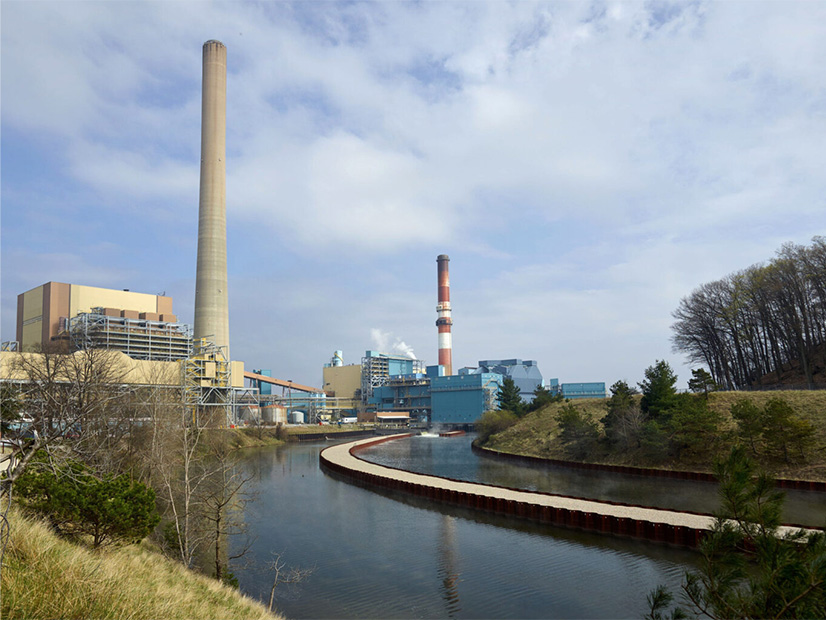
Consumers Energy filed a complaint with FERC against MISO seeking compensation for keeping open the J.H. Campbell coal plant this summer as ordered by the U.S. Department of Energy.
Consumers Energy filed a complaint with FERC against MISO seeking compensation for keeping open the J.H. Campbell coal plant this summer as ordered by the U.S. Department of Energy under Federal Power Act Section 202(c) (EL25-90).
The utility filed the complaint because MISO’s tariff lacks a method to ensure it gets paid for reversing the retirement of the 1,400-MW coal plant, which had been set to shut down May 31. Instead, Consumers has been bidding the plant actively into MISO’s markets and producing energy there when dispatched. (See DOE Orders Michigan Coal Plant to Reverse Retirement.)
The firm also said it has procured fuel, done review and planning for maintenance, and taken other steps to comply with the order. It has set up an account to track all those costs.
DOE’s order calls on Consumers and MISO to file any needed waivers with FERC to ensure the firm gets paid for keeping the plant open.
Consumers was not requesting any specific dollar figure in the filing, saying it will make a filing when DOE’s emergency order is over that explains the just and reasonable costs it incurred in running the plants, minus market revenues.
The utility and MISO agree the tariff lacks a mechanism for the utility to recover costs from complying with the order, and MISO cannot unilaterally offer the utility a rate agreement under Section 202(c). The utility asked for fast-track processing of the complaint and to make the compensation mechanism effective May 23, the date of DOE’s order.
“As soon as the DOE order was issued, Consumers Energy began incurring and will continue to incur costs to comply with the DOE order’s directive to ‘take all measures necessary to ensure that the Campbell plant is available to operate’ for the duration of the DOE order,” the utility said. “The precise order costs will not be known until after the DOE order expires on Aug. 21, 2025.”
FERC has the authority under Section 202(c) to approve compensation for any plants required to stay open under the law. That authority is supplemented by Section 309, which gives the commission the “power to perform any and all acts, and to prescribe, issue, make and rescind such orders, rules and regulations as it may find necessary or appropriate to carry out the provisions of this act.” That part of the law gives FERC the authority to set up rules for cost recovery before those costs are fully known, Consumers argued.
The utility said the costs should be assigned to MISO Zones 1 through 7, which make up the RTO’s northern and central regions, the reliability of which DOE said it was addressing with the order.
“Michigan load will of course pay its fair share of Consumers Energy’s order costs (net of market revenues) because, as the DOE order points out, MISO Zones 1-7 (i.e., the northern and central zones) include Michigan. But Consumers Energy believes that, whatever the order costs turn out to be after netting market revenues, they should be allocated beyond the state of Michigan,” it said. “Consumers Energy customers are already paying for the cost to fulfill the capacity needs of Zone 7.”
DOE’s order noted that while the plant’s retirement was approved by MISO, and Michigan has adequate supplies without it, the north and central zones still face elevated reliability risks this summer.
Beyond the FPA, the government is constitutionally required to pay Consumers for running the plant the summer, the utility argued.
“Specifically, the Fifth Amendment Takings Clause bars the federal government from taking private property for public use without just compensation,” Consumers said.
The utility filed its complaint under Section 206, but it said this was done to cover its bases. In the event FERC finds it lacks the authority under sections 202(c) and 309, it can find the MISO tariff unjust and unreasonable under 206.
“Consumers Energy will incur costs associated with the DOE order, but the MISO tariff does not presently include a mechanism that would allow MISO to compensate Consumers Energy for such costs or allocate those costs to load in the MISO region,” it said. “The MISO tariff is thus unjust and unreasonable as applied to Consumers Energy and its compliance with the DOE order, and the commission should order MISO to adopt a tariff revision to provide a cost recovery mechanism for Consumers Energy’s order costs net of market revenues.”