INDIANAPOLIS — The 2025 Mid-America Regulatory Conference tackled themes on meaningful public engagement, nuclear options, bill affordability, and diversity, equity and inclusion (DEI) programs falling out of favor.
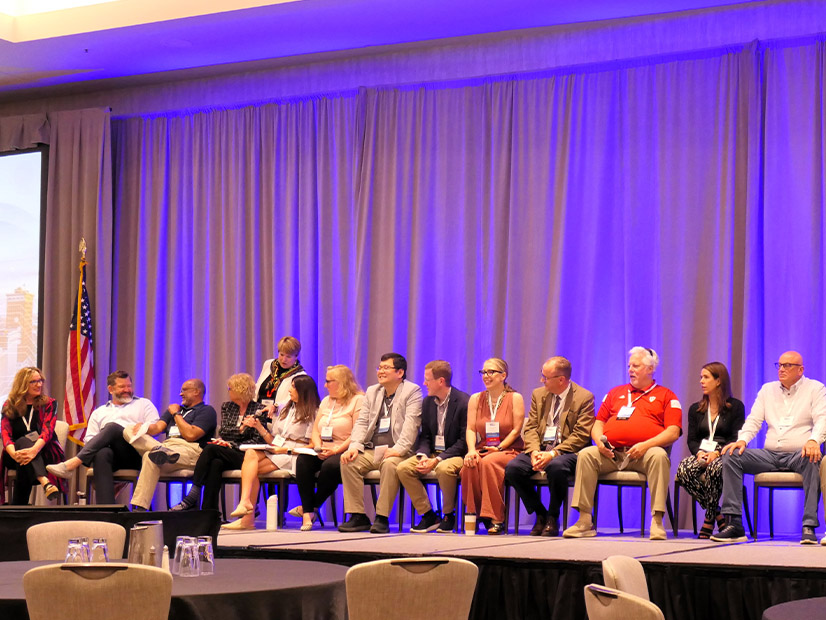
Panelists at the June 22-25 conference appeared to agree that focus needs to stay on underserved communities; affordability should be top of mind; and microreactors will make an appearance to handle load growth in the next decade.
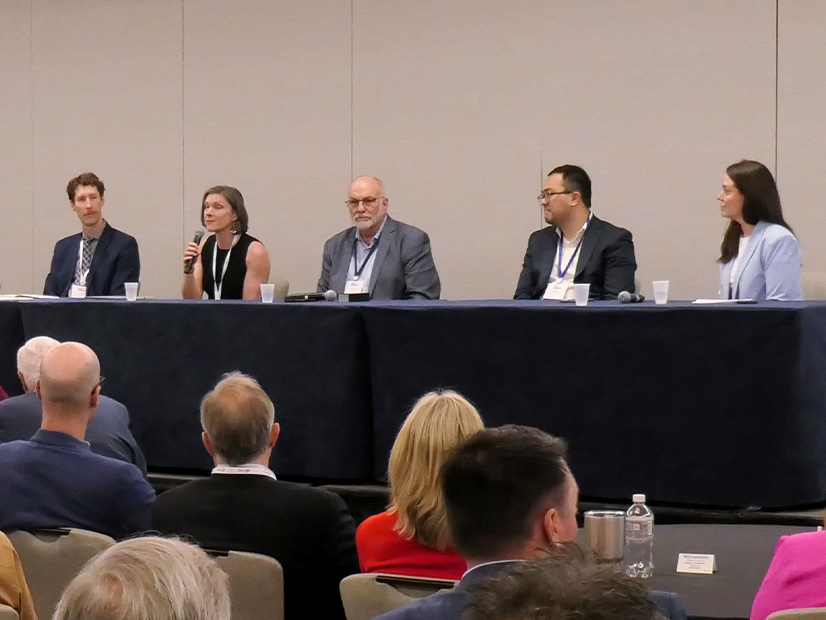
Andrew Valainis, an associate at the Regulatory Assistance Project, said people tend to get interested in electricity only when their rates go up.
Valainis said commissions should create public access and engagement plans as part of annual work plans. He also said that “public notice” and “publicity” for meetings are two different things. While a notice is a legal formality, ensuring that at least some of the public is aware of a consequential meeting is a different matter.
Despite more ways than ever for the public to participate in the regulatory process, “people don’t really care,” said Sarah Moskowitz, executive director of the Illinois Citizens Utility Board.
“More often than not, it’s still all of us talking to each other,” Moskowitz said, gesturing to the audience.
She asked regulatory staff to think about why they want public involvement: to “check a box,” generate ideas, get a bead on sentiment, or if they really want public voices to shape the outcome of a proceeding.
“We can’t have this conversation without being honest about what we want from the public,” Moskowitz said. She also said people tend to show up when they are angry. She said if commissions want participation on a “Wednesday night” for an “esoteric, boring” meeting, the public needs to be educated on the regulatory process.
Moskowitz also said it’s “a lot” to expect frontline groups who have been involved previously in commission matters to continue to show up regularly to meetings. She questioned whether commission staff should try to engage the public directly or if public input can be solicited through community-based groups. Either way, she said, regulatory staffs should conduct more community outreach and make webpages easier to navigate with plain language.
Moskowitz said consumer advocate groups “can’t do it all” and said they need some help from the states.
Former MISO COO and President Clair Moeller had a somewhat darker take on public participation. Moeller said he learned throughout his career that there’s a difference between “the public interest and the interested public.”
“People who are educated and have a voice have an outsized influence,” he said, mentioning “well-funded” groups that pay individuals to speak at meetings and submit comments. The regulatory processes seem set up to be confrontational and invite litigation because of their opacity until outcomes are announced. “That’s something I’ve noticed,” he said.
Moeller urged industry players to speak in plain language and not use technical terms. However, he said, “the fact that a lot of these cases end up in litigation” cannot be ignored and has a chilling effect on openness. He recalled he once gave a presentation to answer questions, and the PowerPoint presentation showed up as an exhibit in a state rate case before he could make the drive home.
He urged the industry to create an environment where “it’s safe to answer the question.”
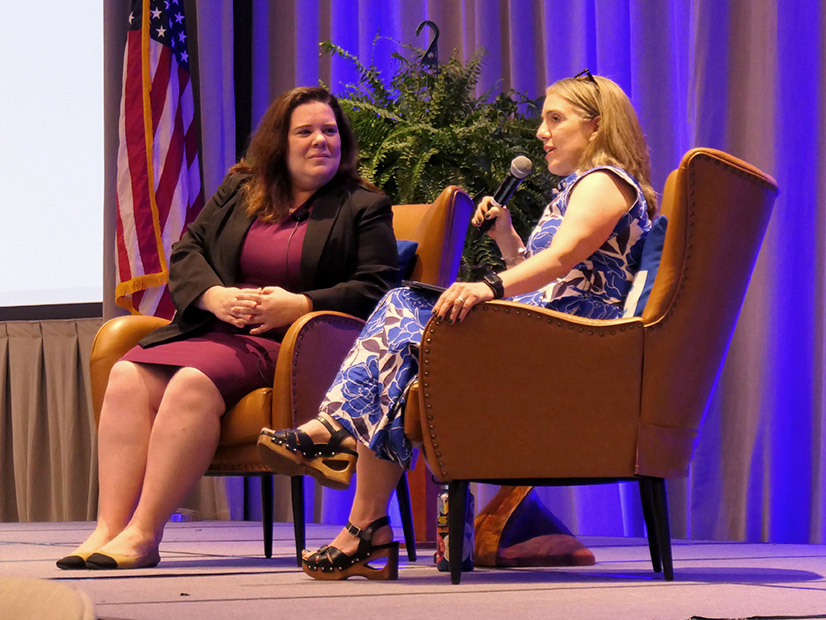
During a “fireside chat,” FERC Commissioner Lindsay See and Indiana Utility Regulatory Commissioner Sarah Freeman both said they have noticed an uptick in legal challenges to commission orders in recent years.
Freeman said she hoped the increased activity is a result of a more informed public. “That matters so much for the outcomes we deliver,” she said.
See said that while clerking for Judge Thomas B. Griffith, of the D.C. Circuit Court of Appeals, she was “struck” by the real-world implications of complex law interpretation. See said she is a huge believer in public service and state service and “genuinely considers” FERC in a partnership with the states.
“I learned a lot about how important the state voice is,” See said of her time as West Virginia Solicitor General.
See said she appreciated the divergence of policy in the midcontinent region and assured attendees that she reads states’ individual comments on FERC filings.
DEI in Actions, not Words
The recent national political backlash to DEI hiring practices and considerations in billing did not deter some panelists from appealing for their continuation.
Michelle Fleurantin, a fellow at the Institute for Policy Integrity think tank at the New York University School of Law, pushed back against the notion that the energy industry exists in a “post-DEI” world. However, she said it’s “scary and challenging” for regulators to conduct targeted outreach for historically disadvantaged ratepayers right now.
Fleurantin said regulators may have to confront a “sticky situation” in which they publicly break with messaging from the federal level and announce intentions to assist burdened communities.
Fleurantin asked regulatory staffs to reflect on the difference between the essential need to hear diverse voices in decision-making and reacting to an “unreasonable chilling effect” from state and federal lawmakers. She said it’s necessary for regulators to consider equity and inclusion in their work to figure out if initiatives “actually work on the ground” and discern whether decisions could risk putting “large swaths” of a population in danger.
“DEI is obviously super politicized, but we need to home in on outcomes,” Fleurantin said.
Fleurantin said continuing to set aside a significant percentage of investment for underserved communities should continue. She said although it’s by now a cliché to recommend people call their elected officials, she advised them to do so to encourage continued funding. However, she allowed that it’s difficult for the public to understand how to become involved in utility decisions. “It’s very opaque; it’s very technical; there’s definitely a high barrier to entry in these spaces.”
Panelists also touched on how DEI works in hiring practices in today’s political climate.
Tim Simon, principal and founder of TAS Strategies and former member of the California Public Utilities Commission, said his firm is advising clients that there is a difference between a federal mandate and state ambitions.
“Once upon a time, they called them ‘states’ rights,’” he said and noted that there’s now a “friction” between the federal government and some states. He noted that Indiana Gov. Mike Braun (R) broadly replaced the DEI efforts in the state with a “merit, excellence and innovation” philosophy.
“I don’t think it’s time to really pull out our bayonets. I think we have more in common,” Simon said. He stressed that “our workforce and our suppliers are an issue of national security” and said skilled workers across the country can fill needs. He said the best candidates can earn jobs while simultaneously satisfying divergent aims from states and the federal government.
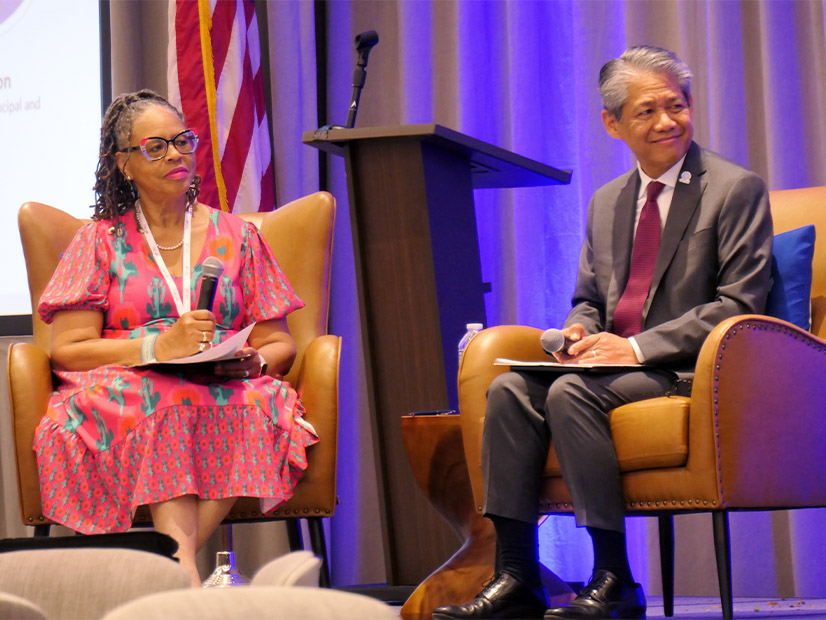
“I think we have to get away from the nomenclature and do the work,” he said, adding that regulators have more work to make sure rates are just and reasonable. He said more and more households are being pushed into low-income status, which isn’t sustainable for the utilities’ business model.
“Do we have a diverse pool of candidates every time we have an opening? Yes,” Commonwealth Edison CEO Gil Quiniones said. He said those diverse candidates then are sized up by a diverse hiring committee, with the best candidate selected.
“I would stack up our team against any utility in the country,” he said.
Affordability Concerns
RMI Senior Associate Maria Castillo said research shows U.S. households increasingly are forgoing other expenditures to afford their energy bills.
Oracle Director of Regulatory Affairs Julia Friedman agreed there is an energy affordability crisis. She said when electricity bills rise 30 or 40%, it pushes a lot of customers who never have needed bill assistance into needing help. However, she said utilities’ increases are coinciding with a “stagnation” in customers turning toward assistance programs.
Friedman said according to Oracle’s research, customers say their mortgage or rent payments and utility bills are the household expenses they feel they have the least amount of control over.
“We have to overcome … customers feeling like they have no control over their bills,” Friedman said. She said utilities can provide an online one-stop shop for discounts and time-of-use programs.
Chris Villarreal, an associate fellow at R Street Institute, said a state-funded consumer advocate coupled with state regulators can apply “some amount of pseudo-competitive pressure” on monopoly utilities to keep their rates in check.
Villarreal said customers now have more viable options available for them to supplement their supply, mentioning rooftop and community solar.
“There’s not one place that provides the electricity. Now, there’s one distribution system that delivers the energy,” he said.
Julia Selker, of Grid Strategies’ Working for Advanced Transmission Technologies Coalition, said grid-enhancing technologies can pull more monetary value from the grid and help lower bills.
Selker said if transmission operators were to place a dynamic line rating on a highly congested line, it would pay for itself in a weekend. She said even a “walking” wind speed can cool lines down enough to carry 30% more power.
Selker said at this point, utilities’ hesitancy to deploy grid-enhancing technologies is only “cultural.”
Once Again, Load Forecasts
No industry conference is complete in 2025 without a debate on load growth, and MARC 2025 delivered.
RMI Principal Lauren Shwisberg said load forecasts should be taken “seriously, not literally.”
She said RMI has found that historically, utilities over-forecast their load by about 17%. She said while under-forecasting poses risks to reliability, over-forecasting threatens affordability.
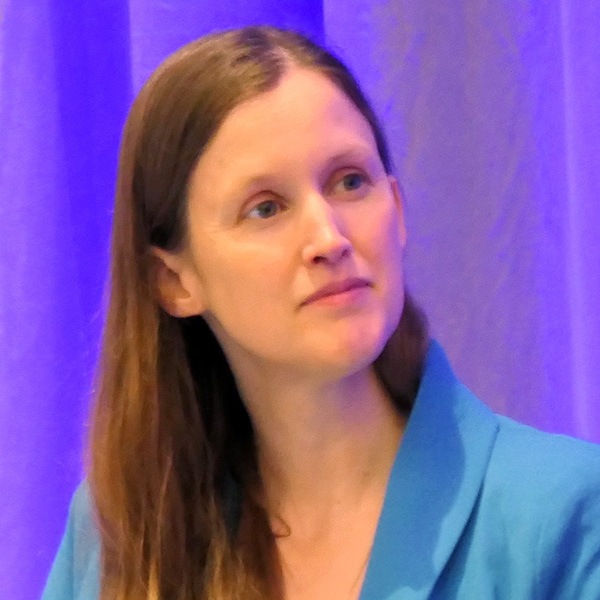
“We’re operating at margin, and we’re doing a pretty darn good job,” MISO Executive Director of Transmission Planning Laura Rauch said. But Rauch said operating without the 25% cushion that existed when she was a “baby engineer” makes grid planning more difficult.
Rauch said the urgency surrounding the need for construction often reminds her of a saying that “the best time to plant a tree was 20 years ago if you want the shade now.”
“The next best time is today,” she said, later adding: “You can’t piecemeal your way to serving a city-size load.”
Even with a co-located generation plan, data center loads largely plan to draw on the system when their own generation is unavailable and inject into the grid when they aren’t fully using their on-site power source, she said. Utilities, data center customers and MISO need to match “desires and incentives with commitments” to weed out speculative announcements.
Google’s Tyler Huebner addressed the possibility that “six to 10 data centers might become two to three.”
“I don’t want to give the idea that we’re just playing around with load forecasts. The reality is that it’s very complicated to build a data center. … It’s not malfeasance, and it’s not [us] trying to be a bad actor in any way,” Huebner said. He said data center developers must consider the most opportune spots to connect, the availability of generation and optimal siting.
MISO Senior Vice President Todd Hillman said the energy industry is learning to be “dynamic and disruptive” with new technology avenues amid load pressure. He noted that about 97% of MISO’s interconnection queue is solar, wind and battery storage. But he also said MISO is lacking about 31 GW in new generation projects that should have been online by now but are stalled.
“Imagine 31 more gigawatts today. The summer is still going to be hot, but it’s going to be a different story in terms of what we can do,” Hillman said. He said the holdup can be traced to five causes: “People, parts, permitting, politics and pricing issues.”
“Our industry represents 5% of the economy, but it’s the first 5% of the economy,” ITC Holdings CEO Linda Apsey said.
Apsey noted that the American Society of Civil Engineers rated U.S. energy infrastructure a “D+,” which isn’t going to cut it for a grid that will see rising demand from data centers and manufacturing onshoring. Apsey said the score is the same as 20 years ago, despite pains since then to refurbish and build out the aging grid.
“Time is of the essence, and reliability and resiliency is of the utmost importance,” she said.
Apsey said the last time the country saw material load growth was in the 1970s when a wider selection of home appliances and home air conditioning took off.
She said utilities don’t have a choice but to accept the economic opportunity that data centers present or risk losing them to other states or regions. “For them, it’s a race. They have to be first to market.”
The Nuclear Option
“I don’t think you can walk into a room and not hear about data center growth,” Constellation Energy Vice President of Strategy and Growth Colleen Wright said.
Wright said there’s a “perfect storm” of conditions that can help get new nuclear built to replace baseload generation.
“I don’t think that window is open forever,” she added.
Timothy Grunloh, principal research scientist at the University of Illinois Urbana-Champaign, said he hopes the university’s plans for a research reactor can show that microreactors “can be built with a predictable schedule; a predictable budget.”
Grunloh is helping to develop a modular microreactor to figure out whether permitting, siting, safety reviews, supply chain or regulatory processes present the biggest barrier to building new nuclear generation. The demonstration reactor will rely on tri-structural isotropic fuel particles, which consist of uranium-based kernels that use graphite as a moderator.
A decade ago, he said he would have characterized the Nuclear Regulatory Commission as a “bogeyman” that tries to “trip up” developers. However, he said his experience working with the NRC is the opposite and said staff are all about, “How do we get you to ‘yes’ safely?”
Grunloh said so far, his team has found that the supply chain presents the biggest challenge.
“Beyond that, all roads go through public perception,” he said. Grunloh said the public’s recent softening toward nuclear energy thus far has been hypothetical. He said that positivity may change once some reactors become reality. Grunloh added that small reactors could be ready in commercial use sometime around 2029.
In a later talk, Gov. Braun said he couldn’t think of anything else “tested to the degree” as nuclear has been to provide future baseload power. He said he thinks U.S. Energy Secretary Chris Wright and the Trump administration should be able to clear regulatory obstacles to scale up new nuclear quickly. In response to an audience question, Braun said he’s open to experimenting with small modular reactors at the state’s military sites.
Braun said he viewed himself as a “conservationist” but in a “practical” way. He said he saw an ongoing spot for coal in Indiana’s energy mix until enough batteries or nuclear generation can be installed.