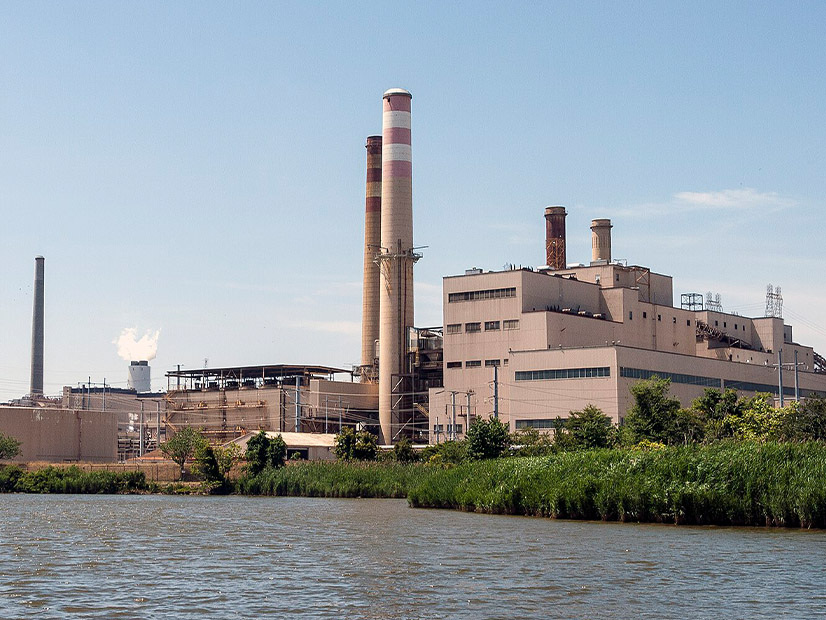
The U.S. Department of Energy has issued an emergency order to lift annual run-hour restrictions on the H.A. Wagner Generating Station Unit 4 located outside of Baltimore to address a shortage of generation in PJM.
The 397-MW generator is limited to operating at a maximum of 438 hours when operating on oil fuel by a consent order that Raven Power, a Talen Energy subsidiary, entered with the Maryland Department of the Environment (MDE). In a July 21 request for the emergency order, PJM stated that the unit had 80 hours remaining before hitting the limit.
The RTO anticipates a need to run the unit throughout the year, particularly when temperatures exceed 82 degrees and loads rise above 151 GW, or to mitigate the impact of transmission or generation outages. In particular, the request stated that if a heat wave similar to the high temperatures seen in late June were to occur again, Wagner would exhaust its remaining run hours. (See PJM Reviews June Heat Wave.)
“This order reduces the threat of power outages during peak demand conditions for millions of Americans,” U.S. Secretary of Energy Chris Wright said in an announcement of the order.
The July 28 emergency order allows the unit to be dispatched beyond the run-hour limit when PJM determines the unit is needed to meet demand during a maximum generation alert or transmission security emergency. It is effective for 90 days, which is the maximum allowed under DOE’s Federal Power Act (FPA) Section 202(c) authority.
The unit’s operation would continue to follow emissions limits. If Wagner is operated “in reliance on this order,” PJM is required to notify the DOE and provide a summary of the hours exceeding the operating limit.
“The inability to run Wagner Unit 4 could result in adverse reliability impacts to service in the Baltimore Gas and Electric (BG&E) territory, and within PJM’s service territory more broadly,” the emergency order states. “For the remainder of 2025, PJM anticipates the continued need to schedule Wagner Unit 4 in order to maintain reliable system operations during projected peak demand and/or increased flows on transmission facilities that are required to serve the BG&E zone.”
In its request, PJM wrote that it has been dispatching Wagner Unit 4 more often in 2025 than the year prior, including during the winter storm that set a new seasonal peak on Jan. 22 and for 100 hours during the five-day heat wave in June. PJM wrote that it was told by the MDE that the consent order could not be modified without changes to the larger state implementation plan, which would not be possible before the end of the year. The plan limited Wagner’s run hours in order to meet the one-hour sulfur dioxide national ambient air quality standards.
Wagner and the co-located 1,289-MW Brandon Shores generator are operating on reliability-must-run (RMR) agreements with PJM to keep the units operational between their desired June 1 deactivation date and May 31, 2029. (See FERC Approves $180M Annually for RMR Deals with Brandon Shores and Wagner Plants.)
The DOE also has used Section 202(c) emergency orders to delay the deactivation of two generators in PJM and MISO: Consumers Energy’s 1,560-MW J.H. Campbell coal plant in West Olive, Mich., and Constellation’s 760-MW Eddystone Units 3 and 4 near Philadelphia. Those orders focused on broader resource adequacy shortfalls the RTOs have discussed. (See DOE Orders PJM, Constellation to Keep 760-MW Eddystone Generators Online.)
NRDC Director of RTO Advocacy Casey Roberts said PJM was urged by organizations like the Sierra Club to consider alternatives to an RMR agreement for Brandon Shores and Wagner, including the feasibility of battery storage at the site. The situation shows that relying on inflexible fossil generation vulnerable to issues with environmental standards and permits is not a good solution, she said. PJM’s Deactivation Enhancement Senior Task Force is in the early stages of considering alternatives to retaining deactivating resources on RMR agreements, she added.
While avoiding RMRs outright would provide a more long-term solution, Roberts said PJM also has not been clear enough on the operational alternatives it may have to avoid dispatching Wagner above its maximum run hours, such as how Wagner would be dispatched relative to demand response.
Roberts said Section 202(c) orders have been sought by PJM in the past to allow resources to exceed environmental permits during acute needs, including allowing units to exceed run hours during Winter Storm Elliott. The Wagner order is more theoretical in the needs it aims to resolve, she said. Unlike the Campbell and Eddystone orders — which she said were based on sweeping resource adequacy claims — the Wagner order is more rooted in an evidentiary basis, but there remains insufficient detail on how the generator may be deployed.
“PJM is not being very transparent about the circumstances in which it is dispatching Wagner, or Eddystone for that matter,” she said.
In response to Roberts’ comments, PJM spokesperson Jeff Shields said the RTO sought an order from the Secretary of Energy to allow the H.A. Wagner generator to continue operating beyond its run-time limitation to preserve grid reliability in specific circumstances over the next 90 days. PJM will dispatch Wagner Unit 4, a 397-MW fuel-oil generator in the BG&E territory, only under limited emergency conditions, Shields said. He emphasized that Wagner 4 already is operating under a FERC-approved RMR agreement to operate beyond its intended deactivation date through 2029.