The West-Wide Governance Pathways Initiative will run its stakeholder processes separately from CAISO’s until the effort’s “regional organization” (RO) is formally launched in 2028, even in areas of overlapping interest, an official said in a July 28 update.
Pathways Launch Committee Co-Chair Kathleen Staks provided the update and associated slides via email after the group’s July 25 monthly online meeting was repeatedly “Zoom-bombed” by someone making offensive remarks, forcing the organizers to shut it down.
Key among the topics that were to be discussed: how Pathways and CAISO will proceed over the next couple years as they engage in parallel stakeholder initiatives covering similar subjects.
“We have received several questions about whether and if so, how, the various stakeholder processes underway may overlap and how stakeholders are supposed to engage,” wrote Staks, the executive director of Western Freedom. “It is important to note that … CAISO will continue to run its own stakeholder processes for the WEIM [Western Energy Imbalance Market] and EDAM [Extended Day-Ahead Market] and any other initiatives until the RO is fully functional and the tariff changes are in place that give the RO authority over the WEIM and EDAM ([around] January 2028).”
Staks said the Western Energy Markets (WEM) Regional Issues Forum (RIF), the WEIM’s key stakeholder body, will continue with its work, including evaluating recommendations coming out of Pathways’ final “Step 2” proposal. (See Pathways Initiative Approves ‘Step 2’ Plan, Wins $1M in Federal Funding.)
“For the RO implementation work, the Launch Committee will continue to manage the stakeholder process the same way it has since the beginning of the Pathways Initiative — through public meetings and written comment opportunities,” she wrote. “This work includes development of the corporate documents, organizational policies and procedures, including the scope of work of the Office of Public Participation and job descriptions for key RO roles, and refinement of the RO stakeholder process.”
Once it is seated and selected, the RO’s “initial” board of directors will be making final decisions on those, while the Launch Committee likely will continue to manage related stakeholder processes until launch of the RO, she said. The committee hopes to seat the board by July 2026 and no later than January 2027, Staks said during the group’s May meeting. (See Pathways Initiative Seeks $7.1M to Fund RO.)
In her update, Staks also clarified that the membership of the RO board’s Nominating Committee will reflect new sectors described in the Pathways proposal, and not those in the RIF, despite some overlap.
“Each sector will need to organize itself to participate in the RO Nominating Committee process separate from the past/current engagement in the RIF or the CAISO-WEM Nominating Committee,” she wrote.
Staks noted that CAISO will be running the stakeholder process for the tariff revisions needed to implement the Pathways proposal, given that it’s the ISO’s tariff that will be changing.
Additionally, she wrote, the RO’s Stakeholder Representatives Committee (SRC) is unlikely to be “fully functional” until the RO is operating.
“Having the right staff in place at the RO to manage the independent stakeholder process will be a priority for the RO, but the timing will depend on funding through the RO implementation phase,” she said.
Staks recommended that sectors begin organizing to select their Nominating Committee representatives by this fall and to participate in RO stakeholder work ahead of formation of the SRC.
Nominating Committee Revisions
The Launch Committee has revised the appendix of the Pathways final proposal related to the Nominating Committee, following recommendations from the Bonneville Power Administration and California Large Energy Consumers Association, Staks said.
“In response to these comments, the Launch Committee made some significant changes to streamline and better organize the document and make it less prescriptive. In several places, there was language removed because the Launch Committee determined that it would be better to leave procedural details to the sectors and Nominating Committee to ensure flexibility and independence,” she wrote.
The revisions remove the ability of the RO’s corporate secretary to appoint sector representatives to the Nominating Committee, clarify that the WEM Body of State Regulators representative is a voting member of the committee while the RO board representative is a non-voting member and specify that Launch Committee alternates will not vote on the initial board slate, among other changes.
Updated Timelines
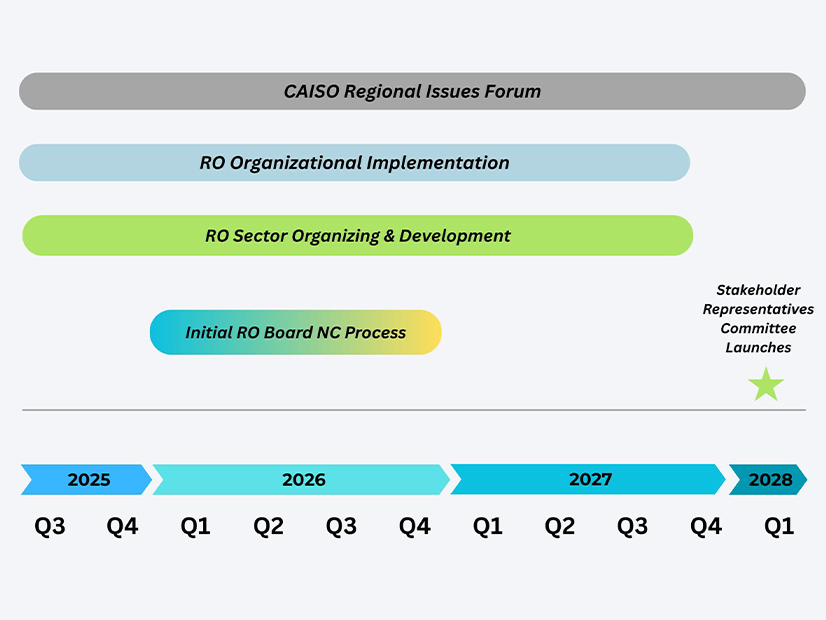
A chart in the slide presentation shows the Pathways Formation Committee has updated timelines for “key” deliverables, including extending the time allotted for developing corporate documents and defining the scope of the work of the Office of Public Participation.
The chart also shows that Pathways will begin its Phase 2 fundraising in August. The group, which has estimated a $7.1 million budget for all three of its phases, hit a financing snare early in 2025 when the Trump administration paused nearly $1 million in funding as part of a larger spending freeze on projects previously promised support by the Biden administration.
Online Meeting Restrictions
In response to the Zoom-bombing July 25, the Launch Committee will enact more restrictive practices for its online public meetings, including preventing participants from turning on cameras or microphones until they make a request using the “raise hand” feature. Staks said the committee also is considering disabling the chat feature because other entities have reported problems with “inappropriate content” being shared through that function as well.
“These features do limit the ease of participation, but after our experience on Friday, we feel implementing these changes will prevent this situation from occurring again but still leave room for participation,” she said.