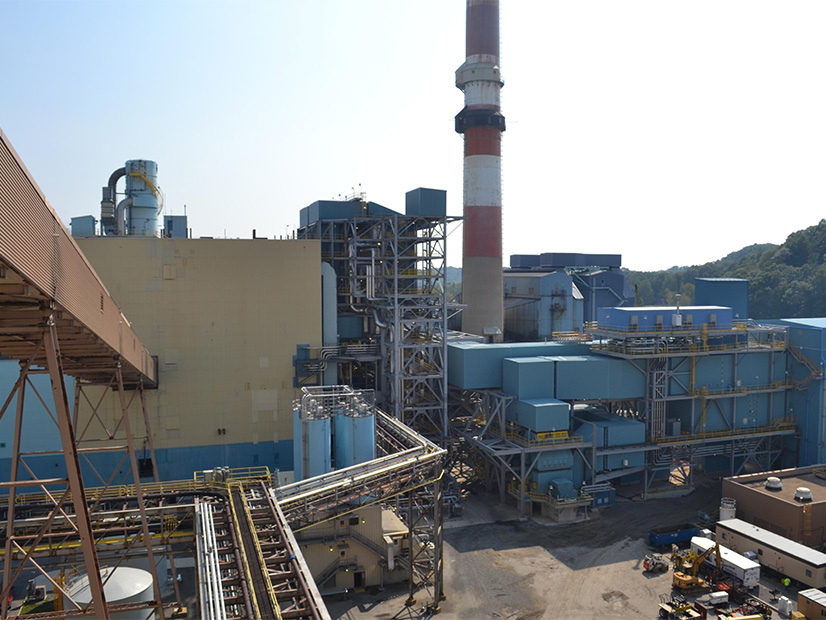
The U.S. Department of Energy has ordered the J.H. Campbell Generating Plant to remain available another 90 days, saying its capacity is needed to maintain MISO grid reliability.
Consumers Energy had planned to retire the 1,420-MW coal-fired facility in southwest Michigan on May 31, but DOE on May 23 issued an emergency order (202-25-3) under Section 202(c) of the Federal Power Act ordering it to remain ready to operate because of a shortage of electricity and capacity to generate electricity. (See DOE Orders Michigan Coal Plant to Reverse Retirement.)
That order expired at midnight Eastern time Aug. 21.
Energy Secretary Chris Wright issued the follow-up order (202-25-7) at 8:50 p.m. Eastern time Aug. 20; it expires Nov. 19.
In his Aug. 20 order, Wright indicated the generation shortfall in MISO is likely to continue.
President Donald Trump declared an energy emergency on his first day in office, and his Cabinet agencies have been scrambling to rejigger energy policy toward the fossil fuels he favors.
One of their stated priorities has been halting retirement of aging fossil-burning plants.
In a news release, Wright cited seasonal outlooks by NERC and NOAA warning of high temperatures in the Midwest as well as resource adequacy projections by MISO itself.
“The United States continues to face an energy emergency, with some regions experiencing more capacity constraints than others. With electricity demand increasing, we must put an end to the dangerous energy subtraction policies embraced by politicians for too long,” he said.
“This order will help ensure millions of Americans can continue to access affordable, reliable and secure baseload power regardless of whether the wind is blowing or the sun is shining.”
Section 202(c) has been a lightly used provision historically. Just 11 orders were issued during the Biden administration, all of them weather-related. This compares with nine by Wright since mid-May, only one of which was weather-related.
The cost of halting the J.H. Campbell retirement has been a point of contention. (See DOE Extension of Michigan Coal Plant Cost $29M in 1st Month and FERC Rules Costs of Mich. Coal Plant Extension Can be Split Among 11 States.)
It also has been unpopular with environmental advocates.
Sierra Club Beyond Coal Campaign Director Laurie Williams said Aug. 21: “By illegally extending this sham emergency order, Donald Trump and Chis Wright are costing hardworking Americans more money every single day for a coal plant that is unnecessary, deadly and extremely expensive.”
Earthjustice Senior Attorney Michael Lenoff said: “Chris Wright is not a Soviet-era central planner, but his new order suggests he would fit right in. The order purports to override the considered judgment and careful work of many federal, state and regional bodies who actually have authority to keep the lights on. In their place, Secretary Wright blunders in.”
In a statement, MISO said it will “continue coordinating with Consumers Energy to comply with the order.”
But MISO again stressed that J.H. Campbell did not clear the planning resource auction and is unnecessary for resource adequacy in the 2025/26 planning year.
“MISO’s 2025-2026 Planning Resource Auction indicated adequate resources to meet anticipated demand. State regulators along with utilities have the responsibility of ensuring resource adequacy. MISO remains focused on reliably operating the grid using the resources our members provide, while working closely with stakeholders and regulatory partners, providing visibility into system needs and sending market signals to inform long-term resource planning,” MISO spokesperson Brandon Morris said in a statement to RTO Insider.
MISO leadership previously has said it might have to navigate similar future orders from the federal government to prop up retiring coal plants.
MISO Director Todd Raba said MISO might have to navigate similar edicts in the future, with about 30 coal plants in the footprint. At MISO’s June board meeting, he said it’s a “critical topic that will have huge implications in MISO.”
Lawmakers, health professionals and other officials gathered near the plant in West Olive, Mich., on Aug. 12 to protest its extension. On Aug. 18, a small crowd of community members marched to U.S. Rep. Bill Huizenga’s office in nearby Holland, Mich., to again protest continued operations.
Consumers Energy said it was evaluating the order extension and expects to “continue operating the plant as required by DOE.”
“We have worked closely with MISO and have been operating in compliance with the order and MISO’s dispatch requirements. All power generated by the Campbell plant and other Consumers generating plants is supplied to the MISO grid. Specific details on recent generation are not publicly available at this time,” spokesperson Brian Wheeler told RTO Insider.
Wheeler also said the utility was “pleased” with FERC’s approval of an allocation that’s set to disburse cost recovery of the plant among the 11 states or portions of states in MISO Midwest.
Consumers Energy declined to comment on the coal plant’s usefulness so far over the summer or how the plant will fit into the MISO market over the fall.
Data from power analytics company Yes Energy shows the 1.42-GW plant has been used consistently since the beginning of August, averaging an 84-88% hourly capacity factor.