The Planning Committee voted to endorse a PJM quick fix proposal to expand provisional interconnection service to allow resources that are not fully deliverable to enter service as energy-only resources. The quick fix process allows an issue charge and corresponding proposal to be voted on concurrently. (See “1st Read on Expanded Provisional Interconnection Service,” PJM MRC/MC Briefs: Aug. 20, 2025.)
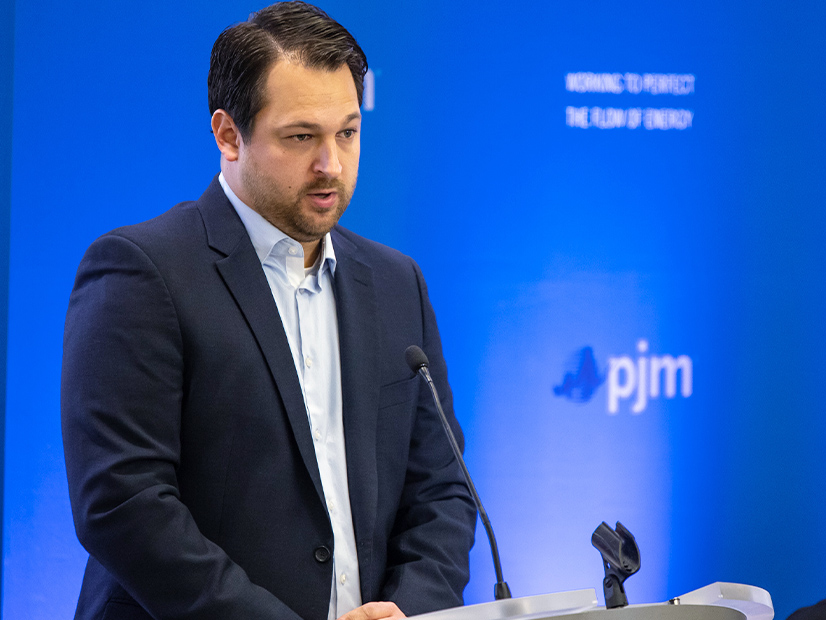
PJM Director of Interconnection Planning Donnie Bielak said the proposal is intended to allow resources to begin operations while their requisite network upgrades are proceeding, making more energy available to dispatchers going into emergency conditions. As of the Sept. 9 PC meeting, he said more emergency conditions had been declared in 2025 than in the previous decade combined, a trend he said is likely to continue with rising load growth and limited new generation.
Provisional interconnection service allows a planned resource to enter service before the network upgrades assigned to it have been completed only if an interim deliverability study determines it can reach its full output without triggering transmission violations. The proposal would loosen that standard to grant provisional status if a resource can deliver part of its installed capacity, which would be documented in an operational guide to inform dispatchers about how the unit can be operated. It targets provisional service requests for the 2026/27 delivery year; any agreements it awards would need to be renewed by developers with annual interim deliverability studies until the resource enters full service.
The quick fix proposal focuses on expanding the pathway for developers to apply, and pay, for PJM to study a planned resource for provisional service. A separate issue charge endorsed by the PC will explore a process for PJM to proactively identify projects that might quality for provisional service without slowing the overall interconnection study process.
The longer-term issue charge envisions a 10-month stakeholder effort charging the Interconnection Process Subcommittee with identifying possible changes to the tariff and business manuals. The out-of-scope section includes generation that does not fall under FERC jurisdiction, the requirements for resources to participate in the capacity market, and changes to the interconnection process not pertaining to provisional service.
Bielak said the proposed manual language was amended after the August first read to state that PJM will publish the provisional interconnection service offered to resources to allow market participants to have the same insight on the status of the transmission grid. Additional language was added around how the resources would be dispatched to clarify they won’t receive special treatment.
“The existing procedures under these operations will prevail, and these will be treated like any other energy-only resource,” Bielak told the PC.
Paul Sotkiewicz, president of E-Cubed Policy Associates, argued PJM should post all requests for provisional service, stating it could inform market participants’ hedging strategies. He said the manual language detailing the information about service requests and awards PJM would post should explicitly specify attributes like the output resource owners seek to inject.
Bielak questioned the value that information would provide and said he prefers more generic language to avoid situations where changes to the posting requirements for the overall interconnection process might fall out of sync with the provisional pathway.
Gregory Pakela, manager of regulatory affairs for DTE Energy Trading, said the data Bielak presented shows the bulk of emergency procedures have been initiated during the summer, suggesting reliability risk corresponds to load peaks during heat waves more than PJM’s winter-skewed risk modeling would suggest.
“We have to treat models as tools, but the interpretation of those models is almost more of an art,” he said.