IESO has increased the capacity target for its planned solicitation for long lead-time resources, even as it acknowledges questions about the need for the procurement.
IESO has increased the capacity target for its planned solicitation for long lead-time (LLT) resources, even as it acknowledges questions about the need for the procurement.
The ISO plans to seek 600 to 800 MW of capacity from resources requiring at least five years of lead time, up from its proposed 600 MW, “to recognize the volume of system needs arising in 2035,” officials told stakeholders at an engagement session Sept. 16. The energy target will be up to 1 TWh, unchanged from what the ISO outlined at its June 5 engagement.
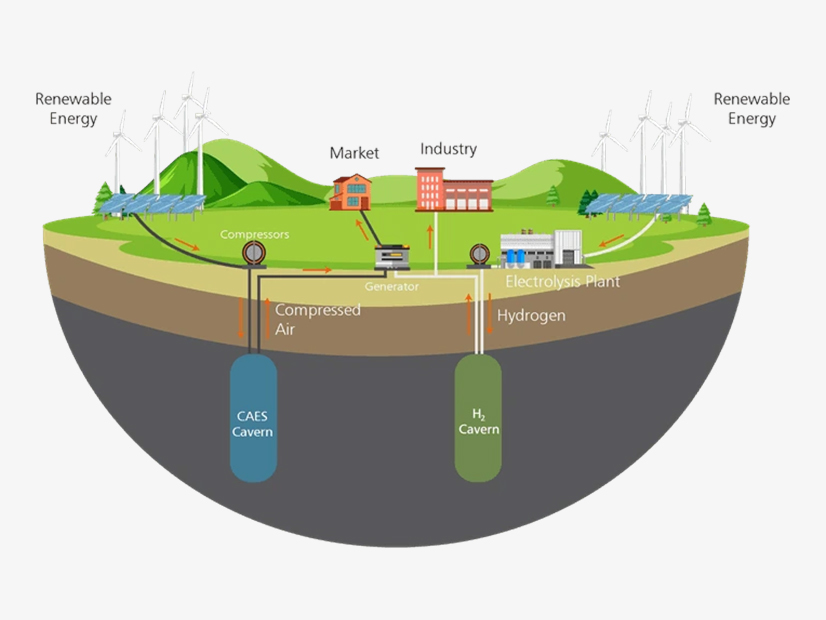
IESO decided to pursue a separate LLT procurement in response to stakeholder feedback that energy storage resources such as compressed air and pumped hydro require longer planning cycles than the four-year lead times for resources offering in the pending Long Term 2 (LT2) procurement. Energy proposals for LT2 are due Oct. 16, and capacity proposals are due Dec. 18. (See IESO Officials Deny Favoring Gas Resources in Upcoming Procurement.)
The ISO issued a request for information last fall to guide its design of the LLT solicitation and summarized its findings in an Aug. 29 report to the Ministry of Energy and Mines.
Requirements
To participate in the LLT procurement, resources must require a lead time of five or more years and have an operating life of 40 years, versus 20 years in LT2.
Technologies for which IESO is less familiar — such as emerging long duration energy storage (LDES) — may need to prove they meet the lead-time requirement with an independent engineer report detailing the project scope, permitting path and supply chain constraints.
Although the LLT RFP is intended for new resources, IESO is considering including hydropower redevelopment projects — large-scale replacements of existing equipment that IESO said “would be similar in scope to a new build facility.”
“Following redevelopment, the expected operational life of the facility would be comparable to that of a newly constructed facility,” the ISO said.
Reservoir hydro projects (those with storage capability that are not pumped hydro) will be eligible to participate in the energy stream only because they would be unable to offer full contract capacity between 7 a.m. and 11 p.m. on business days, as required for capacity resources.
Pumped storage and other LDES resources will be eligible to submit in the capacity stream only.
IESO plans an engagement in October to discuss hydro repowering, expansions and upgrades of hydro and other resource types in its procurements.
Questioning the Need for LLT Procurement
Jonathan Cheszes, president of Compass Greenfield Development, questioned the need for the LLT solicitation, saying the eight- to 12-hour requirement for capacity resources is “functionally consistent” with that in the LT2 capacity procurement.
“If you need eight to 12 hours of capacity, then why not ask for eight to 12 hours of capacity? … Why limit what technologies can participate?” he asked.
IESO’s Ben Weir said the LLT RFP is an effort to procure resources with attributes — such as a 40-year life span — that can’t compete in LT2.
“There’s not much point in signing a 40-year contract with a battery, because it’s not going to last 40 years … the way we intend to use it,” Weir said.
Cheszes suggested the LLT procurement was premature.
“If you’re going to get eight to 12 hours out of LT2 … maybe see what the pricing comes in at before” seeking a solicitation for LLT resources, he said.
“You raise an absolutely valid concern,” responded Dave Barreca, IESO’s supervisor of resource acquisition. “Please believe me that this is top of mind for us. … We are thinking very hard about ratepayer value and prices and how to manage that for this RFP, given that … the field of competition is quite narrow.”
“Forty years [is] a long time,” Cheszes responded. “Just imagine what batteries are going to cost 20 years from now. … And whatever [the] technology [will be, it] won’t be lithium ion, right? It’ll be something totally different. So, you know, locking in 40 years — there’s some pluses, but there’s a bunch of minuses as well.”
Weir said ISO officials will hold engagements monthly for the rest of 2025 to develop the RFP, with proposals expected in the fourth quarter of 2026 and contract awards in the first half of 2027. The timing of the RFP and the target sizes will be finalized after receiving guidance from the ministry, Weir said.
Weir said IESO may accept a percentage of all proposals submitted — perhaps 80% — similar to what the ISO did in its second medium-term solicitation (MT2). (See IESO Purchasing 3,000 MW of Energy and Capacity.)
“This is just a way to maintain competitive tension if the numbers of proposals received are lower than we expect,” he said.
Rated Criteria
IESO is seeking more information on potential projects in prime agricultural areas (PAAs) to inform how it sets its “rated criteria” — non-price factors used to evaluate proposals — for the procurement.
Some stakeholders said the ISO should not use rated criteria based on locations, such as for proposals located in northern regions or outside of PAAs.
IESO said its criteria will “be reflective of policy decisions made by the Ministry of Energy and Mines.”
The ministry also will weigh in on whether IESO should offer price incentives — in addition to rated criteria points — for projects involving Indigenous communities.
Round Trip Efficiency
IESO is considering minimum round-trip efficiencies (RTEs) — and incentives for exceeding them — because LDES are expected to have lower RTEs than battery storage.
Barreca said resources considering participating in the LLT RFP have offered a wide range of RTEs with a “middle” of about 60%. That “is quite different than what we’ve seen … in the lithium-ion batteries that we’ve procured” in the first long-term procurement, he said.
Outages
The ISO plans to use the same rules for planned outages as under LT2. Energy resources should incorporate planned outages into their imputed production factors to avoid non-performance charges. Capacity resources will be permitted a planned outage of up to one month during April, May, October or November.
Resources will be permitted one long-term outage — a maximum of six months — during the second half of their contracts.
Environmental Attributes
IESO is considering allowing suppliers to retain the proceeds from sales of “environmental attributes” during the first 20 years of the contract, with the supplier sharing the attributes with IESO in the second 20 years.
Although suppliers are unlikely to place much value on the attributes for 2051-2070, Barreca said, “there is a good chance that there will be some value there” that could be recovered for ratepayers.
“We are certainly open to the alternative, which is that you do have forecasts for what those are going to be worth, and you are willing to put those values into your proposal prices,” he added.
Defining LDES
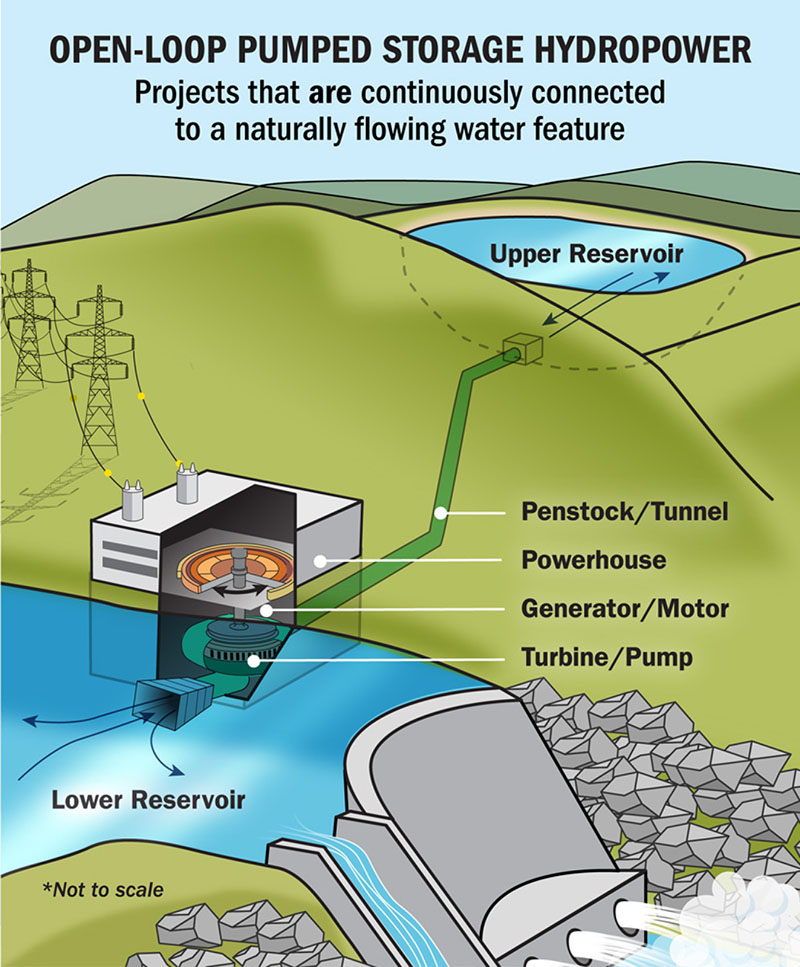
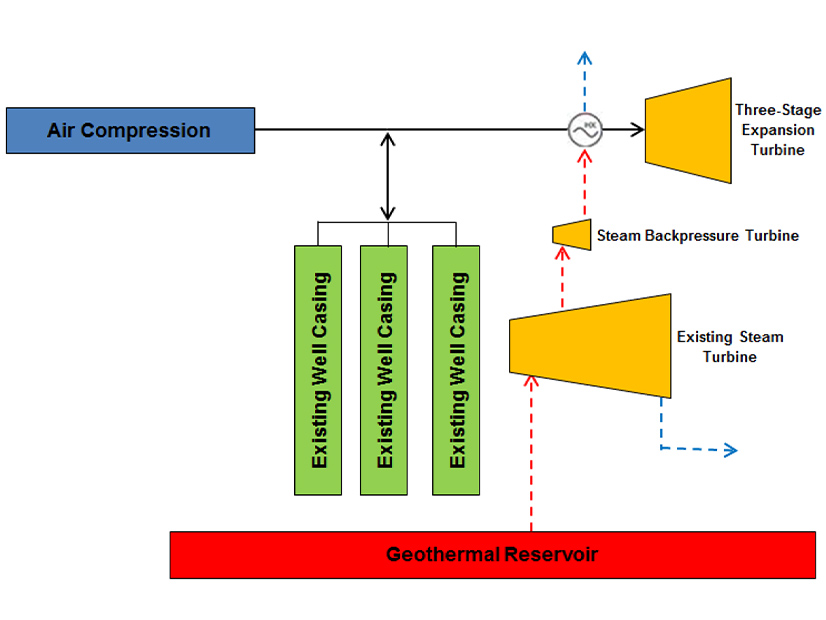
In addition to inviting participation by compressed air energy storage and pumped hydro storage, IESO will consider emerging technologies such as liquid air energy storage and compressed gas “that are able to demonstrate a sufficient level of technology readiness.”
Stakeholders told IESO it should clarify its definition of commercially proven LDES technologies and allow participation from LDES technologies with a technology readiness level of eight or higher, indicating it is ready to move from development to commercialization, per the U.S. Department of Energy.
Although some stakeholders pushed IESO to increase the minimum duration requirement to 10 or 12 hours, the ISO said it expects participating LDES resources “to be in the eight- to 12-hour duration range, which can realize the most reliability benefits at this time.”
Barreca said IESO’s planning team is conducting research to understand the value of increasing the minimum duration.
“We’ll need to make a call in terms of whether we think the extra value would be worth the extra price to make that a minimum requirement,” he said. “There is more study required to go to the 24-hour or … multiday storage. That will be a different procurement.”
Non-performance Charges
The ISO rejected requests that non-performance charges for energy producing resources be based on a five-year rolling average versus the three-year average used in LT2. The three-year average “allows for effective accounting of anomalies that may impact production, such as irregular weather patterns,” IESO said.
Barreca said the ISO is sticking to a three-year average “primarily because this is a competitive RFP, not a standard offer program, and there are quite a number of variables that a proponent has to work with to find their optimal risk profile.”
Price Escalation
IESO still is determining how it will escalate prices during the contract term.
Some potential suppliers said IESO should provide 100% inflation indexing from the contract date to the commercial operation date (COD) — similar to that in the LT2 RFP — and 60% indexing from COD until the contract end date.
Barreca said the 100% indexing in LT2 “was a direct response to the geopolitical environment at the time.”
“We have a little bit of runway ahead of us to see what happens there,” he added. “I think we are going to wait just a little bit longer and see how the world evolves between now and then.”