By Chris Robinson and Scott Simms
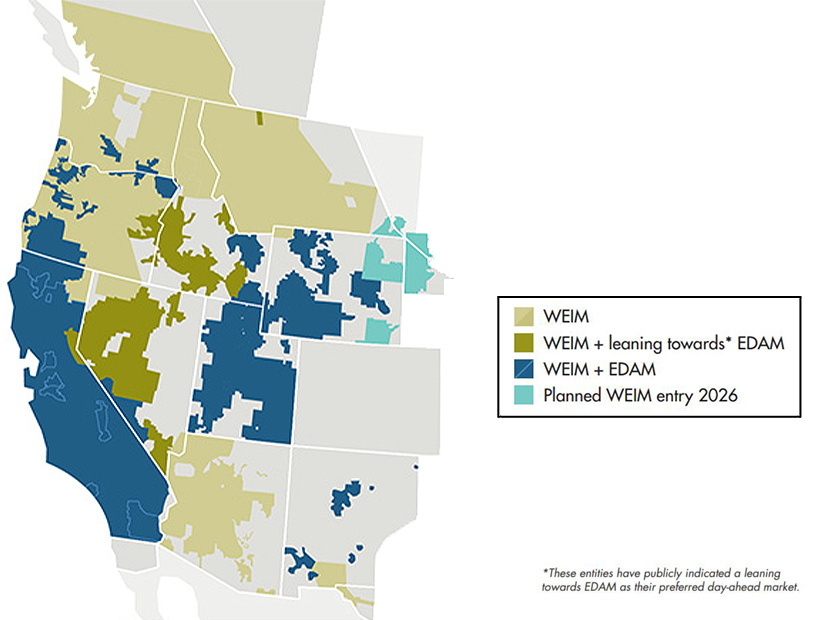
The future Western markets picture is in sharper focus now: We are progressing toward broad participation in two day-ahead markets. Such widespread participation in expanded market offerings may have seemed doubtful previously — even as recently as 10 years ago at the start of the Western Energy Imbalance Market (WEIM). Collaboration, determination and optionality have been critical to getting us to this pivotal point.
Utilities and other market participants have recognized the potential benefits of expanded market participation and have worked hard to develop market options that meet their needs — including creative solutions that do not require participation in an RTO, new governance structures, and market designs that are compatible with continued OATT transmission service. Developing such options has facilitated organized market participation to grow, both geographically and in the breadth of services offered.
The passing of AB 825 marks a significant milestone for planned EDAM participants, laying the groundwork for implementing the Pathways “Step 2” proposal. This proposal will establish a new regional organization that will partner with CAISO to implement the Extended Day-Ahead and Western Energy Imbalance markets. At the same time, PacifiCorp and Portland General Electric have had their EDAM tariffs approved by FERC, and all signs indicate a 2026 go-live date.
Meanwhile, Markets+ also is moving forward with implementation. Nine utilities have made substantial financial commitments to secure the development of the market, with more utilities indicating their intent to join. In addition, many more participants and stakeholders are actively engaged in this final implementation phase. The market go-live is in 2027.
While we know there is frustration among some parties that a single market could not be achieved, ultimately the region should celebrate the collective progress that these markets represent and respect the decisions that each entity has made regarding its individual participation.
For entities such as PPC, Tacoma and BPA (as described in their Day-Ahead Market Policy Record of Decision, Appendix B), the risk of participating in a market that continues to have statutory ties to a single state or subset of market participants is untenable.

Even under the Pathways governance proposal — which is enabled by California AB 825 — CAISO continues to retain statutory obligations to the people of California and legally must be the operator of EDAM in order for California entities to participate. We respect the decision some entities have made that this level of independence is sufficient for their participation in EDAM, but it continues to be a deal-breaker both for us and for many others.
It is our hope that after many participants have made their market decisions, both market tariffs have been approved by FERC, governance structures are known, and implementation efforts are under way, we can all turn our attention to good faith efforts to make the soon-to-coexist market approaches in the region as successful as possible.
Achieving the additional efficiency and access to resources that will be offered by either market will benefit the region much more than having utilities not participating in organized markets — which is a likely outcome without the optionality that has been developed. As long as entities across the West remain committed to continued regional trade, coordination and reciprocal efforts to enable market participation, there can be significant benefits for the region at large.
We applaud our colleagues whose hard work, determination and collaboration were able to bring AB 825 over the finish line. Our hope is that we collectively can bring that same energy and genuine spirit of collaboration to the hard work needed ahead to successfully implement both markets, including seams negotiations when the time is right.
Chris Robinson is general manager of Tacoma Power and is the Public Power Council Executive Committee chair.
Scott Simms is the CEO & executive director of the Public Power Council.