The New Jersey Board of Public Utilities is looking to stimulate energy-efficient construction with a new program launched Oct. 7 that offers a simpler incentive application process and incentives of up to $2.50/square foot.
The New Construction Program (NCP) provides builders, developers and project stakeholders with a “single point of entry” through which they can access a portfolio of financial incentives, the BPU said in a release. It replaces several old programs that were accessed independently with a consolidated system that offers “three distinct pathways” designed to meet the needs of different projects.
Incentives under the new program start at $1/square foot for buildings that are ENERGY STAR certified or meet LEED V4.1 standards, rising to $2.50 for projects that achieve PHIUS certification, the board said. Projects can earn more incentives if they offer greenhouse gas reduction, develop affordable housing, or create industrial and high-energy intensity buildings in priority zones.
BPU President Christine Guhl-Sadovy called the NCP a “pivotal step forward in making high-performance buildings more affordable and comfortable for New Jersey residents and businesses.”
“By consolidating our previous programs and offering enhanced incentives, we’re creating clear pathways for builders to deliver energy-efficient buildings that reduce utility costs, improve indoor comfort and support those who choose to pursue clean energy options,” she said.
Emphasis on Decarbonization
Creating energy-efficient buildings, mainly by electrifying heat and water heating systems, is a key plank of Gov. Phil Murphy’s effort to cut emissions and reach the state’s goal of having 100% clean electricity by 2035.
The BPU is refining a new Energy Master Plan, a follow-up to the 2019 version, both of which lean heavily on building electrification. (See N.J. Releases Electrification-focused Energy Master Plan.) In December 2023, Murphy signed an executive order setting a goal of electrifying 400,000 additional dwelling units and 20,000 additional commercial spaces or public facilities by December 2030. (See N.J. Advances Multifaceted Building Decarbonization Strategy.)
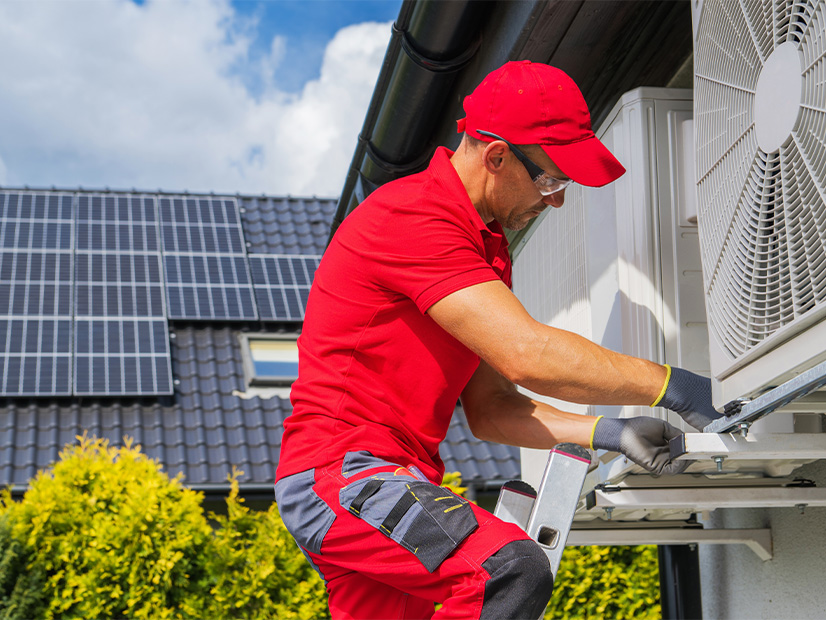
The NCP “strongly emphasizes decarbonization technologies, offering bonus incentives for projects incorporating all-electric systems such as heat pumps, helping support builders or homeowners who choose to pursue highly efficient and decarbonized air and water heating systems,” according to the BPU.
In one of the options, a so-called “bundled pathway” combines several energy conservation measures that can be used on commercial and industrial buildings. A second, “streamlined” pathway offers a much simpler process for projects that harness only energy conservation measures. And a third, “high-performance” pathway allows the developer to obtain the most generous incentives by meeting “nationally recognized certifications.”
DEP Seeks to Make Electrification Funding Easier
The BPU’s launch of NCP coincided with the announcement by the New Jersey Department of Environmental Protection of a new online tool that seeks to help residents, local governments, nonprofits and businesses find incentives for building electrification and other climate mitigation projects.
The New Jersey Funding One Stop Shop can help reduce project costs by estimating which incentives are available and what percentage of a project is funded. It asks users about the project and provides information on possible grants, rebates, financing options and a technical assistance program, according to a DEP release.
Among the target categories for the website are “building energy efficiency” and “energy generation.” The possible funding sources include the state’s $15 million NJ Cool pilot program, which opened in May and provides financial assistance to commercial, industrial and institutional building owners and tenants undertaking retrofit projects that reduce operating emissions from existing buildings.
Another program reached through the site is one offered by Jersey Central Power & Light, one of four utilities that serve the state, which offers commercial and industrial customers up to $4 million for a “tailored, non-standard energy efficiency project.”
“The One Stop Shop database is an easy-to-use tool that can help residents, local governments and nonprofits pursue critical green projects, like homeowners installing a heat pump [and] a government transitioning to an all-electric vehicle fleet,” DEP Commissioner Shawn M. LaTourette said.