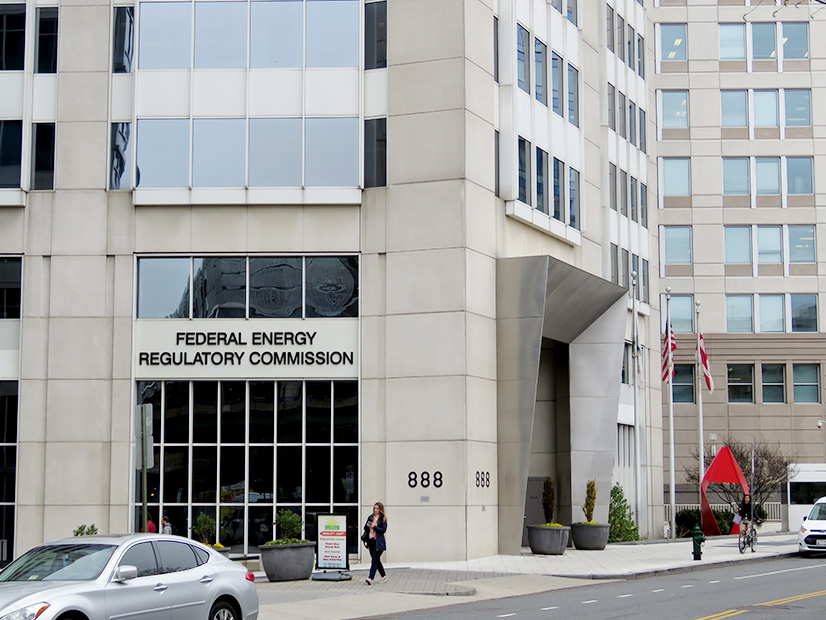
FERC sided with San Francisco in the city’s dispute with PG&E over cost allocation provisions in a wholesale distribution contract, finding PG&E improperly required the city to bear the cost of system upgrades instead of allocating costs among all beneficiaries.
The Oct. 16 order affirms an administrative law judge’s previous finding and directs PG&E to revise its wholesale distribution tariff within 60 days and issue refunds to its wholesale distribution customers (ER20-2878).
FERC found that under the company’s cost allocation provisions, the City and County of San Francisco would shoulder the entire cost of upgrades to distribution systems and facilities even though the utility’s retail customers also benefited from those improvements. That scenario results in a violation of FERC’s cost causation principles.
PG&E spokesperson Jennifer Robison told RTO Insider that the utility appreciates FERC’s “thoughtful review of our filing.”
“Our goal in updating PG&E’s wholesale distribution tariff was to simplify and standardize wholesale distribution service to eliminate legacy preferential treatment and to ensure that all PG&E customers are treated fairly and equally,” Robison said. “We designed the updated tariff proposal to help achieve FERC’s goal of ensuring reasonable rates, terms and conditions. We understand the City and County of San Francisco’s concerns and have been working with them on a mutually agreeable resolution.”
The underlying case concerns PG&E’s wholesale distribution tariff, which governs how wholesale distribution customers, such as San Francisco, accesses the company’s services. Wholesale customers use PG&E facilities to access the CAISO-controlled grid to make wholesale sales and purchases, according to the order.
PG&E updated the wholesale distribution tariff’s terms and conditions in 2020 and transitioned to a formula rate. San Francisco protested the update, arguing that PG&E proposed definitions of “upgrades” and “direct assignment facilities” were discriminatory.
The case has taken several twists and turns since 2020, including settlement discussions. The Oct. 16 order deals with two remaining issues:
-
- whether PG&E’s treatment of the costs of upgrades to the distribution system under the wholesale distribution tariff is just and reasonable and not unduly discriminatory or preferential.
- whether PG&E’s treatment of the costs of direct assignment facilities — facilities that are used by only a single wholesale customer — under the tariff is just and reasonable and not unduly discriminatory or preferential.
In agreeing with the administrative law judge, FERC said “PG&E’s proposed treatment of the cost of upgrades violates the commission’s cost causation and comparability principles and is therefore unjust and unreasonable.”
“Specifically, we agree that under the definition of upgrades in the [wholesale distribution tariff], PG&E’s retail customers may benefit from the use of the upgrades,” the order stated. “Thus, consistent with the commission’s cost causation principle, the costs of upgrades must be allocated among customers that benefit from the upgrade rather than directly assigned to the wholesale distribution customer that requested the upgrade.”
On the issue of the costs of direct assignment facilities, FERC sided with the administrative judge’s reasoning that because those facilities “solely benefit the requesting wholesale distribution customer” it is “therefore inappropriate to roll in installation costs for direct assignment facilities to the wholesale distribution revenue requirement or otherwise assign those costs to retail or other wholesale customers.”
However, PG&E failed to show that it treats retail customers’ facilities on the same basis and that wholesale customers end up shouldering some of the costs for retail facilities, according to the order.
“The presiding judge found that for PG&E’s retail customers, PG&E does not assign itself the full costs of retail distribution line extensions,” the commission wrote. “Instead, the costs of those retail customer-driven facilities are rolled into the wholesale distribution revenue requirement and allocated to wholesale distribution customers using the load ratio share methodology,” the commission wrote.
“We affirm the presiding judge’s determination that PG&E’s proposed definition of direct assignment facilities in the [wholesale distribution tariff] does not comply with the commission’s comparability principle and is unjust and unreasonable and unduly discriminatory or preferential,” the order stated. “Additionally, we direct PG&E to submit a compliance filing revising the [wholesale distribution tariff] in accordance with the initial decision and this order, make refunds, and submit a refund report.”