FRANKLIN TOWNSHIP, N.J. — New Jersey will need to overcome a raft of permitting, funding and policy issues as it seeks to remake its energy strategy to confront the sudden, data center-fueled rise in energy demand on the horizon, speakers told an energy forum organized by the state’s largest business group.
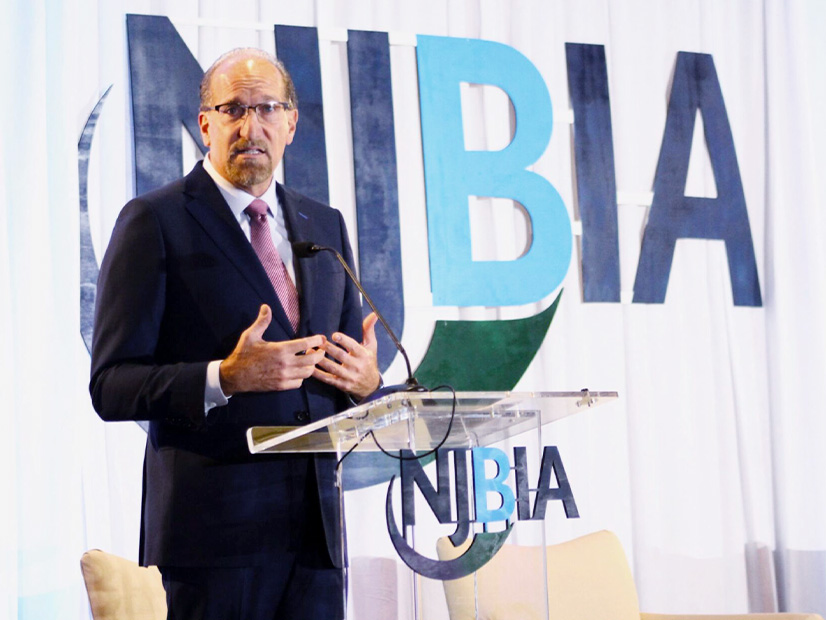
Perhaps the most urgent need is a clear-eyed look, coupled with some tough decisions, at what energy sources the state is going to pursue, keynote speaker Zenon Christodoulou, a commissioner on the Board of Public Utilities, said at the New Jersey Business & Industry Association’s annual Energy and Environmental Policy Forum, held Oct. 28-29.
As the state emerges from a vigorous, Democratic-led pursuit of offshore wind, Christodoulou warned against accepting the “agnostic” view of energy in which all sources are valid, commonly described as the “all of the above” approach.
“I know it sounds impartial and democratic,” but the word “agnostic” also “conveys a sense of ignorance and lack of knowledge,” and the state needs a more defined strategy, he said.
“We need to take some educated guesses here,” he said. “We need to find the best-of-the-above approach, not an old approach. And while we’re at it, maybe we can look at some below-the-surface approaches, like geothermal and hydrogen.”
The conference took place amid the final stages of the gubernatorial election to pick the successor to Gov. Phil Murphy (D), who aggressively pursued a clean energy strategy, the largest part of which — 11 GW of offshore wind — has largely stalled under unfavorable economic conditions and President Donald Trump’s opposition.
Energy issues have taken center stage in the state in large part from a predicted electricity shortfall and the impact on ratepayers. New Jersey ratepayers’ average electric bill rose 20% in June.
As one of the 13 states served by PJM, New Jersey faces a dramatic surge in demand, mainly because of the expected development of heavy electricity-using data centers. Analysts say the expected shortfall was also triggered by rapid closures of aging fossil fuel plants as new plants, mainly clean, have come online more slowly.
Importer or Exporter?
Former Gov. Chris Christie (R), a keynote speaker at the forum, said the state generated enough electricity that it was exporting power when he handed the reins to Murphy. He blamed the incumbent’s “hyper focus” on clean energy for the state’s current predicament and its swing to become an energy importer, rather than being self-sufficient.
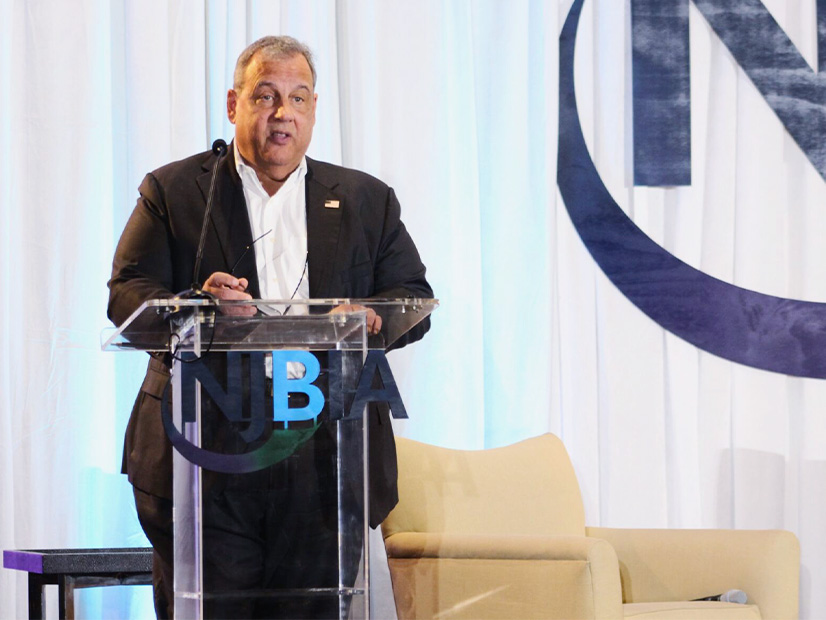
“What he’s done is deter any baseload generation, and that begins the part of the problem,” Christie said. He added that the next governor will have to “bite the bullet” and develop natural gas plants.
“Their first step, in my view, if they asked [me], would be to sit down with utilities and say, ‘What do we need to do to get you to open two or three new natural gas generation plants as quickly as possible?’” he said.

But Brian O. Lipman, director of the New Jersey Division of Rate Counsel, told a panel on rates that the state has been a net importer of electricity since 1990, and that’s not a problem.
“We’re not an exporting state,” he said. “The whole point of PJM is that we could bring in cheaper electricity from other states. Generation is expensive to build, and it’s cheaper to build it, quite frankly, in Pennsylvania, in the middle of nowhere, than it is anywhere in New Jersey.
“We can talk about whether we should be an importer, and how much we should be, whether it’s economic to build in New Jersey at this time,” he said. “But the reality is, when it’s economic to build outside the state and bring electricity in, that’s what we should be doing.”
If New Jersey wants to generate its own power, then it needs to streamline and speed up the permitting process, he said. “We can do things with permitting where we can override the NIMBY issues that a lot of these projects are going to have,” he said.
He suggested the state could protect itself from bearing the burden and infrastructure costs of excessive data center demand by requiring such facilities to bring their own generation sources. But he also expressed caution.
“If you legislate too much, the data center is just going to go to another state,” he said. “And if the data center goes to Pennsylvania, we still have the same demand issues that we would have if they were in New Jersey. We just aren’t going to get any of the economic benefits that we would get if they were built in New Jersey.”
Backing Nuclear
With wind and solar largely an afterthought at the forum, the panelists more frequently focused on nuclear and gas to resolve the state’s looming power shortage.
Erick A. Ford, president of the New Jersey Energy Policy Coalition, which advocates for a “balanced” energy strategy, said the state is “uniquely positioned” to lead the move into nuclear, with an experienced workforce and a history of managing nuclear plants, including Public Service Enterprise Group’s three existing facilities in Salem and the now-defunct Oyster Creek plant.

Speakers on a panel titled “Nuclear Power – Is it in NJ’s Future?” cited several recent announcements that suggest nuclear power is increasingly viable. They included the U.S. government’s announcement on the same date as the conference that it had forged a partnership with the Canadian owners of Westinghouse Electric to spend at least $80 billion on nuclear reactors. In a separate announcement, NextEra Energy said it plans to restart the 50-year-old Duane Arnold Energy Center. (See related stories, U.S., Westinghouse Partner for $80B in Nuclear Construction and NextEra, Google Announce Nuclear Collaboration.)
New Jersey is home to a 50-acre technology center in Camden, run by Holtec International, which is restarting Michigan’s Palisades nuclear plant and plans to build two small modular reactors beside it. (See Holtec Announces SMR Plans at Palisades Nuclear Plant.)
The company also is decommissioning the Oyster Creek facility. Holtec CEO Krishna Singh told New Jersey legislators in August that the company is looking at whether four of its SMR-300 reactors could be sited in Oyster Creek, generating 1,300 MW of power.
Feasibility Challenges
Whether New Jersey is a contender for future reactors is unclear. The U.S. Nuclear Regulatory Commission in 2016 issued PSEG an early site permit for the Salem site that currently houses the three reactors it operates, but the company has yet to announce any plans for the site.
To host other facilities, the state would have to meet the needs of developers or their clients.
Ray Fakhoury, energy policy manager for Amazon Web Services, told the forum that nuclear projects will be critical to the company’s Net Zero by 2040 plan. Amazon on Oct. 16 outlined plans to build up to 12 SMRs and generate 5 GW of nuclear power by 2039.
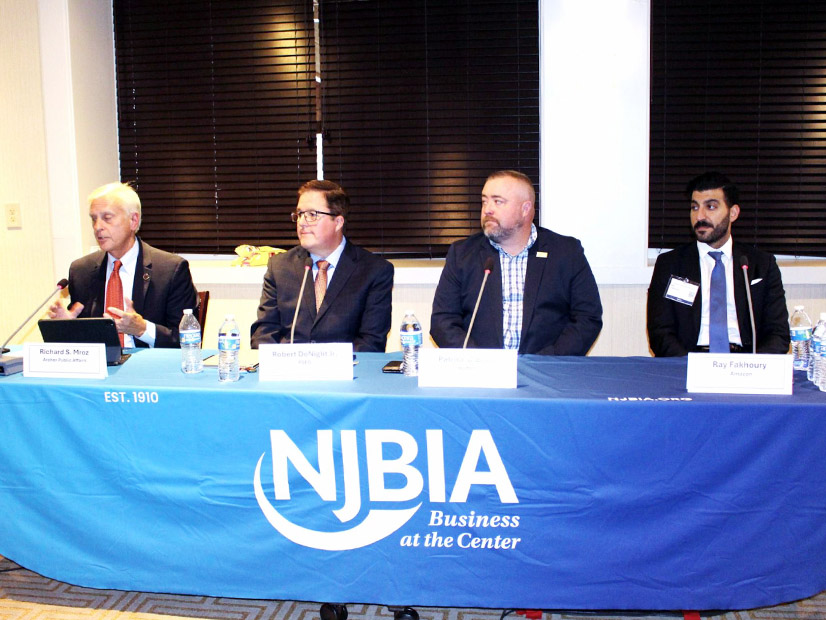
In looking for sites to put a data center served by a nuclear project, the company’s first priority is access to a transmission line to “create the promise that there will be future growth opportunities to that potential area,” he said.
“The challenge is a one-off facility might not be so useful for Amazon because we can’t capture those economies of scale,” he said. In addition, having a site with a pre-application submitted, “early site works being done and permitting kind of being set forward are all really critical to building, and all of that is wrapped up in this nice bundle of policy certainty.”
Other challenges to developing nuclear sites in the state will be finding trained workers and overcoming the lack of a supply chain. On top of those challenges is the fact that nuclear plants take longer and cost more to build than other generating sources and so can’t meet the state’s urgent shorter-term needs.
Yet the NRC has reduced the 5-mile emergency management zone perimeter for nuclear plants, shrinking the footprint needed, which is helpful to densely populated states such as New Jersey. And nuclear plants last much longer than other plants.
Robert DeNight, vice president of nuclear engineering for PSEG, told the forum that the company may seek to extend the life of its three nuclear plants beyond 80 years, well beyond the operating license extensions it requested from the NRC last year. (See PSEG Plans for 80-year Nuclear Generation in NJ.)
“After we get 80 years, we’ll assess from a material standpoint and see if 100 years makes sense,” DeKnight said.
Patrick O’Brien, director of government affairs for Holtec, said, “The reality is you’re going to replace a wind and solar farm two or three times before you get to the end of a nuclear plant.”
“We’re running on average 95% of the time,” he said. “So there’s a lot of benefits there for long-term usage; a lot of energy density on a small piece of property.”
But any project will require investor confidence that it can be completed. And that has been sorely damaged by the Trump administration’s efforts to terminate offshore wind projects heading for completion, forum speakers said.
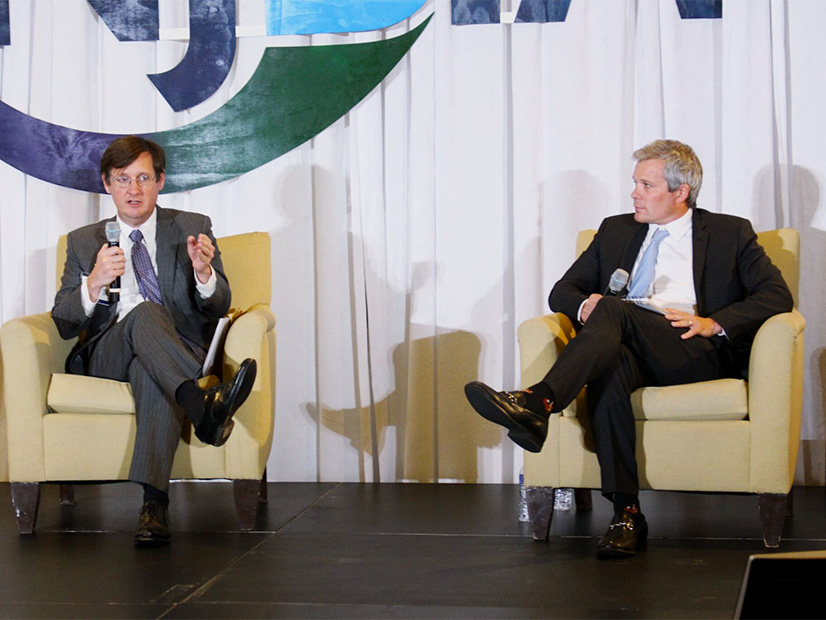
“The No. 1 concern is, how do I know three years, four years from now, my project will be safe?” said Matthew Leggett, an energy specialist at law firm K&L Gates. “Whether it’s an oil-and-gas project, a solar project, a wind project, any other kind of project — any multiyear, large, energy infrastructure investment has a question mark because of that uncertainty that’s been created.”
Timothy Fox, managing director at ClearView Energy Partners, added, “Project developers and especially the financiers behind those projects are going to be wary of investing in a capital-intensive industry with such demonstrable high election risk. Because can you really get a project through permitting and fully built in four years?”