DTE Energy has secured its first hyperscaler agreement and says it has enough excess capacity to power the 1.4-GW data center load without new construction.
The Michigan utility said it does plan to add 1 GW of storage capacity in connection with the hyperscaler project in a peak-shaving role, but the customer will cover the cost.
However, if DTE secures the other data center agreements it is negotiating, it will need to add capacity.
In its third-quarter earnings report Oct. 30, DTE said it is boosting its five-year capital investment plan from $30 billion to $36.5 billion and allocating almost all of the additional $6.5 billion to its electric business to support data center development and the transition to cleaner power generation.
CEO Joi Harris said during an earnings call with financial analysts that DTE is in late-stage negotiations with other hyperscalers for about 3 GW of new load and it has potentially 3 to 4 GW in other data center opportunities further down in the pipeline.
DTE is looking at new gas-fired generation for some of this load.
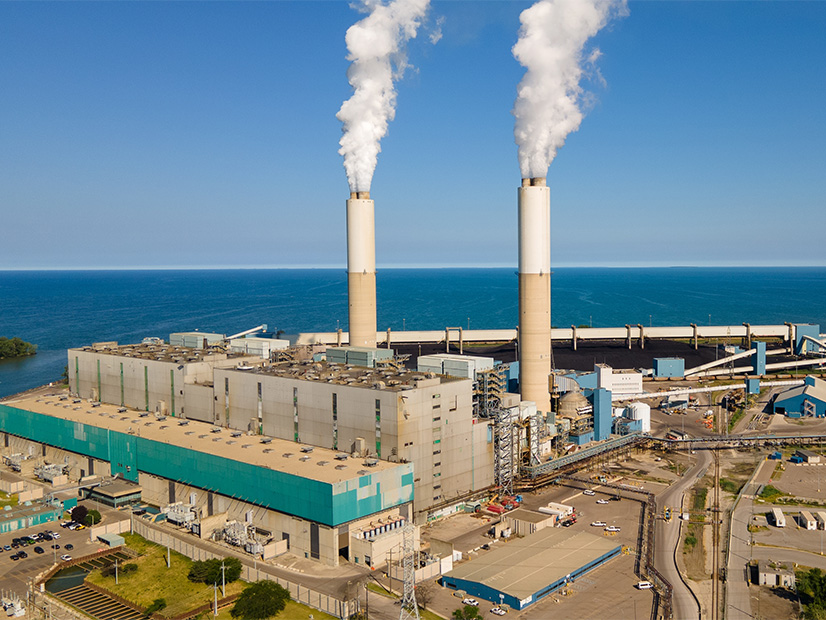
Harris said DTE already is in the manufacturing queue for a combined-cycle gas turbine to replace the coal-fired Monroe Power Plant, which is slated for retirement as DTE works toward a complete exit from coal by 2032. The new gas facility will cost about $2.5 billion, or $2,500/kW, she said.
Additional combined-cycle gas turbines will be needed for new gigawatt-scale data centers, Harris said, but new demand from smaller data centers could be met with a mix of renewable and fossil generation and storage.
The wait time now is three to four years for a new combined-cycle gas turbine, she said, but less for smaller-scale gas generation equipment.
DTE expects to have a better picture of what mix of generation it needs once it firms up negotiations with some of the other potential large-load customers and knows what their anticipated ramp rates are. It plans to provide more details in its next integrated resource plan.
But the utility does anticipate the need for greater generation capacity — the 1.4-GW hyperscaler project alone will result in a 25% increase in load as it ramps up over the next two to three years, Harris said.
DTE will submit the hyperscaler contract for regulatory approval Oct. 31. It includes a 19-year power-supply agreement with minimum monthly charges.
The hyperscaler also will pay for the new energy storage through a 15-year contract. Two-thirds of the new storage capacity will be met with construction to start in 2026; the remainder will be met through tolling agreements.
Nationally, hyperscaler proposals drawing as much power as a small city have consumer advocates fretting over the impact on electric rates.
But Harris presented DTE’s 1.4-GW data center deal as a win for existing ratepayers, as they won’t have to pay for infrastructure up front or face the prospect of paying for stranded assets down the road.
“We don’t have to build anything substantial to support the load,” she said. “We’re using our excess capacity to support the load and building batteries on top of it, just for peak-shaving purposes. And the customers get that full benefit, so it will show up in the form of a lower ask over our next rate case cycle.”
The 1.4-GW agreement also will help drive 6 to 8% annual growth in earnings per share through 2030, Harris said.
DTE reported third-quarter 2025 net earnings of $419 million or $2.01/share on revenue of $3.53 billion, compared with $477 million, $2.30/share and $2.91 billion in the third quarter of 2024.