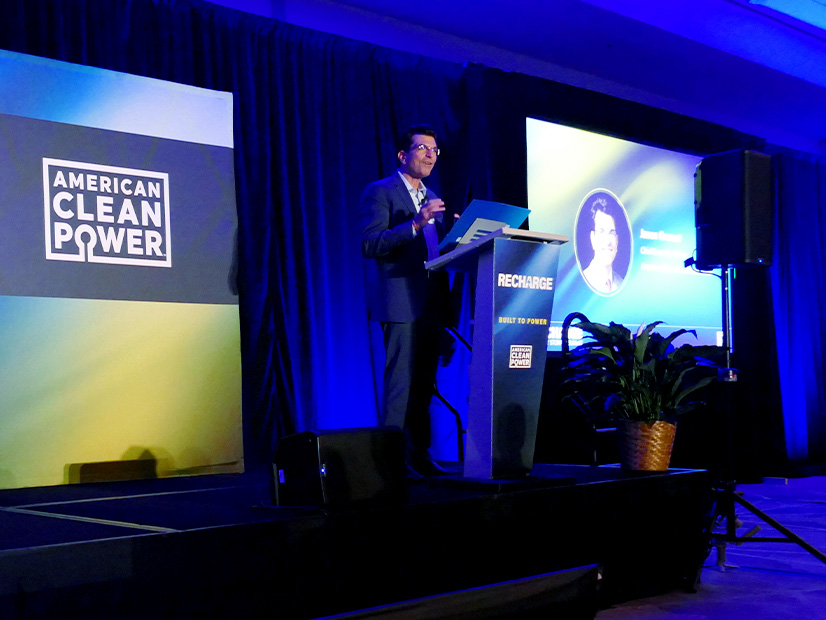
AUSTIN, Texas — Reports of the energy storage industry’s demise are greatly exaggerated, experts said during the American Clean Power Association’s annual Energy Storage Summit.
Laura Beane, chair of ACP’s board and CEO of Vestas North America, welcomed attendees to Texas, a state “now increasingly at the forefront of the energy storage future.” She recalled her comments from ACP’s CLEANPOWER conference, held May 19-22 in Phoenix, where she laid out the challenges facing the industry.
“The noise, the shifting policy landscape, the disinformation, the conflicting narratives,” Beane told an estimated 750 attendees during the Oct. 27-29 conference’s opener. “Yes, there’s still a lot of noise. There are regulatory hurdles; there’s a tremendous amount of uncertainty, and we’re working hard every day to cut through that noise, but our job, individually and collectively, every day, is to also drown out the noise.
“When we cut away the distractions, what do we see? We see an industry that, like most mature industries, is driven by demand and supply, and right now, we are standing on the edge of the greatest energy expansion this country has ever seen,” she added. “Energy storage has truly come of age. It’s no longer a concept on the horizon. It’s here. It’s real; it’s essential. It’s technology that no longer relies on positive narratives or temporary incentives. It’s not tethered to the noise and the distraction. It’s standing on its own, driven by market demand, technological innovation and the undeniable need for flexibility and reliability in our grid, and the data certainly backs this up.”
A recent report from BloombergNEF bears this out. (See BNEF Sees Short-term Pain, Longer-term Rebound for Renewables.) The report says the U.S. is expected to add 204 GW over the next decade, a sharp increase from the 31 GW installed through 2024. The projections are 25% higher than those BNEF shared after the One Big Beautiful Bill Act, which slammed wind and solar energy, was signed into law in July.
BNEF’s Isshu Kikuma, one of the report’s authors and a summit panelist, said storage is faring better than renewables because the full value of its tax credits is good through 2033. The credits drop to 75% in 2034 and 50% in 2035.
ACP CEO Jason Grumet followed Beane on the stage and compared storage to a good neighbor or friend.
“Storage is the friend who shows up on moving day with a truck and snacks. Storage is the person who picks you up at the airport at 11:30 at night. Storage is the kid with the color-coded binder with all the deadlines for their college application,” he said. “We are warm. We are relatable.
“But look, 99% of Americans and virtually all policymakers do not know much about storage,” Grumet went on. “We live in a moment where electrons and molecules are seen to have political affiliation, but storage so far is kind of like hanging out in that kind of quiet, independent voice.”
But there are risks for the industry, both foreign and domestic, he said.
“The supply chain is a huge challenge for us. The concentration of critical mineral processing in China is an economic risk,” Grumet said. “The most imminent risk we face domestically is not technology; it’s political uncertainty. We can generate the electrons; we can get power to the people if we allow the market to function. Building massive infrastructure requires a decade of political stability. What we are finding is that in four years, you can mess up the existing pipeline of technology, but you can’t build the next one, and so we have to figure out how to avoid having ideology collide with energy fundamentals.”
Storage Proves Value in ERCOT
ERCOT CEO Pablo Vegas sat down with Grumet for a fireside chat and said that despite meeting near-record summer demand with a fuel mix that includes energy storage and renewables and their resulting low prices, managing the Texas grid is not easy.
“We are special — I will start with that — but it’s a challenge every day. It’s a challenge because things are constantly changing,” Vegas told Grumet.
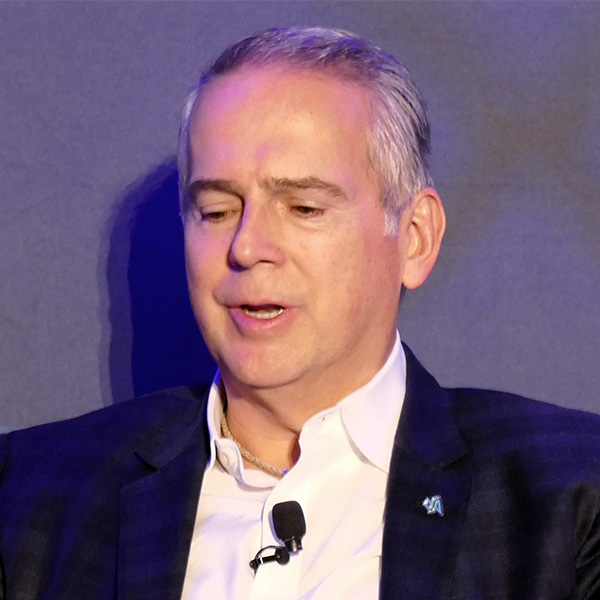
When he was named ERCOT’s CEO in 2022, he said, there was less than 2 GW of storage on the system. “It has doubled every single year that I have been here,” he said, noting the grid operator’s installed storage capacity has now grown to 15 GW. The interconnection queue includes an additional 178 GW of standalone and co-located storage.
“I think batteries are really in the first or second inning there,” Vegas said. “It’s at scale. It’s really become a part of the energy equation, a really important part of it. But it’s early in the process, and I think there’s a huge future ahead of it … as long as we don’t get in the way and trip it along the way.”
He said the biggest risk facing storage is “policy, ideology and differing agendas that don’t embrace the growth environment of the state.”
Texas Public Utility Commission Chair Thomas Gleeson said he runs into the same political headwinds. He said the joke in his office is that when he testifies in legislative hearings, “it seems like the Democrats on the committee agreed with me more than the than the Republicans.”
“I believe batteries are a dispatchable technology,” Gleeson said. “We need more gas plants in the state. I think it would be hard to deny that. But I would say often when posed the question, ‘What do you do with unreliable, intermittent resources?’ And I was quick to tell folks, ‘I don’t believe that they’re unreliable.’ They’re variable, which causes its own kind of challenge. But gas plants break.
“The goal, again, is to have such an expansive portfolio that they all work well together in balance,” Gleeson said. “And so, I do view batteries as dispatchable. I think everyone should.”
Robb: Batteries Help Grid Reliability
NERC CEO Jim Robb agreed with Gleeson, saying his organization has been “really clear” on storage’s reliability contributions to the grid.
Storage “mitigates the variability that you’re always going to have with wind and solar production. Clouds fly over, wind stops for a few minutes, so it helps deal with those issues,” he said.
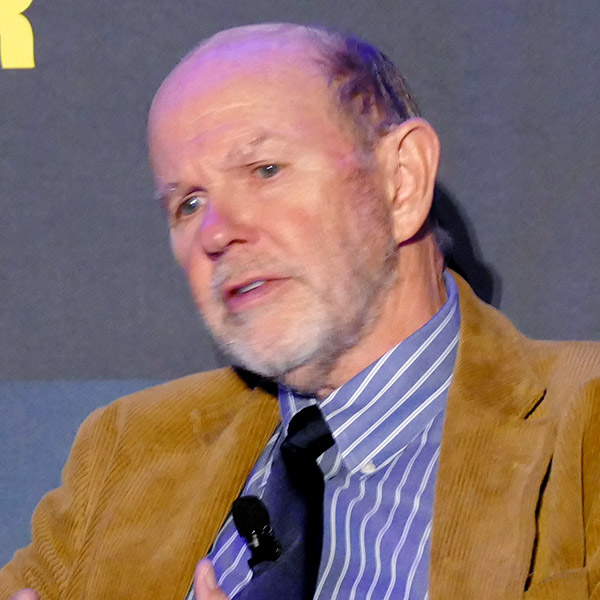
Robb said the bigger issue comes during the late afternoons, when solar production begins to ramp down. ERCOT credits storage in Texas for compensating for the loss of solar in the evening hours. The grid operator has now gone two summers without serious reliability concerns. (See Texas RE: ESRs to Boost ERCOT During Summer.)
“When the solar drops off, you need something to fire up really, really quickly,” Robb said. “We’re seeing solar playing a really big role in moderating those ramps, which is good for the fossil fleet to be able to operate in a more rational way. They’re still getting stressed, but it’s not as bad as it would be, and it really plays a very nice moderation.”
That makes the case for pairing storage with solar facilities, he said.
“We see enormous benefits from having battery storage combined with [solar],” he said. “You look at California, you look at Texas, in particular. Texas is probably the most interesting market because it’s isolated whereas California is integrated with the rest of the West.”
Nickell Sees Storage’s Growth in SPP
While Texas and California are awash with solar and storage facilities, SPP isn’t. ERCOT’s neighbor had 172 MW of accredited summer battery storage capacity in 2025 and 548 MW of operational solar as of June 2025.
However, the RTO’s interconnection queue lists 48.4 GW and 34.6 GW of storage and solar capacity requests, respectively. That accounts for almost two-thirds of the queue’s requested capacity.
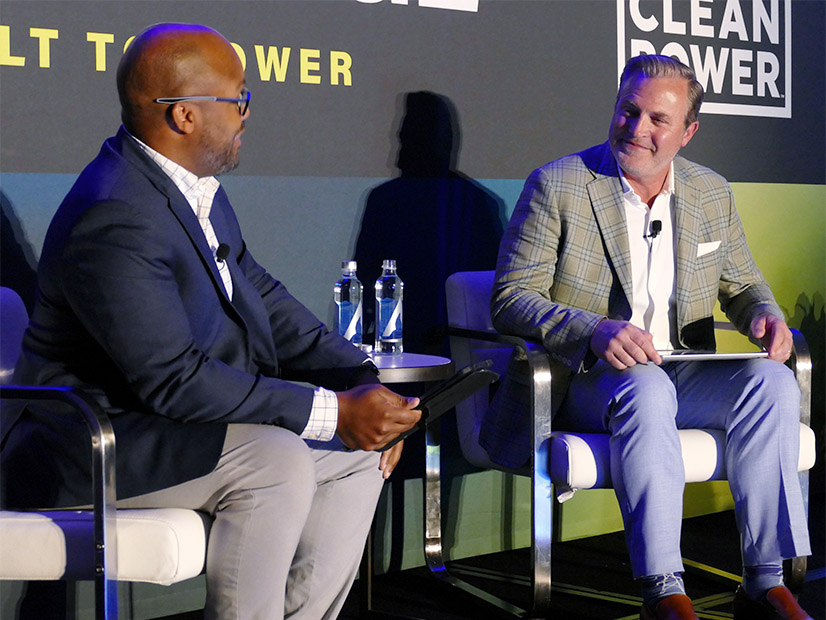
“We see a lot of interest. We’re not seeing a lot of it get built yet,” SPP CEO Lanny Nickell said. “What we’ve heard when we talk to a lot of our customers, developers and the market is that markets in California and in Texas are more lucrative. And the reason for that is because, not only are the prices on average higher in those markets … but also, particularly for storage in those markets, there’s a lot more volatility. You want to be able to charge when prices are low, and you want to be able to discharge when prices are high, and when that gap exists almost on a daily basis, that’s attractive.”
Nickell is buoyed when he looks at the requests for storage and solar in the generator interconnection queue. “We know solar is coming, and we think solar will bring more storage … over the next two [to] four years,” he said.
Nickell was asked why that is. Does it have anything to do with the glut of storage in the CAISO and ERCOT markets?
“I do think that will cause more storage to be looking at SPP because those markets are starting to fill up and there’s not as much more opportunity now compared to what there used to be,” Nickell said.
SPP filed a proposed tariff change with FERC in October following the board’s approval of a high-impact large-load service proposal that Nickell said would make the footprint much more attractive to those loads. (See “Large Load Integration OK’d,” SPP Board Approves 765-kV Project’s Increased Cost.)
“What [the proposal] does is allow these large loads to connect immediately as long as they’re willing to be conditional,” he said. “‘Conditional’ simply means if you’ve got your own generation, you’re going to probably have to start it up as opposed to actually curtail your consumption of energy. They don’t want to do that very long, so they’re going to be looking for backup sources of energy to help augment their energy supply. That’s going to be a tremendous advantage that storage is going to have in that kind of a market.”
FERC Chairs Like Batteries’ Value
Former FERC Chairs Rich Glick and Willie Phillips appeared together as a two-person panel and reminded the audience that reliability remains the No. 1 challenge for any leader of the commission.
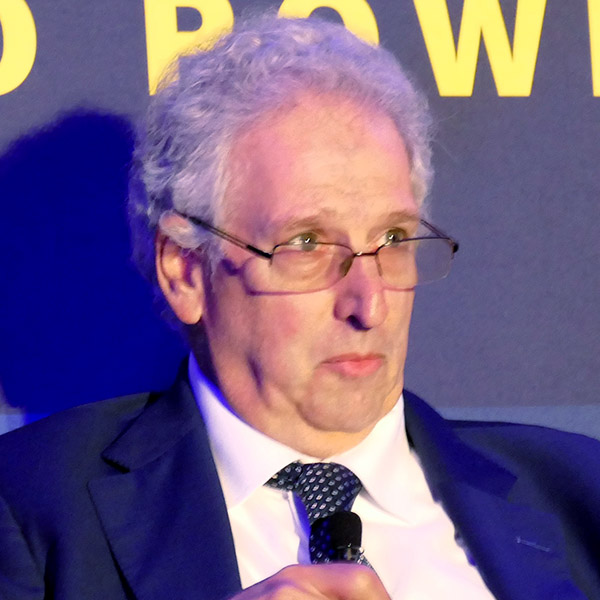
“We didn’t experience the great load growth that we’re now talking about today,” Glick said. “It’s amazing to me, like night and day from when I was at the commission until today, [that California and Texas] added a significant amount of storage that’s helped keep prices down, but it also helped keep the lights on during some very, very difficult weather conditions. Obviously, storage provides some of the essential reliability services and does it in a very quick way, much quicker than some other technologies.”
Phillips said that when he succeeded Glick as FERC’s chair, he found that meetings with industry executives consumed much of his day.
“It helped highlight just how much demand forecasts were beginning to change. I started hearing from CEO after CEO, leader after leader, that they were having a doubling of the expected demand for energy coming on to their system, depending on the particular region,” he said. “That crystallized for me … that if we don’t get this moment right, there could be some reliability, some resource adequacy, some type of crisis that we face.”
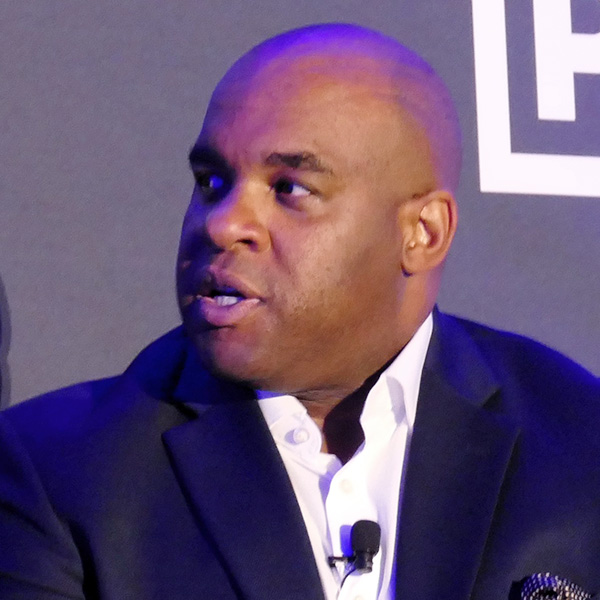
Glick and Phillips also agreed accreditation and other methodologies to determine capacity levels have been beneficial for storage resources.
“Storage came out pretty well, because with storage, there’s obviously a reliability aspect to storage and it provides, depending on how you measure, some argument that there’s significant capacity attributes,” Glick said.
Calling for grid operators to treat paired resources as a single flexible unit, Phillips said, “If you can get to that, you can get to the accreditation, you can get to the reliability value better. We’re asking [our system] to do something that it simply wasn’t designed to do. Going forward, we can’t continue to use the same rules that were in place 50, 60 years ago.
“If we’re going to have a modern grid for our modern 21st century economy,” he added, “transmission is the backbone of our economy. I think the grid of the future is going to include resources like hybrid resources … because you have to do it. You have to do it in the near term because there’s so much pressure on our system. It’s being tested in ways that have never been tested.”