Idaho Power can continue to sell power at market-based rates after it acquired more than 200 MW in resources in 2023 and 2024, FERC ruled Dec. 18.
The decision — which covers Idaho Power’s market-based rate authority (MBRA) in its own balancing authority area, first-tier markets and CAISO’s Western Energy Imbalance Market (WEIM) — came after the Boise-based utility had submitted a series of change in status notices to report ownership of and control over new resources that came online during those years (ER10-2126 et al.).
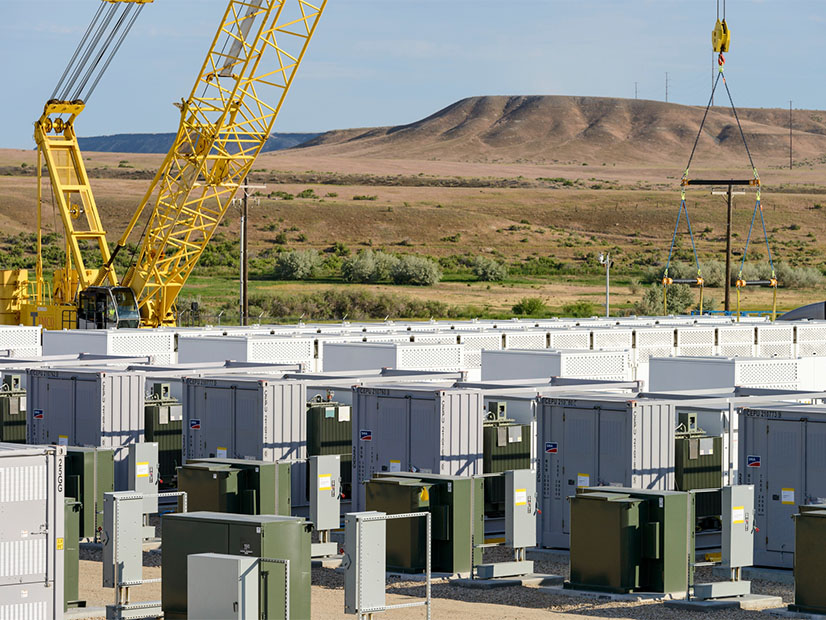
Those filings, submitted in October 2023 and July 2024, reported that the utility added a net cumulative 211.8 MW of generation output after entering agreements to take power from two solar facilities and energizing — and then expanding — its Hemingway standalone battery storage facility.
Idaho Power explained that its own market power analysis showed that the utility still passed FERC’s pivotal supplier and wholesale market share screens for the WEIM and the utility’s adjacent first-tier markets, which include the Avista, Bonneville Power Administration, NorthWestern Energy, and PacifiCorp East and West BAAs.
But the analysis also showed Idaho Power failed wholesale market share screens in its own BAA in the winter, spring and fall, with market shares of 31.3, 41.8 and 30.3%, respectively. That put the utility well above FERC’s 20% threshold, prompting the commission to institute a Section 206 proceeding under the Federal Power Act to scrutinize the utility’s MBRA eligibility.
In allowing Idaho Power to retain its MBRA within its own BAA, FERC agreed with the utility’s contention that the commission should give more weight to the utility’s delivered price test (DPT) analyses rather than a sensitivity analysis based on activity at the Northwest’s Mid-C electricity trading hub.
The DPT analyses showed that, when Idaho Power’s obligation to serve its native load was taken into consideration, its “available economic capacity” — that is, energy available to be sold into the market — fell under the 20% market share threshold and the allowable threshold for market concentration of generation capacity as measured by the Herfindahl-Hirschman Index (HHI).
“Because Idaho Power has native load obligations, we find that the available economic capacity measure more accurately captures conditions in the Idaho Power balancing authority area,” FERC wrote. “The October 2023 DPT and the July 2024 DPT show that, using the available economic capacity measure and based on [Electric Quarterly Report] prices and the Mid-C hub prices, Idaho Power’s base case analyses indicate that Idaho Power is not pivotal in any season. The base case analyses indicate that Idaho Power’s market share under the available economic capacity measure is below 20% in almost all season/load periods, and market concentration in those periods is below the commission’s HHI threshold of 2,500.”
FERC’s Dec. 18 order does not cover a separate Section 206 proceeding the commission instituted for Idaho Power in July 2025, after the utility filed a change in status notice showing the addition of 230 MW of generation (EL25-91). The commission expects to issue an order in that proceeding by early January. (See FERC Launches Section 206 Proceeding for Idaho Power.)