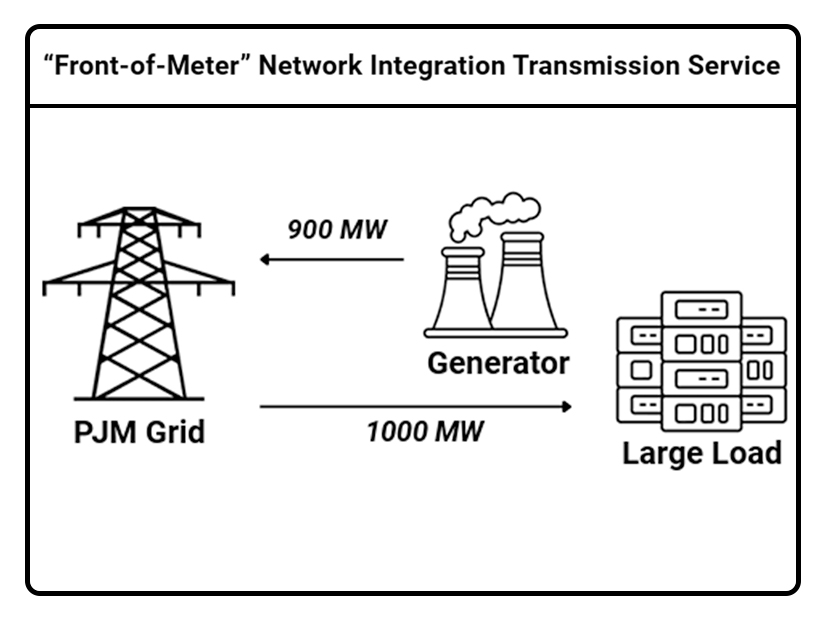
PJM presented stakeholders with an initial look into the first of a handful of FERC compliance filings it is drafting to define how co-located large loads receive transmission service (EL25-49).
The first compliance filing, which is due by Jan. 20, will focus on the most straightforward directives FERC included in its order: revising the tariff to explain how developers seeking to pair large loads with dedicated supply can receive provisional interconnection service, specify how resources may interconnect to provide less than its nameplate rating to PJM, accelerate interconnection and use surplus interconnection service to bring resources online faster.
PJM is required to submit an informational report on the proposals in the Critical Issue Fast Path (CIFP) process focused on large-load interconnections. The commission specifically asked for details on proposals to expedite generation interconnection, changes to the reliability backstop that could allow it to respond to resource adequacy shortfalls, and changes to PJM’s load forecasting and demand flexibility rules.
PJM Associate General Counsel Mark Stanisz said PJM intends to keep the tariff language it is developing under the compliance filing aligned with the market design proposals the Board of Managers is considering under the CIFP process. He presented the proposal to a Co-Located Load Order Workshop on Jan. 9.
“There’s a lot in the air, but we are monitoring it all and are trying to proceed in a coherent way,” he said.
New resources intended to exclusively serve co-located load would be permitted to skip to the final agreement negotiation phase of the interconnection process if it is determined no network upgrades would be required.
PJM Vice President of Planning Jason Connell said new resources would be able to sidestep the interconnection queue only if they would be unable to inject energy into PJM’s grid, such as by tripping offline if the customer they were serving was interrupted. He compared the interconnection of co-located generation to the RTO’s rules for behind-the-meter generation (BTMG), which are not required to go through the queue. Projects already in the queue would not be able to use the new pathways.
New resources that do require network upgrades could use provisional interconnection service to begin partial operations serving the co-located load while those upgrades are under construction.
Developers of co-located resources would be permitted to provide less than the full nameplate to PJM but would be limited to reducing its interconnection service only by the amount needed to serve the paired customer.
Stanisz said the first round of directives the commission gave is more prescriptive than the rest of the order and PJM is looking at governing document language it needs to modify. Staff are reviewing draft tariff changes with the intention of posting language within a few workdays. The first compliance filing may include a definition of co-location — a change the commission requested but did not specify which compliance filing it should be included in.
Manager of Stakeholder Process and Engagement Michele Greening said a survey will be posted along with the proposed tariff revisions to solicit stakeholder feedback.
“It’s all in the spirit of clarification and frankly in the most surgical of ways,” Stanisz said of the directive for the initial filing.
In the second compliance filing, due Feb. 17, PJM is tasked with adding three new forms of transmission service that can be used to serve co-located load, requiring the customers be charged for regulation and black start service based on their gross load, clarifying how the network upgrades required to serve co-locations will be studied, and requiring that existing interconnection customers pay for those upgrades. The filing is due by Feb. 17.
Stanisz said the commission’s order did not comprehensively address many of the jurisdictional issues around the interconnection of large loads and how they receive grid service. The commission’s assertion of jurisdiction over generation interconnections is not novel or trailblazing, so unanswered questions about its jurisdiction over large load interconnections are more likely to be addressed in the Advance Notice of Proposed Rulemaking (ANOPR) on large load interconnections.
Asked if PJM is considering requesting a rehearsing, extension or clarification of the order, Stanisz said staff are focused on preparing the deliverable compliance directives the commission has requested. While other entities might seek such relief, and PJM would review those requests, at this time he is not aware of any intent for the RTO to make such filings.