Debates about affordability continue to dominate state-level energy policy debates throughout New England, shifting the focus away from decarbonization, a panel of experienced lobbyists said at a webinar held by the Northeast Energy and Commerce Association on Jan. 16.
All six New England states face gubernatorial elections in 2026, while U.S. Senate races in Maine, Massachusetts and New Hampshire are drawing significant attention. As federal and local political races heat up, energy affordability is poised to be a key issue, several speakers said.
Christopher Boyle, a lobbyist and former Rhode Island House majority whip, said he has seen “a sea change in how we’re looking at energy in the General Assembly and the governor’s office.”
He noted that Rhode Island Gov. Dan McKee (D) did not mention climate change during his Jan. 13 State of the State address, and has proposed pushing the state’s target for achieving 100% clean energy from 2033 to 2050. McKee also has proposed a cap on energy efficiency spending.
In Massachusetts, Republican challengers have frequently criticized Gov. Maura Healey on the topic of energy affordability, said Jen Gorke of TSK Associates. She noted that the spike in energy prices in the past winter “led to affordability being on the agenda in a way that I have never seen it in Massachusetts.”
But while there is broad agreement that energy affordability is a problem that must be addressed, there is significant disagreement about its root cause, Gorke said, noting that “if you don’t agree on the cause, you can’t agree on the solution.”
“There’s kind of two camps, and a lot of people in the middle,” she added. “Some see our leadership on clean energy and climate as the driver of high cost, while others see those exact same things as the path to lower cost and greater stability and reliability in the future.”
A pair of energy bills introduced in Massachusetts in 2025 exemplified some of the divergence in approaches to addressing energy affordability.
In May, the Healey administration proposed a wide-ranging bill that would tighten regulations around residential competitive electricity supply; allow utilities to issue bonds to help cover costs of the clean energy transition; expand the state Department of Energy Resources’ (DOER’s) procurement authority; and reduce net metering rates for new large solar resources. (See Mass. Gov. Healey Introduces Energy Affordability Bill.)
In contrast, the House members of the legislature’s Joint Committee on Telecommunications, Utilities and Energy (TUE) advanced a bill in November that drew significant public pushback from environmental advocates. While the bill included similar competitive supply regulations and expanded procurement authority for the DOER, it also would cut energy efficiency spending, reduce the annual requirements of the state’s Renewable Portfolio Standard and undermine several key components of the state’s heating electrification strategy. (See Top Mass. House Members Seeking Major Rollback of Climate Laws.)
These debates may heat up in 2026; House lawmakers seek to advance a version of the TUE bill out of the House Ways and Means Committee, while the Senate likely will produce its own version of an energy bill. Historically, the Senate has tended to side with climate advocates on energy policy debates and recently has looked to cut energy costs by reining in spending on the gas system.
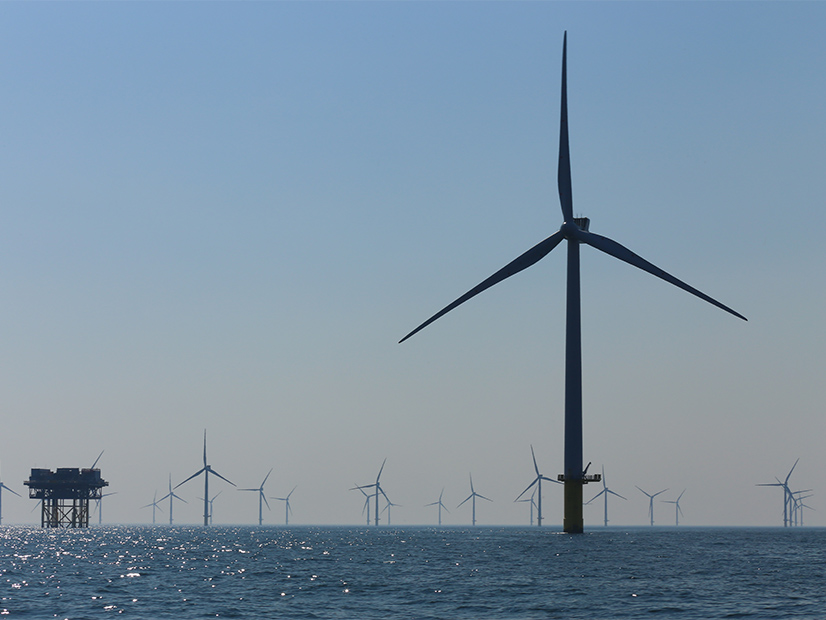
Gorke added the Trump administration continues to have a major effect on all aspects of state government, including energy policy, with particularly large impacts on the state’s offshore wind industry.
“Offshore wind was the key tool for Massachusetts and was really expected to carry a big share of the clean energy transition,” she said. “People are trying to be very creative about how we can plug these holes and keep the momentum, but it has a big impact.”
She added there’s significant concern the Trump administration’s antagonism toward offshore wind will have a long-term chilling effect on investment in future projects even if the current crop of under-construction projects overcomes the administration’s obstacles.
“For Rhode Island, offshore wind is the holy grail of our policy,” said Boyle. He added that, while Revolution Wind may be able to finish construction, the future of SouthCoast Wind is far murkier. “I think the SouthCoast project is the one that is going to really have a material, substantial effect … it’s obviously both an energy issue and a jobs issue having an impact from Washington.”
As offshore wind struggles, Maine’s ongoing solicitation of 1,200 MW of onshore wind in the northern part of the state appears to be increasingly important for the clean energy goals of the southern New England states, said Jeremy Payne, a Maine-based lobbyist for Cornerstone Government Affairs. (See Maine PUC Issues Multistate Transmission, Generation Procurement.)
Four other New England states are collaborating with Maine on the procurement, while ISO-NE’s complementary Longer-term Transmission Planning procurement has the backing of all six New England states. Payne speculated Maine may look to procure some of the energy from the Millstone Nuclear Power Plant in Connecticut in exchange for Connecticut’s procurement of onshore wind in the Northern Maine RFP.
Millstone is under contract with Connecticut electric utilities through 2029, with the utilities required to purchase about half of the plant’s power and all its environmental attributes over the period. The state repeatedly has expressed interest in including other states in subsequent contracts.
“Connecticut has long been interested in nuclear — has long seen its value — but does believe that it has to be a regional resource, because currently the burden is on Connecticut electricity ratepayers,” said Nicole Tomassetti, partner at Capitol Strategies Group.
There’s broad interest across states in exploring the potential of small modular nuclear reactors (SMRs). While it’s difficult to forecast future costs for the early-stage technology, a 2024 study by ISO-NE estimated that adding about 15 GW of SMRs by 2050 could enable the region to meet state decarbonization goals at 33% less capital cost than the renewable-dominated base scenario.
“We have a pretty big political divide here, and obviously we’re in a campaign year, so that makes it even more pronounced, but I think nuclear is one of the few topics where the Democrats and the Republicans can agree that there’s some potential,” said Heidi Kroll, a New Hampshire-based lobbyist for J. Grimbilas Strategic Solutions.
New England has a long history with nuclear power; it was home to a boom in both nuclear development and anti-nuclear activism in the latter half of the 20th century. After a series of major plant retirements over a period of about 25 years starting in the mid-1990s, only Millstone in Connecticut and Seabrook Station in New Hampshire remain.
In Rhode Island, the mere mention of nuclear power in legislative hearings used to elicit “groans and moans and screams and eye rolling,” Boyle said. “The fact that it has become part of an accepted methodology to solve this problem, I find historically very interesting.”