Energy Information Administration (EIA)
EIA
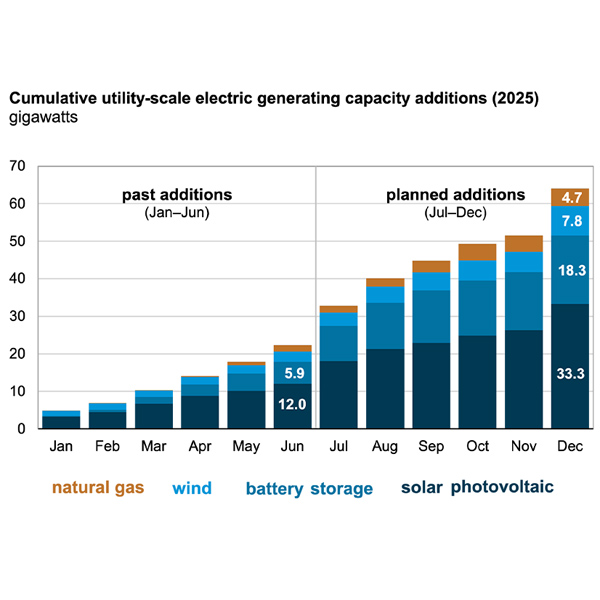
The United States is on track for a record increase in power generation capacity in 2025, the U.S. Energy Information Administration reports.
EIA
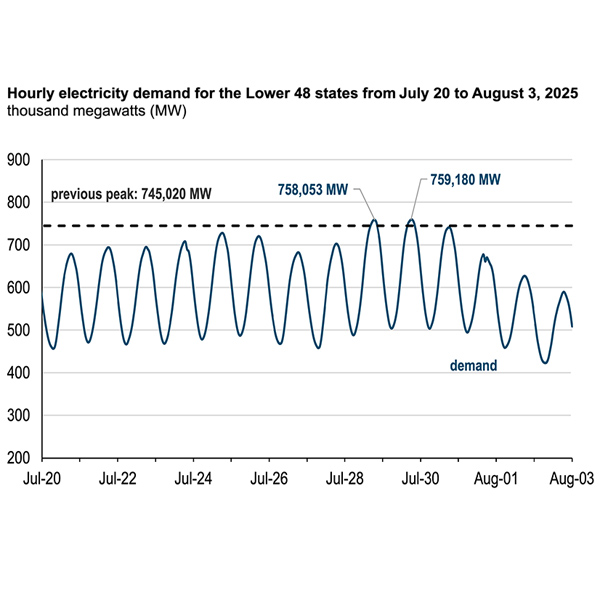
Peak electricity demand in the 48 contiguous states set records twice in the last of week of July, reaching 758,053 and 759,180 MW over one-hour periods July 28 and 29.
EIA
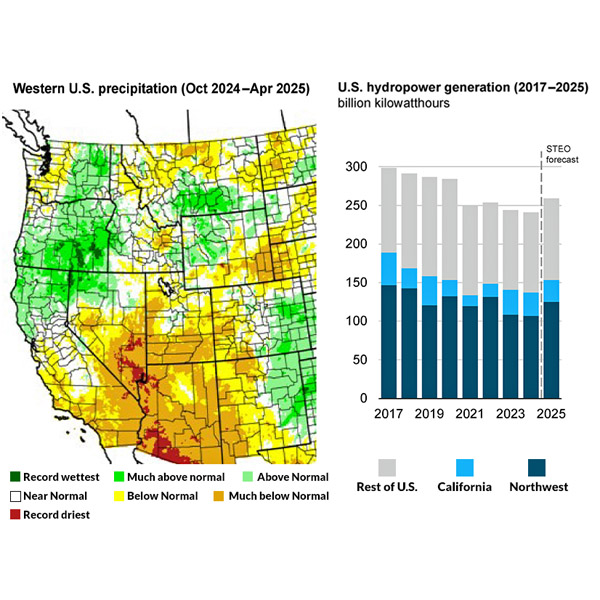
Federal analysts expect U.S. hydropower generation to increase 7.5% over 2024 totals, which were the lowest in at least 14 years.
EIA
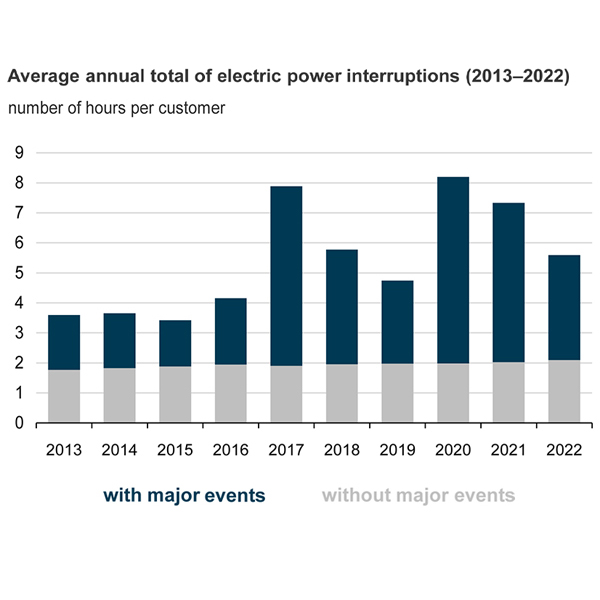
"Chicken Little" claims about power outages being caused by the transmission grid being overtaxed do not stand up to scrutiny, says columnist Steve Huntoon.
EIA
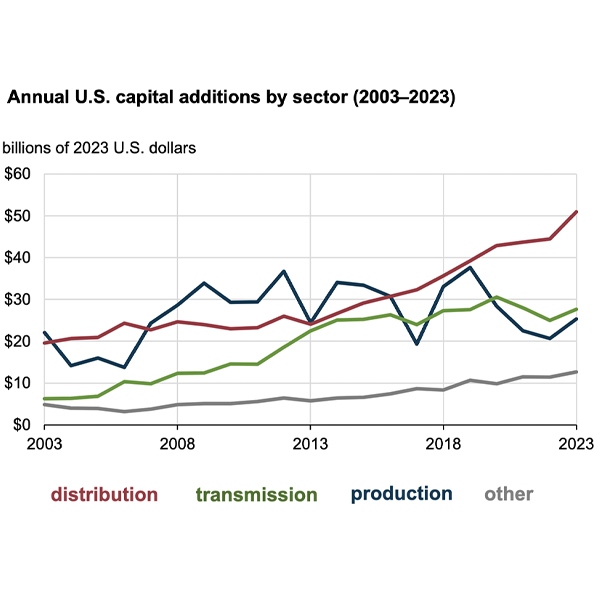
EIA data on utility capital spending over the past 20 years shows that an increase in distribution and transmission spending outweighed declines in generation spending.
PJM
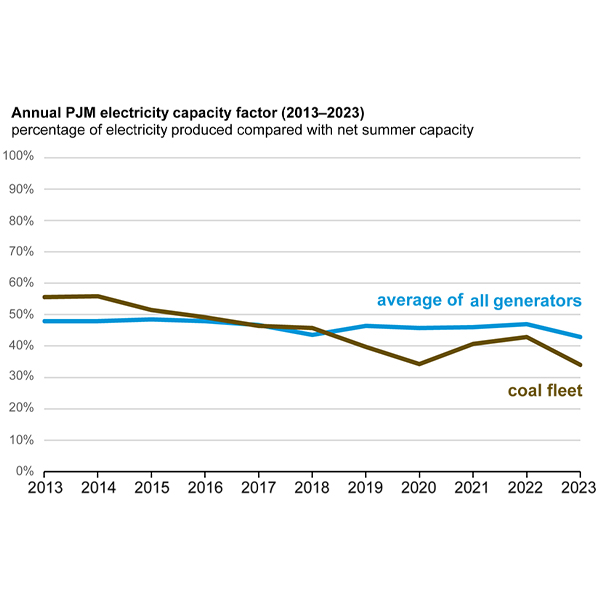
Analysis from EIA finds the average runtime for PJM coal-fired generators has declined sharply over the past decade because of increasing fuel and start-up costs.
Resources for the Future
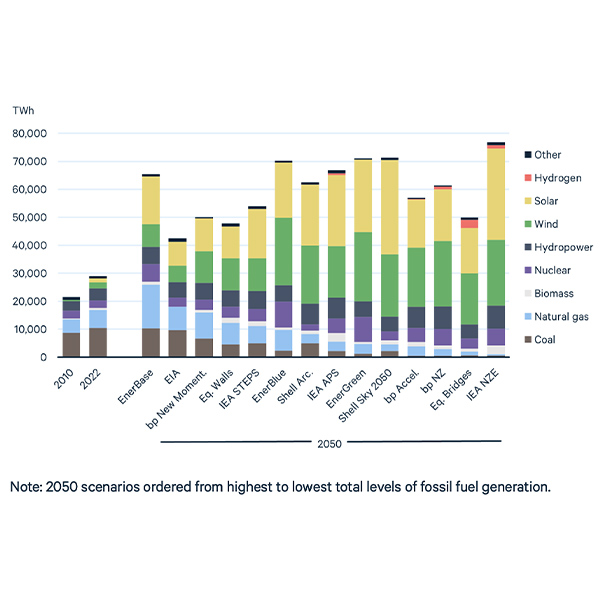
Many recent projections for energy use have fossil fuel use plateauing after 2030, when it needs to rapidly decline to meet midcentury carbon targets, Resources for the Future said.
EIA
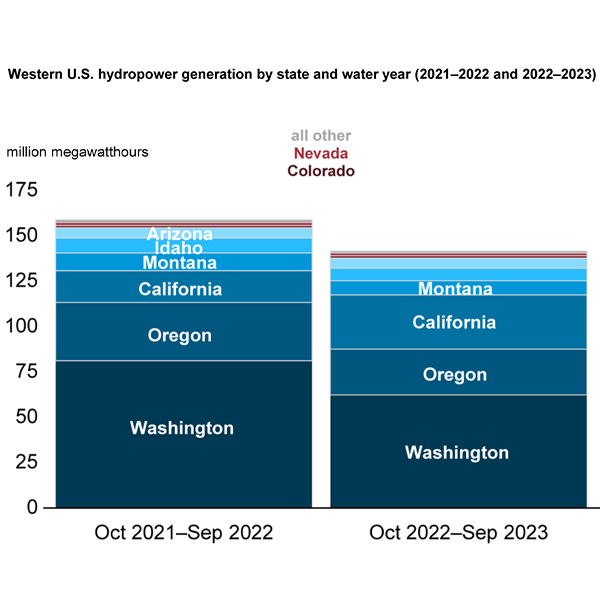
Despite record winter precipitation in California, hydroelectric generation in the Western U.S. fell to a 22-year low in the 2022/23 water year, largely due to drought conditions in Washington and Oregon.

EIA
The U.S. Energy Information Administration reports that fossil fuel generation retirements will slow in 2024 and that solar and storage will dominate capacity additions.
EIA
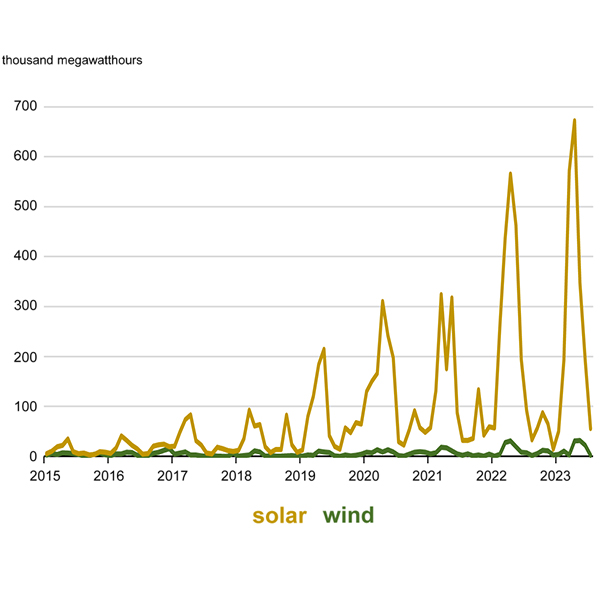
CAISO’s curtailment of solar and wind power is on the rise, and about three-quarters of curtailments so far this year have been from transmission congestion.
Want more? Advanced Search