VALLEY FORGE, Pa. — Looking ahead to the possibility of future emergency orders from the U.S. Department of Energy, stakeholders endorsed a PJM issue charge to establish a more permanent set of rules for how to allocate the cost of keeping generation online beyond its desired deactivation date when ordered by the federal government.
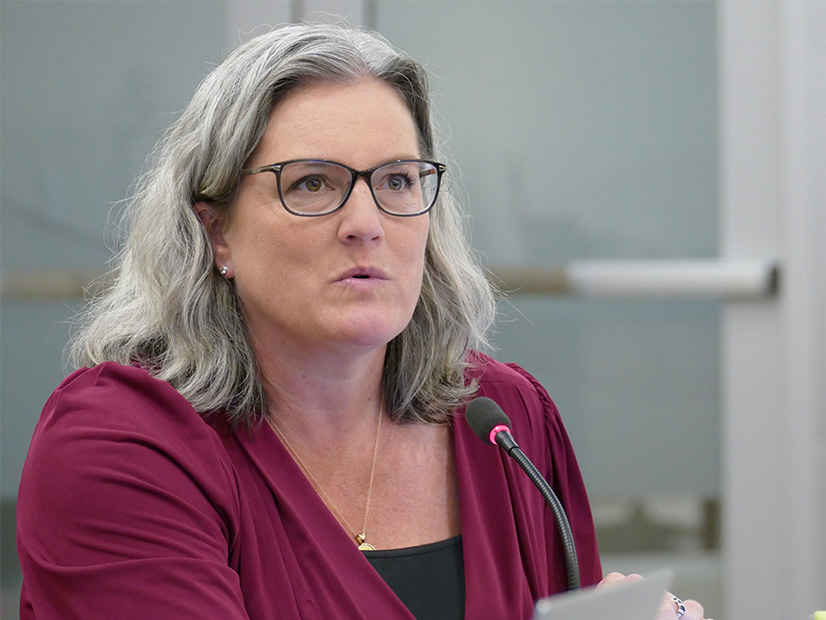
PJM Executive Director of Member Services Jennifer Tribulski told the Markets and Reliability Committee on June 18 that the RTO envisions a new senior task force meeting two to three times a month, with a goal of submitting a filing to FERC in October.
The issue charge designates the content of future DOE orders and the “operating protocols and parameters agreed to by the resource owner” as out of scope.
The Members Committee voted to support a proposal to assign all PJM consumers a share of the cost of continuing to operate Constellation Energy’s Eddystone Generating Station. The company was ordered by DOE to keep Eddystone online past its May 31 deactivation date to ensure resource adequacy, but the order did not specify how Constellation should be compensated. (See PJM Stakeholders Propose Cost Allocation Models for DOE Emergency Orders.)
The package from Gabel Associates received 86% sector-weighted approval in the June 18 vote, making it the only proposal to receive the committee’s support over two proposals from PJM and three from the East Kentucky Power Cooperative (EKPC). The vote results are advisory to inform the PJM Board of Managers’ determination on how to proceed.
Stakeholders commented on the proposals to the board in a Critical Issue Fast Path (CIFP) meeting, which was closed to media and held after the MRC meeting but just before the MC vote. The CIFP process was conducted on a tight five-day timeline to avoid a gap in billing.
All of the proposals include the same June 1 implementation date, transparency provisions, billing frequency and cost allocation calculation formula. Where they differ is how to determine which consumers should be allocated a share of the costs and whether the governing document revisions should address possible future DOE emergency orders.
Gabel’s proposal, PJM Package C and EKPC Package E would allocate the costs to all PJM consumers, while PJM’s Package A would narrow the allocation to specific locational deliverability areas (LDAs) or zones if future emergency orders specified that a resource adequacy issue was geographically isolated. EKPC Packages D and F would allocate the costs to specific LDAs if they clear short of their reliability requirement; otherwise, they would use an RTO-wide allocation.
Gabel and EKPC Package E both would apply only to the Eddystone order expiring in August, with the other five including differing ways of addressing any future emergency orders to keep generation online.
Constellation Vice President of Wholesale Market Development Adrien Ford said the company could not support Gabel’s proposal without modifications to allow it to continue to provide cost allocation beyond the Aug. 28 expiration of the DOE order in the event the department requires Eddystone to remain online longer.
Exelon Director of RTO Relations and Strategy Alex Stern said he supports the Gabel proposal and trusts the board to make any necessary adjustments, such as the applicability to future orders.
Carl Johnson, representing the PJM Public Power Coalition, said some members supported the Gabel proposal because it would limit the changes to the current Eddystone order, with the belief that there will be more emergency orders issued in the next few weeks and those should be addressed as they come up.