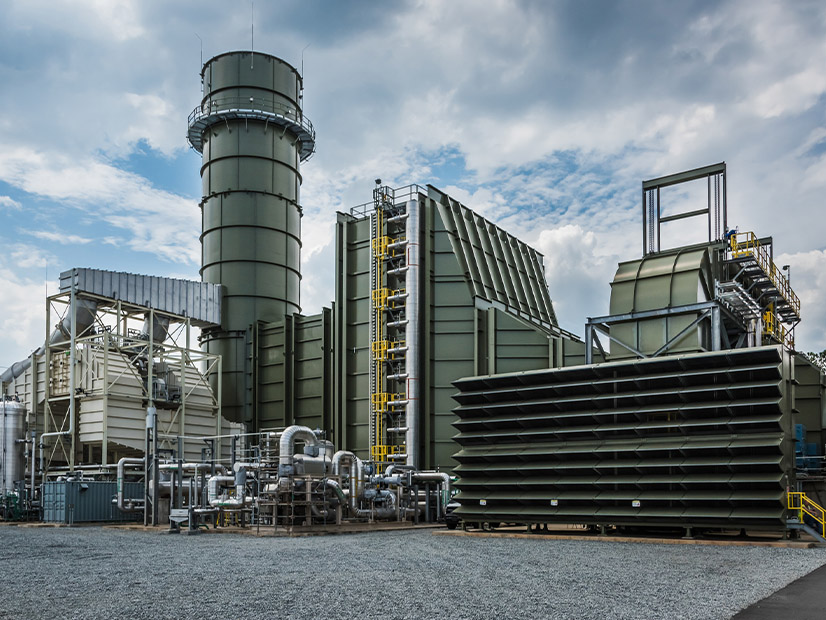
The U.S. Department of Energy has issued an emergency order authorizing Duke Energy Carolinas to operate certain generation facilities at maximum output to meet heat-related demand.
It was the fourth invocation in six weeks of the lightly used Section 202(c) of the Federal Power Act, and it was the first time in nearly two years that high heat prompted such an order.
Duke requested the order June 23 as humidity and temperatures approaching 100 degrees F were settling over its service area in North and South Carolina. It said it expected a small percentage of its generating units to experience operating difficulties due to the heat and said also that 1,500 MW of capacity is offline or derated.
Meanwhile, with a heat index in the low 100s, the utility forecast 21,968 MW of load for Duke Energy Carolinas.
Duke declared an Energy Emergency Alert Level 2 (EEA 2) and told DOE it might not be able to meet the demand and might need to curtail load to preserve grid reliability.
Early June 24, Energy Secretary Chris Wright signed Order No. 202-25-5. It expires at 10 p.m. June 25, but Duke can request a renewal.
At 3 p.m. June 24, the National Weather Service reported a temperature of 98 degrees and a heat index of 105 in Duke’s hometown, Charlotte, N.C. It predicted a heat index as high as 110 on June 25 and forecast high temperatures would reach the low to mid 90s over the following few days.
Also at 3 p.m., Duke’s outage map showed 121 outages totaling just 816 customers without power in the Carolinas. And the U.S. Energy Information Administration’s hourly electric grid monitor was showing Duke Energy Carolinas at 21,306 MW of demand.
Duke Energy spokesperson Jennifer Garber told RTO Insider: “The grid is performing as expected and we currently have adequate power generation to meet our customers’ needs.”
The 202(c) order would be used only if needed to preserve reliability, she said, and is narrowly focused on a few facilities: Duke’s Buck Station, Lincoln Combustion Turbine Station, Marshall Steam Plant and Rockingham Station, plus a few units that independent power producers requested be included.
The request to DOE was a precautionary step as part of Duke’s all-of-the-above preparation for the heat wave, Garber said.
The utility issued conservation appeals for customers in the Carolinas to reduce their energy use, particularly during the peak 3-8 p.m. period.
The DOE order noted Duke also had curtailed all recallable energy sales and implemented its load management program, including residential demand response and large-load curtailments. Duke also notified wholesale customers to implement in-kind load management programs. These efforts were expected to shave 700 to 1,000 MW off peak demand.
Meanwhile, the order said, Duke obtained as much external capacity as it could — about1,332 MW.
Duke told DOE it would exhaust these options before it ran any generation units in a manner that would conflict with local, state or federal regulations and permits.
The 202(c) order authorizes the generators to operate at maximum capacity only as needed and only as long as Duke has declared an EEA 2 or EEA 3.
Rare Invocation
Section 202(c) has been used infrequently. On its website, DOE lists just 26 such orders in the past quarter-century. Many of the recent orders were related to extreme weather — heat, hurricanes and the infamous Winter Storm Uri, which hit ERCOT in 2021.
In the past year, there have been six orders:
-
- Oct. 9, 2024, authorizing Duke Energy to operate certain generating units at low load due to the effects of Hurricane Milton;
- May 16, 2025, two orders to the Puerto Rico Electric Power Authority to expand baseload generation and manage vegetation that threatens transmission facilities;
- May 23, 2025, blocking the retirement of Consumers Energy’s J.H. Campbell Plant in Michigan to preserve capacity in MISO (See DOE Orders Michigan Coal Plant to Reverse Retirement);
- May 30, 2025, blocking retirement of two units at Constellation’s Eddystone Generating Station in Pennsylvania to preserve capacity in PJM (See DOE Orders PJM, Constellation to Keep 760-MW Eddystone Generators Online); and
- June 24, 2025, to help Duke deal with the heat wave.
Before that, the most recent heat-related 202(c) order authorizing maximum generation output was issued to ERCOT on Sept. 7, 2023, as temperatures in Dallas hit a record 107 degrees.