The PJM Members Committee voted against each of the dozen proposals brought to address rising data center load as part of the RTO’s Critical Issue Fast Path (CIFP) process. (See PJM Stakeholders to Vote on Large Load CIFP Proposals.)
The proposal from the Southern Maryland Electric Cooperative (SMECO) was the highest vote-getter at a special MC meeting Nov. 19, receiving 46.66% sector-weighted support, still falling short of the two-thirds required for endorsement. It was followed by the Independent Market Monitor’s proposal at 39.88% and PJM’s at 38.66%. The voting was advisory to the RTO’s Board of Managers, which expressed its intent to file changes with FERC in December to be effective for the 2028/29 Base Residual Auction (BRA).
Addressing the committee after the vote, PJM CEO Manu Asthana said those goals stand, and more detail around timing will be forthcoming. Though there was no winner among the packages, Asthana said there was plenty of information for the board to review from the input shared during the meeting preceding the vote, the last to be held as part of the process.
The CIFP meeting, during which each of the sponsors presented their proposals to the board, lasted much of the day, beginning at 9 a.m. and stretching past its 2 p.m. scheduled end time, pushing the MC’s meeting to start at 3:45 p.m. The CIFP meeting was closed to the media, and there was no discussion on the packages themselves during the MC meeting before the vote opened.
RTO spokesperson Jeff Shields said the board plans to act in the next few weeks.
“PJM opened this conversation about the integration of large loads and greatly appreciates our stakeholders for their contributions to this effort,” he wrote in an email statement. “The stakeholder process produced many thoughtful proposals, some of which were introduced late in the process and require additional development. This vote is advisory to PJM’s independent board. The board can and does expect to act on large load additions to the system and will make its decision known in the next few weeks.”
The SMECO package adopted the changes sought by PJM, including changes to the pricing and dispatch of price-responsive demand (PRD), the addition of state reviews of large load adjustments and an expedited interconnection track (EIT) for state-sponsored projects. Both SMECO’s and PJM’s proposals would shift PRD to an energy market strike price, rather than a dynamic retail rate, but SMECO proposed a $1,000/MWh limit and PJM would set it at $1,849/MWh.
The PJM proposal also would align PRD dispatch with demand response by requiring it to respond regardless of bid price, subject it to performance assessment interval (PAI) penalties and mirror their 30-minute energy bid price caps. SMECO would subject PRD participants to Capacity Performance penalties only if the resource is dispatched when the strike price or PAI conditions have not been met and require that they have supervisory control over the load and the ability to curtail.
The EIT would create a 10-month process for resources of at least 250 MW and nonrefundable study deposits of $10,000/MW for projects paired with large loads and doubled for standalone development. They would require letters of support from the governor or utility commission for the state they are sited in, which is intended to avoid expending limited resources for studying requests on projects that will be mired in permitting and siting challenges at the state level. Only 10 projects would be allowed to proceed each year.
The RTO’s executive summary of its package included a request for the board to initiate a second phase of the CIFP process focused on changes to the reliability backstop and incentives for large loads to bring their own generation or participate in DR programs.
Board Chair David Mills said it will work to assemble a proposal that makes sense of all the information provided throughout the CIFP process.
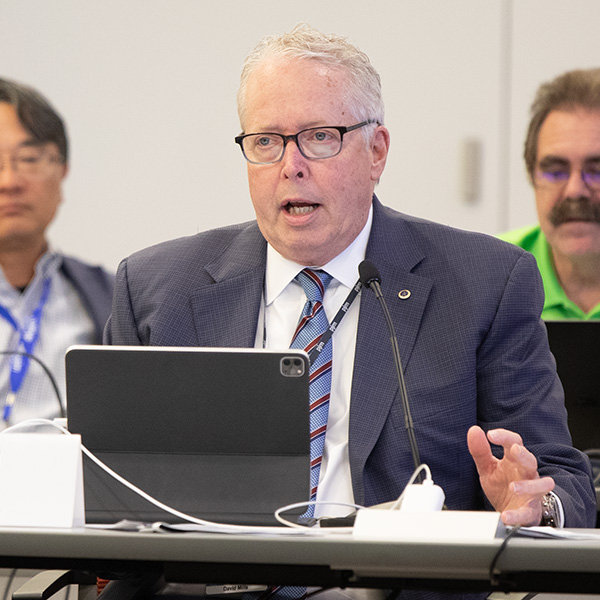
“It’s been an arduous journey to get to this point. I’m actually not surprised we got such disparate accounts on all of these proposals. … Just because none of these passed does not mean the board will not act,” he said.
During an open-ended discussion following the MC’s regular monthly meeting Nov. 20, Mills said he could envision changes to the CIFP process. One possible change could be adding milestones throughout the process if there are many proposals being considered.
Tom Rutigliano, senior advocate at the Natural Resources Defense Council, said the board has difficult decisions ahead of it to ensure that data center growth is not subsidized by the public.
“The growth of data centers is colliding with the reality of the power grid. PJM members weren’t able to see past their commercial interests and solve a critical reliability threat. Now the board will need to stand up and make some hard decisions. We hope they fulfill their obligation to 67 million people and commit to protecting reliability, not subsidize data centers at public expense, and treat all customers fairly,” he said in a statement.
“The public faces a $163 billion bill through 2033; and the region could suffer multiple rolling blackouts each year. If the board doesn’t step up, the region won’t be able to meet record demand and will suffer declining reliability for years to come.”