New Jersey Gov. Phil Murphy (D) is asking FERC to investigate “potential market manipulations” in the PJM Base Residual Auction (BRA) in July 2024 that state officials say contributed to a 20% hike in electricity rates in New Jersey.
Murphy, in a letter to FERC commissioners, said he had “deep concerns about the PJM cost crisis.” He said he believes the “exorbitant price increases” in PJM’s July auction “may have been subject to market manipulation.”
FERC Chairman Mark Christie defended PJM staff in comments at the monthly FERC meeting April 17.
“A lot of this criticism that I’ve been seeing in the media, directed at PJM and its management, and blaming them for everything that is wrong with the PJM capacity market, is in many ways misplaced,” he said. “And a lot of it is because of state policies that have sort of come to a head just recently.”
Christie particularly cited the work of outgoing PJM CEO Manu Asthana and other PJM executives. (See PJM CEO Manu Asthana Announces Year-end Resignation.)
“Manu had the unlucky job of coming in when a lot of factors that were put in play 20 years ago sort of started to come to a head,” Christie said. “These factors, such as the big increase in load that we’ve been seeing in the last few years, the loss of resources has been ongoing for years, and all this sort of came to a head. But he has done, I think, an outstanding job. I’ve always found him to be very, very straightforward and open in dealing with me.”
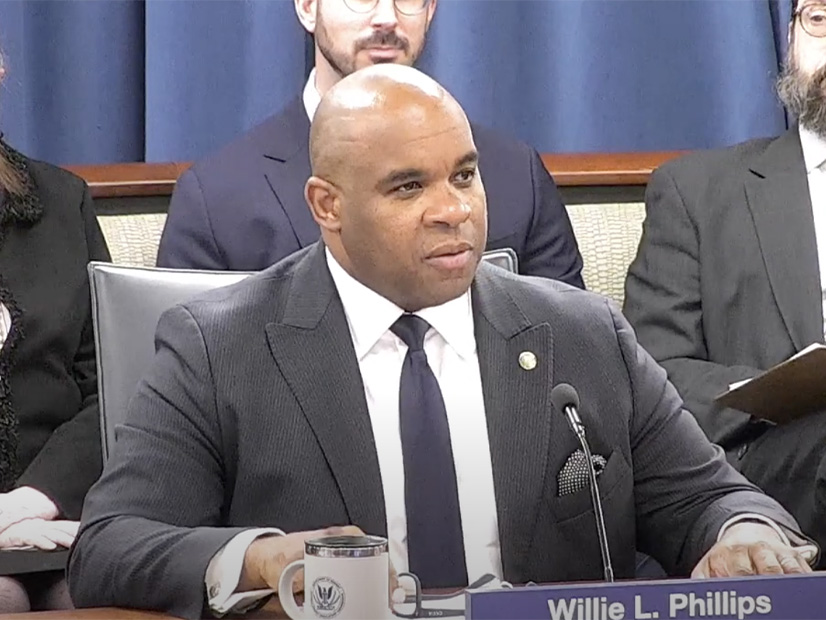
Commissioner Willie Phillips agreed with Christie. “I want to echo the comments you made about Manu and PJM leadership. I think what you said was spot on and very well said.”
Asked whether FERC would launch an investigation, Christie said he had to be careful about commenting because the commission has pending cases dealing with the high prices from the last capacity auction. But he noted he has been a skeptic/critic of the capacity market construct since it first was launched.
“I think that a lot of the problems that PJM is facing today are the result of trends that have been going on for 21 years,” Christie said. “And again, I’m a fact-witness to that. I’ve been there, and I think a lot of decisions were made years ago that are now showing up and causing problems for a lot of the states that are complaining the most. One of the biggest problems, I think, was 20 some years ago. They made a decision to use the PJM capacity market as their mandatory sole source of resource adequacy, and so that put them at the mercy of the PJM capacity market.”
Many of the member states have pointed the finger solely at PJM for those problems, but Christie argued some of their state policies are to blame as well. FERC is holding a two-day technical conference in June to look at resource adequacy, where the issues will be discussed.
Gov. Murphy’s letter urged FERC to “determine the extent to which any such manipulation may have resulted in higher capacity auction prices that are being passed on to retail electricity customers in the PJM market, particularly in New Jersey.”
“I believe that billions of dollars in excessive costs for [consumers] are the direct result of fundamental flaws in PJM’s capacity market and were foreseeable and preventable,” the letter said.
In response, PJM released a statement that said the organization “has not seen evidence that supports a finding of market manipulation in the 2025/26 capacity auction, but we take such allegations very seriously.” FERC’s Office of Enforcement “is the right place to address such a concern, and PJM will follow any directives we receive from FERC,” the statement said.
“New Jersey has insufficient generation in-state to meet its needs, and has to make up this difference through imports,” said the statement, released by spokesman Jeffrey Shields. “A seven-year-long effort by New Jersey to fill this gap with offshore wind has failed to deliver any results whatsoever, and consumers are now paying the price for this failure.”
Murphy’s statement marks a new stage in the friction between PJM and New Jersey and other states over the rapidly increasing cost of electricity and the region’s ability to generate enough power in the future.
New Jersey and Maryland officials on April 16 attended a press conference for the release of a report by Evergreen Collaborative, a national environmental group that promotes solutions to climate change. The report predicted a 60% hike in electricity rates unless PJM takes steps to reform the process by which new clean energy sources are added. (See NJ, Md. Officials Target PJM After Critical Report.)
Pennsylvania in January filed a complaint with FERC about PJM, which resulted in the RTO’s agreement to cap future auctions’ capacity prices. (See PJM, Shapiro Reach Agreement on Capacity Price Cap and Floor.)
New Jersey’s draft master plan, released March 13, predicts demand for electricity will increase by 66% by 2050, and state officials are concerned about how they will meet that need. (See NJ Releases Electrification-focused Energy Master Plan.)
PJM says the expected shortfall in power is in part due to the slow pace of new energy sources coming online compared to the far faster pace at which older generating sources — mainly fossil-fueled sources — are going offline, often in line with state policies. In addition, PJM says the region can expect an influx of high-energy-using entities, especially artificial intelligence data centers.
New Jersey, and other states, say PJM has failed to plan for the surge and the problem is exacerbated by the slow pace at which the agency approves new energy sources, especially renewable energy sources.