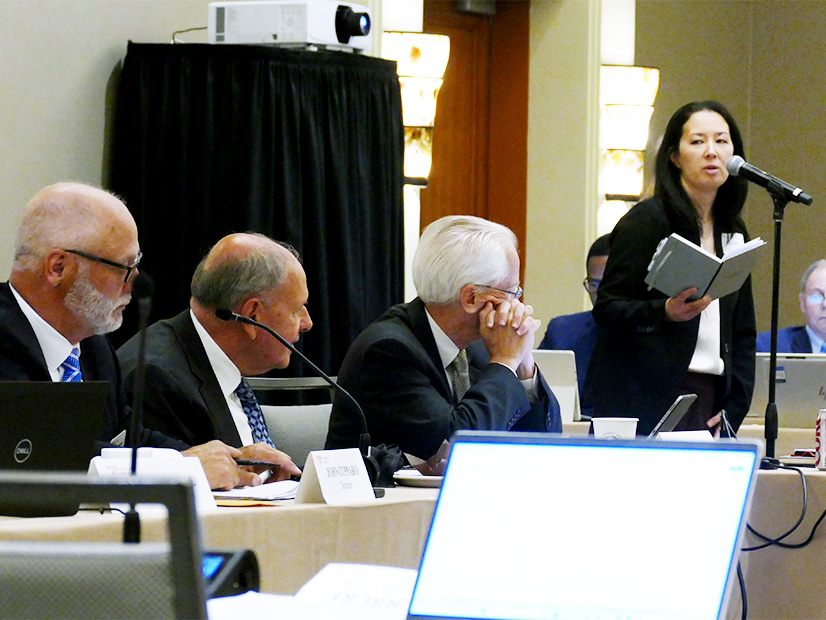
OMAHA, Neb. — As expected, SPP’s Board of Directors has approved a tariff change that creates a one-time study outside the grid operator’s normal planning process over the concerns of independent power producers.
During its quarterly meeting May 6, the board added its endorsement of a revision request (RR668) already approved by state regulators (the Regional State Committee) and stakeholders (the Markets and Operations Policy Committee and several working groups). The expedited resource adequacy study (ERAS) is designed to help load-responsible entities meet their RA requirements that are under pressure from large loads that have increased demand and SPP’s backlogged generator interconnection queue. (See New ERAS for SPP: Stakeholders Approve RA Studies.)
“SPP is committed to evolving its processes to better serve our members,” SPP CEO Lanny Nickell said in a statement. “ERAS is one part of that evolution — an innovative solution that will mitigate acute reliability risks without disrupting SPP’s other processes or ongoing [generator-interconnection] queue reforms — and it comes just in time to meet the reliability needs of a quickly changing grid.”
Transmission-owning members welcomed ERAS’ approval. Environmental groups and IPPs did not, arguing that the study amounts to queue jumping, bypasses open access to the RTO and fails to treat all customers in an equitable manner.
“It will help those of us responsible for keeping the lights on,” said Oklahoma Municipal Power Authority’s (OMPA) Dave Osburn.
“This is an affront to open access and a major and significant problem for those exploring whether or not to invest in SPP,” the Advanced Power Alliance’s (APA) Steve Gaw said.
Brett White, senior vice president of regulatory and government affairs for Pine Gate Renewables, agreed ERAS places open access under threat. He said “undue discrimination” is being applied to interconnection customers who have invested in the current process.
“We as an IPP and our fellow IPPs will be harmed by ERAS, in several ways that are worth mentioning again,” White said. “The lack of coordination between ERAS and the normal [study] process will create unanticipated curtailment and overloads on the system that will harm both groups of projects until additional upgrades are built. This is why we don’t study two clusters in parallel.”
White cast doubt on SPP’s promise that ERAS will be a one-time proposal, saying the RTO has proposed to use the same process in the RTO Western region on a recurring basis.
“This does not reflect the supposed ‘emergency’ nature of this proposal and affirms concerns that ERAS is simply the beginning of a process to chip away at principles of open access,” he said.
The Members Committee’s advisory vote for the board passed 17-5, with one abstention. The APA, Pine Gate, Natural Resources Defense Council, EDP Renewables and Google all opposed the measure.
SPP said it remains committed to principles of independence, fairness and equity and that its standard processes will continue to ensure interconnection requests are studied fairly and efficiently. It said the proposal is necessary to respond to an “imminent and growing need” by adding more generation before the region’s capacity is drawn down to zero.
Large loads have increased LREs’ load forecasts significantly, SPP said, potentially leaving them short by 17 GW in 2030.
“I think of this region as a one-lane road on the edge of a cliff,” board member Steve Wright said. “We’re too close to the edge right now. The need to bring more generation and transmission online is a crucial component to the region.”
ERAS is available only to generation projects nominated by LREs and that meet clearly defined thresholds related to near-term resource adequacy needs. It also provides a bridge to the longer-term relief expected from the Consolidated Planning Process (CPP), a separate initiative to streamline the complex and time-intensive planning process, SPP said.
“Ultimately, CPP is the answer to these problems of getting generation online faster,” White said. “ERAS will only delay by further complicating planning studies and taking staff away from the crucial work of getting CPP up and running.”
MOPC’s approval included an amendment to extend a resource’s commercial operations date to seven years because of supply chain constraints. However, the RSC took up the proposal without considering the extended timeline.
SPP plans to file the proposal with FERC later in May. Assuming the commission’s approval, staff will notify LREs of the process for submitting ERAS projects as early as August, with interconnect rights being granted as early as April 2026.
The board also ran into pushback from the MC in approving a tariff change (RR665) that establishes “subregions” for the cost allocation of future byway (between 100 and 300 kV) upgrades. The measure decouples SPP’s Schedule 9 (zonal rates) and Schedule 11 (highway/byway) transmission pricing zones and creates larger Schedule 11 subregions of existing zones. Two-thirds of the cost of byway upgrades would be allocated to the subregion where they are connected, with the remaining 33% allocated to the SPP footprint. (See “Members Pass Last of HITT’s 2019 Recommendations,” SPP MOPC Briefs: April 15-16, 2025.)
Five members opposed the proposal during the MC’s vote: American Electric Power, Oklahoma Gas & Electric, OMPA, City Utilities of Springfield and Omaha Public Power District.
“AEP remains concerned whether or not this zonal approach is going to benefit customers,” said AEP’s Stacey Burbure, who is responsible for transmission business development and joint ventures. She pointed to no votes cast by Oklahoma and Texas regulators during the May 5 RSC meeting.
“We’re concerned this could result in significant litigation,” Burbure said.
Board members approved several other tariff changes and other measures previously endorsed by the RSC and MOPC:
-
- A provisional load process (RR672) that allows transmission customers to add load to the system when they don’t have enough designated resources to cover their 10-year load forecast (including losses). Under the new methodology, upgrade costs will be assigned directly to the customer, with base-plan funding covering the remaining cost. (See “‘Chicken & Egg’ Issue,” New ERAS for SPP: Stakeholders Approve RA Studies.)
- A structured cost-allocation method for assigning a portion of the new Consolidated Planning Process’ upgrade costs based on benefits received to generator interconnection customers. The generalized rate for interconnection development contribution (GRID-C) formulas and associated cost-control approach will determine load-based cost-allocation impacts for energy resource interconnection service versus network resource interconnection service. The RSC recommended the board approve the approach to proportionally allocate incremental long-term congestion rights based on the GI GRID contribution to the overall CPP transmission portfolio cost.
- An increase to the planning reserve margin for the 2029 seasons (RR664). The summer PRM will go from 16 to 17%, and the 2029/30 winter PRM will go from 36 to 38%.
Nickell Focuses on Members’ Needs
Nickell, making his first president’s report to the board, said his vision of SPP as the best RTO in the country has evolved since the announcement of his selection as CEO in December 2024. (See SPP Names COO Nickell to Replace Sugg as CEO.)
“A lot of our members … instilled in my head that it’s not good enough necessarily to be just the best RTO. What SPP needs to be is what’s best for you, our members and our stakeholders,” he said, directing his comments to state regulators and members. “That has become my slightly modified vision. It’s not just to be the best RTO, but it’s to be the best for those who depend on us in this footprint. Getting there will depend on a strong foundation of culture.”
Nickell said SPP’s stakeholder-driven culture is being challenged by the industry’s rate of change.
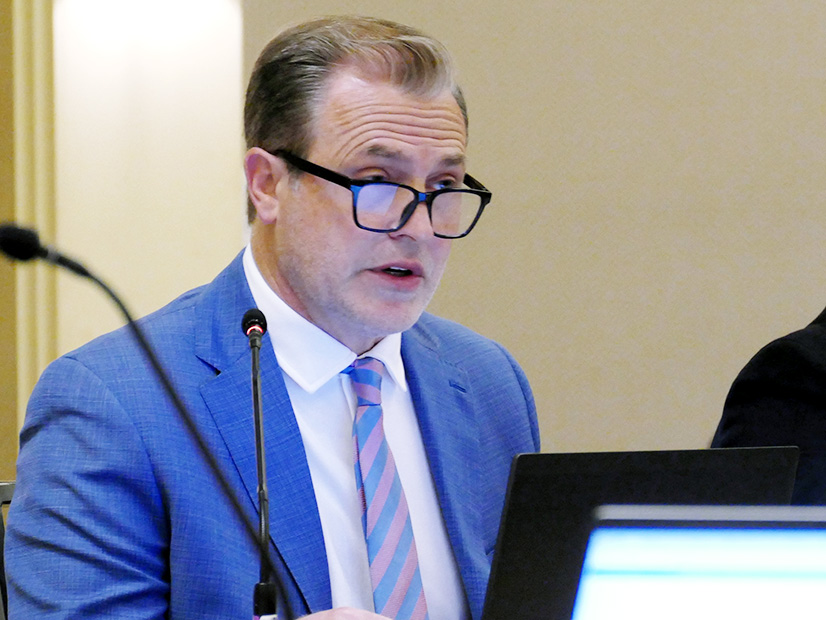
“We will need to evolve both as a company and as an organization, to move faster than we are accustomed in order to survive and thrive,” he said. “We know that we’ve got a generational challenge. We know that our risks are increasing because it takes a long time to get new assets and new steel in the ground.”
Nickell called for more visibility in the industry, saying too often the utility business has been happy to stand in the shadows. But that all changed with Winter Storm Uri in 2021, when SPP was forced to shed load for the first time in its history and ERCOT’s grid was minutes away from a complete meltdown, he said.
“It put us in a much more public position, and now our generational challenge simply compels us to be in front of utility leaders, elected officials, regulators and even consumers,” Nickell said. “We have to do a better job of telling our story in order to make the change that needs to be made and to move our industry forward. We’re going to have to be engaged with CEOs across the industry, with executive leadership of our members, and with government officials. We have to understand their needs, and we hope to be able to explain ours and make sure that we’re moving in the right direction and at the right speed.”
Nickell closed by mentioning the release of SPP’s virtual annual report and its annual member value statement indicated the RTO’s membership realized $3.9 billion in savings and benefits, up 7.8% from 2023 to 2024.
Cupparo Issues ‘Executive Order’
Board Chair John Cupparo closed the meeting with one of his self-admitted monologues and called on staff to outline a draft proposal that will help integrate large loads with the “appropriate acknowledgement of risks and costs” and bring it to the August board meeting.
“This one’s getting heightened national attention. It also has implications on generation and interconnections beyond issues addressed in ERAS,” he said. “This board is willing to push the boundaries on speed and make decisions that may not achieve total consensus in order to meet our mission, to preserve the sustainability of our model and to continue to provide the value consumers in the region have become accustomed to receiving.”
Cupparo asked that the proposal be drafted with the “requisite stakeholder engagement.” He included states and other national regions in the engagement that will be necessary in “pushing the boundaries.”
“We believe it’s important, though, that we drive a stake in the ground in terms of moving these initiatives forward, given we’ve got a window to respond. In my mind, the reality is we’re going to need to go faster as we make additional decisions to meet our generational challenge,” he said.
“Thank you for your executive order, I appreciate that,” Nickell responded. Alluding to his frequent call for “the need for speed,” he pointed out it took 18 months for SPP to approve a competitive project recommended in 2023.
“That’s not speed, folks. We’ve got to get faster,” he said.
Limits for Working Group Chairs
By approving the consent agenda, the board accepted the Corporate Governance Committee’s recommendation to limit working group chairs to three consecutive, full two-year terms as part of its “adaptive governance effort.” The committee said term limits were necessary to ensure balanced representation of various sectors and member organizations across the working groups, given the chairs’ active role in determining the groups’ representation.
The CGC also recommended incumbent Mark Ahlstrom, with NextEra Energy Resources, chair the Future Grid Strategy Advisory Group and Western Area Power Administration’s Brianna Haug chair the Modeling Development Advisory Group. Haug previously served as the group’s vice chair.
The consent agenda also included MOPC’s endorsement of eight transmission upgrades with estimated in-service dates (ISDs) 90 days past their first-reported ISD, and staff’s recommendation to approve four out-of-cycle evaluations for projects issued out of the 2019, 2021, 2022 and 2024 ITP assessments.
Staff said the projects are base-plan funding and any cost changes will be reflected regionally.
Nickell, who chairs the CGC, said the committee has renominated Bronwen Bastone, Ray Hepper and Steve Wright for additional three-year terms as independent directors. It will be Bastone’s third year and the second for Hepper and Wright. SPP’s membership will vote on the nominations during its annual meeting in November.