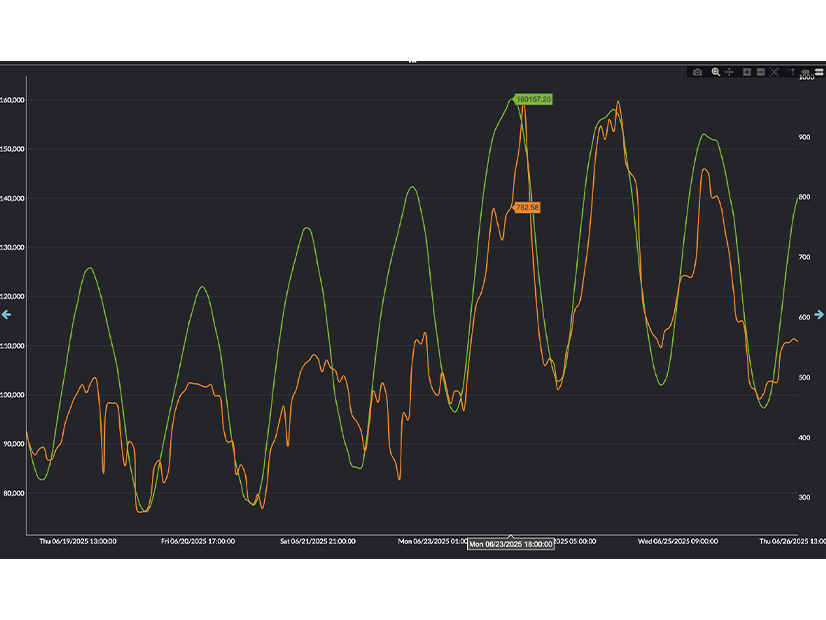
PJM experienced a preliminary peak load over 160 GW on the afternoon of June 23, surpassing the RTO’s summer forecast of 154 GW and requiring the deployment of pre-emergency demand response. (See PJM Summer Forecast Reports Sufficient Supply.)
The heat wave blanketing much of the region brought temperatures of around 100 degrees Fahrenheit, leading to an RTO-wide hot weather alert being issued between June 22 and 25, which was extended to include the 26th as well. Several pre-emergency load management reduction actions were taken June 24 across the RTO, while DR also was called for the Mid-Atlantic and Dominion regions June 23 and 25.
Two maximum generation/load management alerts were issued on June 24 and 25, a notification instructing resource owners to be prepared to operate above their economic parameters if emergency actions are taken. The alerts also put PJM into NERC’s Energy Emergency Alert (EEA) 1 status for their duration.
PJM spokesperson Daniel Lockwood said the June 23 and 24 peaks are the highest PJM has seen since 2011 and both place in the top five for all-time peak demand.
PJM also reported that it has dispatched Eddystone Units 3 and 4 throughout the heat wave. The generator is being operated past its requested deactivation date of May 31 under a Department of Energy emergency order expiring Aug. 28. Eddystone Unit 3 ran for 16 hours on June 23 and all day on the 24th, while Unit 4 operated 14 hours on the 23rd and 20 hours the following day. Both units ran all day on June 25. (See DOE Orders PJM, Constellation to Keep 760-MW Eddystone Generators Online.)