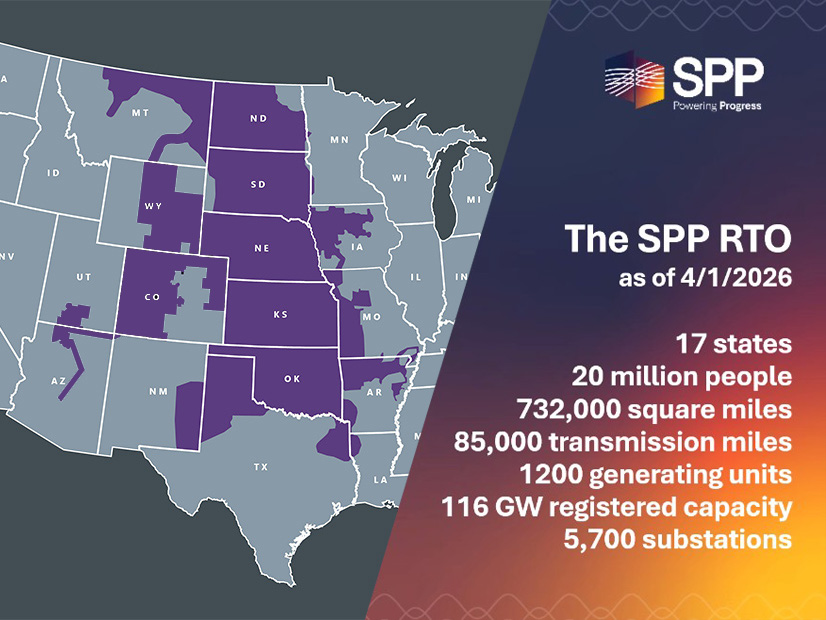
FERC has accepted SPP’s tariff revision that establishes procedures governing interregional transmission coordination in the Western Interconnection between the grid operator and its neighboring planning regions following its RTO Expansion (ER26-1311).
SPP’s proposal also included a method for allocating interregional projects between SPP’s Western region and the planning regions that the commission found to be just and reasonable. FERC said in the April 10 order that the interregional coordination procedures and cost-allocation methodology comply with Order 1000’s requirements.
In a separate concurring statement, Commissioner David Rosner commended the RTO for reaching consensus with its new Western neighbors on the tariff provisions but also highlighted “broader deficiencies” with the commission’s current interregional transmission coordination framework.
He said that since 2011, Order 1000 has resulted in “exactly zero” interregional projects, noting that interregional transmission “time and time again over those 15 years” has made “meaningful” contributions to grid reliability during extremely stressful periods.
“It is imperative that the commission and industry advance meaningful action on interregional transmission planning as soon as possible,” Rosner wrote, saying he is ready to “take swift action” on any future industry filings. “Absent such filings, I intend to work with my fellow commissioners to move this critical ball forward.”
Pointing to NERC’s Interregional Transfer Capability Study, he said it identified a 35-GW gap that, if left unaddressed, “will contribute to a grid that is less reliable.”
“This is a concerning finding that we must address,” Rosner said.
The commission noted the tariff revisions deviated from the common interregional cost-allocation language by assigning project costs to the SPP region according to its existing mechanisms, as applied only to projects in the Western Interconnection. However, it said the revisions comply with Order 1000 because they ensure any project costs in the Western Interconnection allocated to the SPP region on a pro rata basis are allocated only according to SPP’s commission-accepted regional cost allocation method.
FERC found several other variations from the common tariff language to be just and reasonable because it said they clarify the appropriate handling of sensitive information and ensure that costs for projects no longer viable to SPP’s regional transmission needs are not allocated to its region.
The commission also accepted the RTO’s proposal to define CAISO as a “planning region.” It agreed with SPP that while CAISO is not contiguous with and does not neighbor the RTO’s new Western region, including it as a planning region will promote interregional transmission coordination.