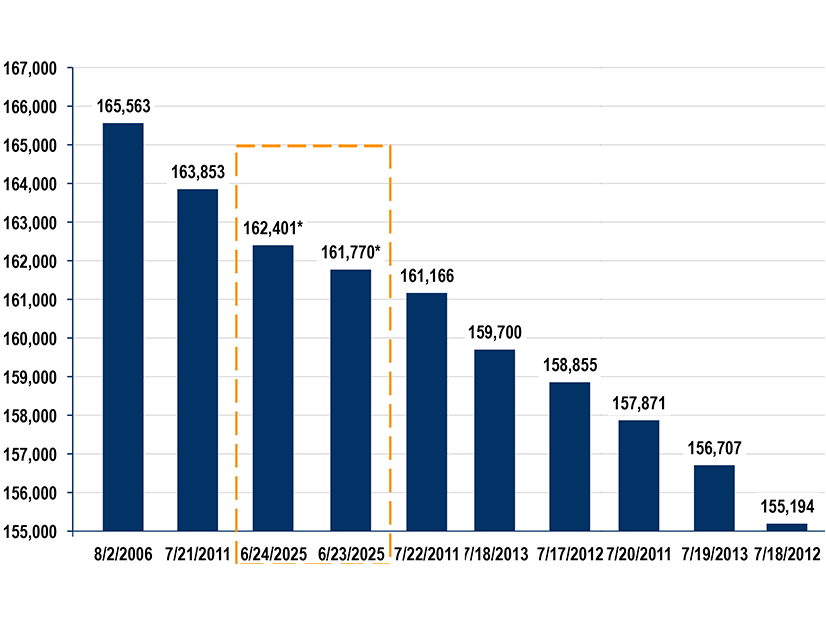
PJM saw its highest peak loads in over a decade during a heat wave that stressed the Mid-Atlantic region from June 22 to 26. (See PJM Exceeds Forecast Summer Peak Load During June Heat Wave.)
The region saw a preliminary integrated hourly peak load of 162,401 MW on the afternoon of June 24, its third highest ever summer peak. The next day followed up with a peak of 161,770 MW. Those figures include demand response deployments, which included all available long and short-lead resources on that day.
The RTO prepared for the heat by issuing a recall on generator maintenance outages between June 21 and 26 and a hot weather alert starting one day later. As the temperatures rose, maximum generation and load management alerts were issued for June 23 to 25, coinciding with pre-emergency DR deployments.
PJM’s Kevin Hatch told the Operating Committee on July 10 that summer risk continues to be driven by peak loads like those seen during the heat wave, the scale of which have been offset by increasing solar penetration. As those resources go offline, increased importance is being placed on the evening ramp, and overall intermittent penetration has required more flexibility, with wind availability varying day-to-day.
Director of Operations Planning Dave Souder said much of the generation interconnection queue is solar, which could lead to reliability risks continuing to be concentrated in the winter, where gas availability and low temperatures are the drivers of system strain.
Stakeholders asked whether PJM experiences a decline in DR availability in the evening when many businesses begin switching machines off at the end of the work day. Hatch said PJM gets updates from curtailment service providers throughout the day and has not seen a decline in evening availability.
The average resource outage rate across the heat wave was 9.65%. The bulk of the outages were from plant equipment failures. A relatively smaller amount were from environmental restrictions. Hatch said the heat wave fell closer to the close of the spring maintenance season than past summer events, contributing to some of the outages.
PJM’s Brian Chmielewski told the Market Implementation Committee on July 9 that high load, reserve shortages and congestion pushed the system marginal price to peak at $3,700 on June 24, $3,011.96 the day prior and $2,358.36 on June 22.
Congestion peaked on June 24, with 12 out of 13 binding constraints in real-time security-constrained economic dispatch, but Chmielewski said congestion played a smaller role in pricing than in recent winter storms. The heat wave saw around half the binding constraints that were seen during the Martin Luther King Jr. Day winter storm, he said.