Rapid Load Growth Focus of State Energy Officials Conference

WASHINGTON — The challenges and opportunities of meeting demand from new large loads like data centers took center stage at the National Association of State Energy Officials’ recent Energy Policy Conference.

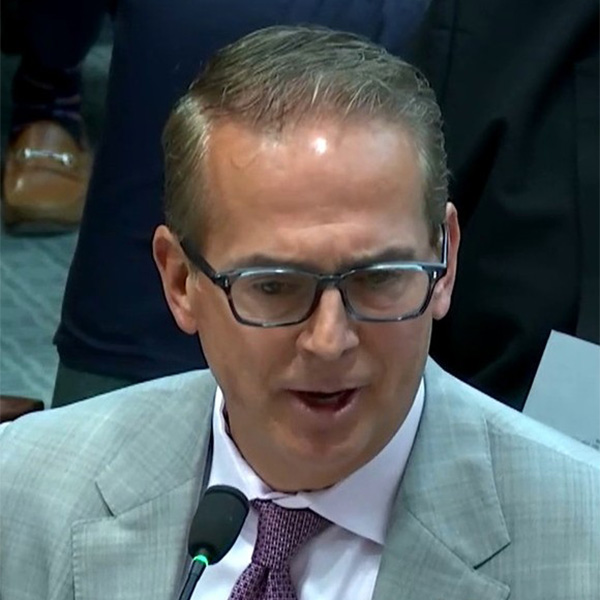
“I think there’s an opportunity right now to think about how the transmission system can be enhanced while we’re going through this growth,” FERC Commissioner Judy Chang said Feb. 4. “So, there is an opportunity where when large loads come in, it can actually keep rates steady while we enhance the grid.”

Regulators could get it wrong and miss that opportunity, leading to higher rates for all consumers, she added. When large loads, potentially paired with their own generation, come online, they will trigger the need to upgrade the transmission system, and it is important that regulators get it right, she said.

Data center developers are flush with cash and have said they are willing to pay their fair share of incremental costs to serve their demand, which in FERC lingo is “beneficiaries pay,” Chang said. “So, beneficiaries should pay for the incremental cost of generation and transmission, but if they also are willing to support the system enhancement overall, it could put downward pressure, or at least leveling pressure, on the rates for all.”

The biggest item in front of FERC is the Advance Notice of Proposed Rulemaking from the Department of Energy, which asked the commission to assert jurisdiction over large loads to the transmission system.

Historically, states have always overseen the process of connecting new customers to the grid, and they might be putting in new processes, as the number of large loads and their speed-to-market concerns are new phenomena for the industry, Chang said.

“I’m still trying to understand that current practice and how this ANOPR will respect — I think that’s the best way to think about this — how to respect the current practices,” Chang said.

How Load Growth is Impacting PJM

Maryland Energy Administration Director Kelly Speakes-Backman recalled that just a few days after she started her job, she received directions from Gov. Wes Moore (D) on working toward ensuring reliability and affordability in the state. (See Maryland Governor Issues Executive Order on Affordability and Reliability.)

“As a member of PJM … 40% of our power is imported from states like West Virginia, and so you can imagine that transmission is a very important issue for us that we are facing right now,” Speakes-Backman said. “Also, as a member of PJM, we’ve seen electricity prices just skyrocket.”

The executive order Moore signed last year seeks immediate relief to the high prices in the short term, while connecting distributed energy resources in the medium term and building transmission in the long term.

West Virginia wants to be one of the sources of electricity being shipped over the transmission serving Maryland and other importing states in PJM, said Nicholas Preservati, director of the state’s Office of Energy. The state already has 40% more generation than it needs, which is exported to the rest of PJM, but load growth forecasts there mean it needs to build many more generators.

“You look at PJM, and they need 100 GW by 2050 to meet peak load,” Preservati said. Along with “58 GW coming offline by 2035, there’s a real problem that we see.”

West Virginia is home to 15 GW of generation, but its 25-year energy plan calls for it to get to 50 GW by 2050.

“People told us we lost our minds,” Preservati said. “But when you look at the need and PJM, someone has to do it, and we can’t do it all, but we’re going to try to step up.”

Federal Government’s Use of Emergency Powers

DOE has signaled it wants to stop all coal plant retirements and has used its authority under Federal Power Act Section 202(c) to effectuate that, said Melissa Birchard, director of the Georgetown Climate Center’s Mitigation Program.

“Imagine a state that is planning to replace an old, unreliable power plant with a new generator, perhaps as part of the utility’s integrated resource plan, perhaps consistent with the large load tariff,” Birchard said. “But if there is a 202(c) order in place that is repeatedly renewed, the state can’t transition the physical use of the site. The state can’t reduce costs for ratepayers by substituting a cheaper plant. They can’t free up interconnection capacity [and] grid capacity, which are extremely valuable right now, in order to put something more efficient and more reliable on the system.”

DOE has issued six such orders so far, but an additional 23 plants are scheduled for retirement this year, with some with pending retirements in May and others in August, October or December. Those retirements could lead DOE to issue more 202(c) orders to keep the plants open.

After the orders pausing coal plants retirements in Michigan and Pennsylvania, Indiana decided to work with DOE and explain which of its retiring plants made the most sense to keep open given load growth, said Jon Ford, executive director of the state’s Office of Energy Development.

Then DOE on Dec. 23 issued a 202(c) order keeping the R.M. Schahfer and the F.B. Culley plants open as an “early Christmas gift,” Ford said. (See DOE Orders Two Indiana Coal Plants to Stay Open Through Winter.)

“We had really gone through and analyzed all of our coal-fired plants and then provided DOE with a list that — if they were going to do this, here are our rankings of the units,” Ford said. “Schahfer was at the top of the list, [but Culley] was at the bottom of the list, so we’re not quite sure how they ended up picking” them.

Indiana also asked its utilities to seek grants and work with DOE, which is why Duke Energy decided to keep an existing coal plant running while it builds a natural gas unit, set for completion in 2031, at the same site, instead of at the older facility, he added.

The 202(c) orders came after President Donald Trump issued a Day 1 executive order declaring a national energy emergency, which has been renewed this year. Despite working for the administration briefly, Cato Institute Energy and Environmental Policy Studies Director Travis Fisher said he disagrees with the policy-by-executive-order approach.

“I don’t think governing by emergency is a good idea in general,” Fisher said. “I will happily eat my hat, though: This past 10 days or so have shown that sometimes that emergency authority is very helpful.”

Energy Secretary Chris Wright issued more traditional 202(c) orders during the recent winter storm, while also using the authority to let large customers offer their backup generation be available to meet elevated demand.

“There’s all sorts of novel applications that we can do, and some of them are scary. Some of them are terrifying,” Fisher said. “I’ve heard people talk about using 202(c) in a blanket nationwide fashion, to put a moratorium on coal plant closures. That’s obviously a terrible idea.”

MISO States Dispute ‘High Risk’ Designation from NERC

Members of the Organization of MISO States have sent a letter to contradict aspects of NERC’s Long-Term Reliability Assessment, disputing the ERO’s label of MISO as being at “high risk.”

State regulators in MISO said NERC should have counted resources in MISO’s fast-track interconnection queue in assessment totals.

MISO was branded high risk in the near term by NERC in its 2025 LTRA, along with PJM, ERCOT and northern portions of WECC. (See NERC Warns of ‘Worsening’ Resource Adequacy Through 2035.)

Organization of MISO States President Michael Carrigan, of the Illinois Commerce Commission, sent the letter to NERC CEO James Robb on behalf of “several” other OMS member states concerned about MISO’s designation in the LTRA. The letter was not considered a statement from the OMS Board of Directors.

Carrigan wrote that MISO’s generator express lane — “developed collaboratively by state regulators, MISO and stakeholders” — is well underway, “and it is expected to address emerging capacity needs in the near to medium term.”

MISO has more than 11 GW of natural gas generation and battery storage proposals in the first two cycles of its expedited interconnection queue that are set to come online by mid-2028. The grid operator will accept more projects throughout 2026. (See MISO Accepts 6 GW of Mostly Gas Gen in 2nd Queue Fast Lane Class.)

At a Feb. 4 MISO Advisory Committee meeting, OMS Executive Director Tricia DeBleeckere said OMS members aired concerns “most importantly because the report did not include” projects in the queue fast lane. She said the expedited generation should neutralize the 7-GW shortfall NERC expects to materialize in winter 2028.

NERC has acknowledged its model didn’t include MISO’s expedited generation proposals. It said if the projects arrive as promised, a projected reserve margin shortfall “would be eliminated.” MISO expects about 8.6 GW more of winter on-peak capacity to reach operation by 2028/29 through the expedited queue.

Per NERC’s assessment, MISO is due to experience a net loss in natural gas units by 2030. MISO’s queue fast lane is comprised mostly of natural gas-fired additions.

‘Red’ Again

OMS continued to voice dissatisfaction with NERC conclusions at a Feb. 6 meeting dedicated to resource adequacy.

“MISO continues to be red. But we think there’s a lot of work in the region … that’s changing the trajectory,” DeBleeckere said.

She said MISO and members “have concerns over the outputs” and that OMS representatives have been in communication with NERC officials since the release of the assessment.

DeBleeckere said there’s a difference between MISO and members carefully crunching reserve margins and “heading toward a stop sign that we’re not going to stop at.”

She said she understands NERC must impose a cutoff on its data to begin working on the assessment.

“But this was such a big piece for us,” she said of MISO’s formation of the interconnection fast lane.

NERC’s inclusion of a sidebar in the report indicates NERC realizes the generator fast lane will mitigate risk, DeBleeckere added. She said MISO’s largely vertically integrated utility model would not allow “massive amounts of load that is un-resourced.”

OMS is meeting with MISO and NERC representatives to understand “the math that goes into the models that produce these results,” DeBleeckere said. She said NERC’s perceived risk of a shortfall by winter 2028/29 clashes with MISO’s summer-peaking conclusions from loss of load studies and that NERC’s interpretation might be one of an array that could be drawn.

DeBleeckere said there may be a “translation issue” between the way utilities plan their resources and how NERC draws its conclusions.

OMS believes there could be issues with the reference margin levels NERC uses in the LTRA, which assume risk only in summertime. NERC’s winter reference margin levels use a one-event-in-100-years assumption.

MISO uses varying seasonal requirements to account for risks. For the 2026/27 planning year, MISO found a slight loss of load risk in all winter months, leading it to use a 0.014 days/year risk — roughly equivalent to one day in more than 70 years — in its loss of load expectation study.

Interestingly, NERC determined MISO would maintain resource sufficiency in summers through 2029, even with an added 10 GW of load growth and a peak demand drifting upward to 138 GW.

Wisconsin Public Service Commissioner Marcus Hawkins said he wanted MISO, members and regulators to focus on the anticipated summertime performance.

“That is wildly impressive in this assessment, so I don’t want this to get lost among the concerns,” Hawkins said.

Bill Booth, a consultant to the Mississippi Public Service Commission, asked how results would be used and which outcomes they could influence.

DeBleeckere said beyond the report “hitting hard” in the press, the U.S. Department of Energy has used NERC assessments to justify keeping generation online in emergency 202(c) orders.

“It also can certainly work its way into state dockets,” Hawkins added.

Booth predicted reacting to the report would involve “damage control.”

‘Already Proactively Addressed’

Meanwhile, Carrigan noted in his letter that most utilities in MISO and state commissions coordinate to anticipate demand growth, retire generation and plan new generation through integrated planning approvals. He said reliability is handled “holistically” in MISO.

“[S]tate regulators, regulated utilities and MISO are actively engaged in identifying and mitigating evolving risks and have well-established tools to do so, as we have been doing for decades. Many risks highlighted in the assessment have already been proactively addressed in the MISO region, for example, by establishment of winter planning requirements,” Carrigan wrote.

Carrigan added that NERC treats planned retirements and load additions as certainties, while replacement generation is branded uncertain until the projects traverse regulatory, interconnection or market prerequisites.

“Utilities and regulators are aware of evolving system needs and have been, and will continue to be, actively engaged in taking corrective planning and regulatory actions to maintain reliability,” Carrigan wrote.

Carrigan said OMS’ well-established resource adequacy survey in conjunction with MISO often predicts shortfalls years down the road, similar to the LTRA. But he said the OMS-MISO survey’s “out-year uncertainty is a structural feature of planning-based jurisdictions and is routinely managed through coordinated utility planning, regulatory oversight and market and policy actions, well before reliability could be affected.”

Carrigan recommended NERC incorporate MISO’s longstanding planning processes and work from its collection of jurisdictions to moderate LTRA results. He said more balanced results could help dodge “disproportionate economic or policy consequences driven by out-year risk signals.”

“In MISO, the balance of state regulatory oversight, utility obligations and market mechanisms is intentionally designed to moderate risk and ensure timely corrective action,” Carrigan wrote.

Southern Renewable Energy Association Executive Director Simon Mahan said NERC’s “maps of doom” aren’t helpful and that MISO’s results in the assessment are “head-scratching.” Mahan said NERC’s inputs are outdated by the time it publishes the report, evidenced by the missing expedited resource additions.

“These maps are already being teed up in legislative hearings, regulatory filings and media articles as justification for: bypassing competitive procurement; fast-tracking utility self-build projects; locking in long-lived fossil investments; and sidelining lower-cost clean energy resources,” Mahan wrote in a reaction piece, adding that knock-on effects include rising gas prices and less-thought-out reliability.

“People make decisions based on NERC reports, even if NERC attempts to dissuade just that,” Mahan said.

In 2025, the MISO community similarly found itself at odds over NERC’s risk interpretation in its LTRA. In that case, MISO’s Independent Market Monitor criticized NERC’s conclusion and pointed out an error.

NERC had used unforced capacity values for MISO when calculating a margin that it ultimately compared to an installed capacity requirement. After a back and forth between MISO and NERC, the reliability corporation ultimately downgraded MISO from “high risk” to “elevated risk.” (See IMM: NERC Reliability Assessment Still Overstating MISO Risk.)

N.Y. PSC Changes DER Interconnection Rules to Meet Tax Credit Deadlines

The New York Public Service Commission has issued new interconnection rules for distributed energy resource developers and utilities aimed at capturing as many expiring Inflation Reduction Act tax credits as possible for wind, solar and storage projects (24-E-0621).

Issued Jan. 22, the rules require utilities to develop schedules and plans for completing the utility-side work to interconnect DERs seeking tax credits.

The One Big Beautiful Bill Act, signed into law on July 4, 2025, terminated the IRA’s tax credits for wind and solar facilities going into service after Dec. 31, 2027. Under orders from President Donald Trump, the IRS established a deadline of July 5, 2026, for projects to have begun construction to qualify for the credits.

The IRS defined having “commenced construction” as developers having begun the physical work (whether on- or off-site) and having a continuous construction schedule. For small solar projects (1.5 MW and below), spending 5% of the cost of the project by the deadline satisfies the requirement. The IRS allowed for a four-year “safe harbor” allowance for construction delays outside the developer’s control, like natural disasters or work stoppages.

The PSC divided DER projects into two groups based on whether the project requires utility-side system upgrades. For those that do, the commission gave utilities some discretion in how they choose to schedule the interconnection work, so long as they meet the IRS deadline. Utilities must offer first-scheduling opportunities for developers who opt in to an accelerated procedure and must supply preliminary work plans for the upgrades by May 1. Developers must pay for their share of the upgrades by June 1. Final work plans must be published no later than July 15.

The PSC also implemented some comments from the utilities, adding deadlines for developer system upgrade payments to utilities. If a project is at risk of not making the deadline, the PSC authorized utilities to consider alternatives.

Taken together, “this approach improves the utilities’ ability to plan and deploy their engineering and construction resources to support tax-credit eligible projects, ahead of others that are not eligible,” the PSC said in a press release. “Today’s action also provides developers flexibility to manage the development of their projects as needed, while providing greater certainty that IRS in-service dates will be met.”

Revolution Wind Weeks Away from Generating Power — Maybe

If Ørsted can continue to beat back the Trump administration’s interference, it could start generating electricity with its Revolution Wind project in a matter of weeks.

The 704-MW wind farm off the New England coast is 87% complete, with the export cables, interlink cable and both offshore substations energized, CEO Rasmus Errboe said Feb. 6.

The developer expects the facility to reach commercial operation and full power delivery to Connecticut and Rhode Island in the second half of 2026, barring further setbacks.

Errboe gave the update on Revolution and Ørsted’s other North American project, Sunrise Wind, during a fourth-quarter and full-year earnings presentation to financial analysts.

The Trump administration shut down work on Revolution in August and then shut down work in December on Revolution, Sunrise and the three other wind farms under construction by other developers in U.S. waters on grounds of preserving national security.

Ørsted won injunctions against all three stop work orders, but the shutdowns caused it to lose several weeks of work and take a $90 million impairment. And the injunctions are only temporary protection in the Trump administration’s campaign against offshore wind.

Ørsted began running into problems with its U.S. offshore portfolio in the form of soaring costs and logistical constraints well before Donald Trump was elected to a second term and followed through on his campaign-trail rhetoric against offshore wind.

The Denmark-based offshore wind market leader already has indicated it would undertake no further projects in U.S. waters but an analyst nonetheless asked Errboe during the conference call if he would be “interested in increasing your exposure in the U.S. market at all.”

He replied: “We have no expectations whatsoever to increase our exposure to offshore wind in the U.S.”

Errboe said Ørsted decided shortly after he became CEO in January 2025 to concentrate on wrapping up the two U.S. projects and refocusing its offshore attention on its core European market, plus select Asia/Pacific markets. Value is the priority, not volume.

The company retains its undeveloped wind leases in U.S. waters but has no plans for them, he said.

However, Ørsted still is engaged in onshore U.S. renewables development, which it set up as a separate business unit in October 2025.

“The business is going well, we are moving forward projects, we have right now roughly 500 MW under construction — one wind project, 260 MW, in MISO, and one battery, 250 MW, in ERCOT,” Errboe said.

“And then on top of that, we have 6 to 7 GW of capacity that meet the IRS qualifications through 2029, and we have this development portfolio consisting of mix of solar, wind and storage, slightly weighted more towards solar in the near term. So, moving forward well.”

Errboe said 59 of Revolution’s 65 turbines are installed and work is approximately 87% complete on the project, a joint venture with Skyborn Renewables.

Sunrise Wind, which will send up to 924 MW to New York, is 45% complete with 44 of 84 foundations installed, onshore and near-shore export cables installed, and fabrication completed of most remaining components. First power is expected in the second half of 2026 and commissioning is expected in the second half of 2027.

Ørsted is developing Sunrise alone. After Eversource departed the project, Ørsted sought an equity partner, but the actions of the Trump administration spooked potential investors to the point that the conditions they set for joining the project were untenable, Ørsted has said. (See Ørsted to Raise $9.3B, Self-finance Sunrise Wind.)

It has said Revolution and Sunrise will have a combined cost of approximately $16 billion.

ISO-NE has said Revolution will be important to reducing reliability risks and NYISO has said Sunrise will help address the capacity shortfall identified in downstate zones. (See ISO-NE Warns Halting Revolution Wind Boosts Reliability Risk and NYISO Again Identifies Reliability Need for NYC.)

Ørsted reported 2025 revenue of $11.6 billion, up from $11.2 billion in 2024; EBITDA of $3.6 billion, down from $5.1 billion; and net profit of $501 million, up from $2.5 million.

MISO Members Push for Modernized Storage Rules

MISO membership has called for modernized market rules for energy storage that can capture its chameleon-like roles.

This time, members at a Feb. 4 Advisory Committee teleconference suggested conversation starters to begin drafting rule changes.

Clean Grid Alliance Executive Director Beth Soholt said there are more uses for storage “than MISO is currently acknowledging or has rules to implement.”

“Storage is very much posed to make an impact in MISO and help with the challenges MISO sees coming,” Soholt said.

Multiple members agreed storage is at once a market resource, transmission asset, load when necessary or a microgrid component and that rules should reflect those capabilities.

South Dakota Public Utilities Commissioner Chris Nelson said he agreed storage is the “Swiss Army knife” of the grid. But he added that commissioners must conclude that storage solutions are cost effective before approving them.

“Bottom line, that’s what we’re looking at,” Nelson said.

However, Fresh Energy’s Mike Schowalter said for storage to be cost effective, MISO’s rules need to be flexible enough for storage to switch duties.

“We hear that it’s a Swiss Army knife, but if it’s not valued in the market for these things, then it’s not going to benefit ratepayers,” Iowa Utilities Commissioner Sarah Martz said.

“MISO’s rules are not compatible for merchant services,” Pelican Power’s Tia Elliott added.

Elliott pointed out that MISO is the only RTO that requires storage to secure and pay for transmission service to charge from the grid, regardless of whether the charging is done under MISO dispatch.

Elliot said storage can interconnect quickly without placing reliability at risk and could help with large load integration. She suggested MISO members meet to discuss where they agree on the resource’s monetizable capabilities.

Schowalter said MISO could start by listing what storage is able to do that typical resources cannot.

“Storage can respond in 16 milliseconds — very fast,” he said.

Schowalter said MISO’s pricing framework and tools were designed long enough ago that MISO and members should examine what’s outdated.

“Especially, as we add more renewables, storage is going to play a key role,” he said, encouraging MISO members to imagine the system and what it would need in 2045 with majority renewable penetration.

“We really can’t wait for that to happen to see what happens and the rules we’ll need in place,” Schowalter said.

“We can do it; we just have to find the will,” Soholt said.

DOE Touts Fossil Fuels’ Role in Meeting Peak Energy Demand This Winter

WASHINGTON, D.C. — The U.S. Department of Energy held a news conference to highlight fossil fuels’ role in maintaining reliability over the recent winter storm and boast of actions the agency took to bolster the grid.

The U.S. Energy Information Administration reported the highest-ever withdrawal of natural gas from storage the week Winter Storm Fern affected the eastern half of the country, Secretary of Energy Chris Wright said at the Feb. 6 event.

“That’s a symbol of what increased energy demand came with this storm,” he added. “What is natural gas? It’s the largest source of home heating for Americans in the country. It’s the largest source of electricity generation in the United States.”

Fern was larger than Winter Storm Uri, which five years ago led to one of the biggest crises in power industry history when much of Texas lacked power for days and hundreds of people died. Fern’s effects on the energy system were much less, Wright said.

While Uri knocked out power to 4.5 million homes largely due to failures in generation and intertwined issues on the natural gas system, just over a million homes lost power this year, due primarily to ice-laden tree limbs taking out power lines.

“We wish that was zero,” Wright said. “We work and strategize and talk every day about how to reduce that number.”

Standing next to bar charts that highlighted how little renewable power contributed to the high demand set by the storm and related cold, Wright argued that the industry needed to focus on installing dispatchable capacity.

“If you want to add to the capacity of our electricity grid, enable data centers, enable us to reshore manufacturing — the only way you do that that’s helpful is you have to add to our peak generating dispatch ability,” he said.

Wind was down 40% during the peak demand seen during the storm, compared to a more normal weather day last year. Overall, that was true, but intermittency correlates with randomness, and SPP reported that it had more wind than expected, enabling it to ship power east — in a reversal of what happened during Uri when imports from PJM and other points east minimized its own outages. (See Wind Output Enabled SPP Exports to Neighbors During Storm.)

Solar works better in regions with more sunshine like the deserts in the West, but even then, Wright said, the sun did not always shine, especially when overall energy demand was peaking.

“Peak demand for energy is always in the winter, by far,” Wright said. “Peak demand for electricity is sometimes and often in the summer. Because the biggest use of energy in people’s households by far is heating, like that winter storm we just went through.”

The natural gas distribution network was delivering four times more energy than the grid was at its maximum stress during the recent storm, he added.

But the natural gas system meeting peak household demand when electricity generators also need more power is a dilemma the industry continues to face. (See Grid Weathers Latest Winter Storm, but Still Faces Gas Coordination Problems.)

The RTOs in the northeast still are working to procure as much fuel as possible as the cold continues to affect demand, Wright said. As is typical, ISO-NE had to rely on burning oil to make it through, as that fuel produced 35% of power at the height of the storm.

“Where it matters at peak demand time, oil was No. 1,” Wright said. “This is crazy. Oil was a huge source of electricity generation in the United States when my mom was in high school.”

DOE is working to improve gas-electric coordination, as it has over the past 15 to 20 years, said Assistant Secretary of Energy James Danly. DOE’s National Petroleum Council (NPC) recently released a report making recommendations. (See DOE’s National Petroleum Council Releases Report on Gas-electric Coordination.)

“The RTOs in the Northeast did their best to procure as much fuel as possible in advance and help their gas generators do that in advance of the weather,” Danly said. “It’s still ongoing. The temperatures are still cold, but we’re seeing, especially in PJM, efforts to get gas out as far as possible, and that’s in part with the encouragement of the department and talking with the stakeholders.”

NPC recommended making it easier to build more pipelines. A major focus of the Trump administration has been to get the Continental Pipeline built. It needs regulatory approval from the state of New York. The project would bring up to 650,000 Dth per day of Marcellus shale gas to New England and New York. The project won approval from FERC in 2014, but it was blocked by the state of New York.

Constitution has asked FERC to reauthorize the project. But unlike the vast majority of pipeline proposals, Constitution did not list any anchor customers, which the commissioners view as an indication of need in pipeline approvals. Wright argued the fact that the petition has none doesn’t mean it’s not needed.

“If a pipeline has been blocked, you know, by the governor of New York, and she says she’s going to continue to block the pipeline, people wait for that politics to come out,” Wright said. “We will have customers coming out of the woodwork. Do you want to burn far cheaper natural gas versus oil?”

While New England’s generation fleet and power consumers would benefit from more natural gas, the vastly different business models make it so generators do not have the incentives to invest in the firm gas contracts pipelines need to secure financing, recently retired ISO-NE CEO Gordon van Welie said during a recent webinar.

“I’ve also spent … many hours talking to the merchant generators,” van Welie said. “And you know, I’ve come to understand it does not make economic sense for merchant generators to invest in long-term contracts that would be required to ensure adequate pipeline and gas storage infrastructure for these intermittent peaky events, which are low probability. So, they would rather price the risk of non-performance of the gas system into their offers, or financially hedge their risk, or physically try and hedge their risk with dual fueling — if they can get the siting and the permits for dual fueling.”

The New England states came to FERC during the Obama administration asking to socialize the cost of new pipelines among electricity consumers, but the commission found the idea clashed with the Federal Power Act, and pipelines ran into issues with state politics as well.

“The workaround that was conceived in New England, but never put into effect, was to require the electric distribution companies essentially putting electric ratepayers on the hook for contracting for firm transportation from the pipelines, and then having the EDCs resell that capacity to merchant generators,” van Welie said.

Data Center Moratorium Bill Introduced in N.Y. Legislature

ALBANY — Democrats in the New York Legislature have introduced a bill that would institute a three-year moratorium on the citing and permitting of new data centers statewide.

“Let’s take a pause. We don’t even understand all the implications this can have for the climate, environment, energy costs and water for the state of New York,” said state Sen. Liz Krueger. Proposed data centers in the NYISO interconnection queue, she added, already represent 9.5 GW of load.

The legislators argue the pace of data center development has outstripped the existing planning, regulatory and environmental review frameworks. They say data centers are driving up the cost of electricity, creating more demand for fossil fuels and delaying New York state’s climate goals.

“The fact is that we should not allow individual companies to skyrocket ahead with their plans that will cost us huge amounts of money, cost us huge amounts of environmental impact and cost us lost opportunities to make other decisions with our future energy planning,” Krueger said.

Data centers are a hot topic across the country and make up the bulk of system impact studies discussed and approved by the NYISO transmission planning committee.

The new bill echoes New York’s cryptocurrency mine moratorium. (See NY Slaps Moratorium on Certain Crypto Mining Permits.) Gov. Kathy Hochul signed that moratorium into law in 2022. The Hochul administration, however, recently reached an air rights settlement with Greenidge Generation Holdings, allowing the cryptocurrency mine to operate a gas generator in Dresden, N.Y.

The chances of passing a data center moratorium are unclear. Krueger and Assemblymember Anna Kelles introduced the bill, which is co-sponsored by Sens. Kristen Gonzalez, Rachel May and Lea Webb. The Democratic legislators are backed by a coalition of environmental and consumer advocacy groups, including Food and Water Watch, the Alliance for a Green Economy and the New York Public Interest Research Group.

“The proliferation of data centers and their insatiable appetite for ratepayer subsidies, excessive water use, noise pollution and regulatory secrecy must stop,” said Blair Horner, senior policy adviser for NYPIRG. “New York state can show the nation how to regulate data centers in a way that protects consumers’ wallets, the public’s hearing and the environment’s most precious resource: water.”

The legislators and advocacy groups represent areas from New York City to rural Upstate. The New York City Democratic Socialists of America, fresh from their recent victory in the NYC mayoral election, also support the legislation.

The bill calls for the Department of Environmental Conservation to complete a comprehensive environmental impact statement on data centers, including the current and forecast effects on energy use, electricity rates, water resources, air quality and greenhouse gases. The Department of Public Services would be required to report the cost impacts of data centers on all other ratepayers and issue any new orders necessary to ensure those costs are paid by data center companies and developers.

“I want to emphasize the fact that this is simply a pragmatic decision to put a pause … and create commonsense regulations,” Kelles said. “This industry has exploded very quickly, and we have not had the opportunity to create infrastructure in the government, both in law and regulations to ensure that … the industry does not have a significant negative impact on workers and our environment.”

The bill would not block projects retroactively. It would pause new permitting by any government body, agency or public benefit corporation for construction, siting or the start of operations. Projects that already have permits would be allowed to continue.

The bill is awaiting discussion at the Senate Environmental Conservation Committee.

West Needs $60B in Transmission Ahead of 2035, WestTEC Finds

The West must build or upgrade 12,600 miles of transmission at a cost of about $60 billion to meet the region’s forecast 30% increase in peak demand and other needs by 2035, according to the Western Transmission Expansion Coalition’s 10-year outlook.

The anticipated 30% increase in peak electric demand — from 168 GW in 2024 to 219 GW in 2035 — is more than three times greater than what the region has experienced over the past decade, according to WestTEC’s 10-year outlook for the Western transmission system released Feb. 4.

WestTEC, an initiative of the Western Power Pool (WPP), anticipates a 35% increase in energy consumption and a 71% increase in generation capacity over the same period.

Meanwhile, transmission expansion is expected to increase from approximately 98,000 miles of 230-kV transmission lines to about 111,400 miles in 2035, or 14%, according to the 10-year outlook.

“I’m not saying that transmission has to keep up one-to-one with load growth,” Keegan Moyer, a partner at Energy Strategies and consultant for WestTEC, said during a presentation in connection with the release of the report. “I don’t think that’s necessarily true. But we definitively know that it can’t grow by half. And it can’t grow at a third of the rate that we’re adding in generation. This study proves that.”

Data centers and “the electrification of everything in our lives” are driving the forecast increase in peak demand, according to Moyer.

WestTEC has put together a portfolio of planned and newly identified transmission expansion projects that would meet this forecast demand through 2035. The total portfolio is estimated to add or upgrade 12,600 miles of high-voltage transmission at a cost of about $60 billion.

The report notes that the $60 billion is manageable when considering that the annualized cost of the projects is “eight times less than the cost of generation that must be added over the same time horizon and represents only 2.5% of today’s average retail electric price in the West.”

The portfolio includes 73 planned projects that total about 9,400 miles at a cost of $46.6 billion, about 20% of which are already under or close to starting construction.

“Reconductoring and rebuild projects represent about 10% of planned transmission in terms of both line miles and costs,” according to the report. “If these sponsors do not complete these in-flight projects, the total transmission gap will grow, and needs identified in this study will not be met.”

WestTEC identified an additional 3,300 miles of upgrades needed to address reliability, deliverability and efficiency concerns.

The group said the portfolio would enable the Western grid to address the 30% growth in electricity demand and reduce the risk of outages by addressing more than 75 “steady-state power flow violations on the high-voltage system that would occur but for the construction of upgrades identified by WestTEC.”

The portfolio would cut power production costs by $500 million/year, with grid congestion costs and generation curtailments falling by 20% and 17%, respectively.

“These metrics are inherently conservative and do not reflect the full extent of savings and efficiencies that could occur,” according to the report.

The identified projects could allow an additional 10 GW of power to move across key regional interfaces during critical periods, lowering shortage risks and reserve requirements, per the report.

‘Admirable Achievement’

Several projects under the Bonneville Power Administration’s $5 billion Grid Expansion and Reinforcement Portfolio are listed in the WestTEC study.

For example, the Lower Columbia to Nevada-Oregon Border project is on the list. The project is aimed at improving connectivity from the lower Columbia region to the Nevada-Oregon border with 500-kV transmission lines and a new substation near the border. (See BPA Provides More Details on $5B Tx Projects.)

The effort has a preliminary estimated cost of $1.9 billion with an estimated completion by 2035.

BPA has been a “proud partner working with the Western Power Pool to support the creation of WestTEC,” BPA spokesperson Kevin Wingert told RTO Insider. “We are one of many participants across the Western utility landscape to participate in WestTEC’s 10-year horizon report.”

“We believe this first-of-its kind, West-wide study identifies necessary transmission infrastructure additions needed to enhance grid reliability, increase efficiency and facilitate the integration of new resources,” Wingert added. “We appreciate the broad range of regional stakeholders in identifying emerging transmission needs across the Western Interconnection. This study provides actionable recommendations for the implementation of new transmission that will address congestion and unlock interregional transfer capabilities.”

Several CAISO projects are similarly included in the list of planned projects in the WestTEC study, such as the 260-mile Humboldt-to-Collinsville 500-kV line. The line is part of CAISO’s 2023/24 transmission planning process. (See FERC OKs Abandoned Plant Incentive for Calif. Offshore Wind Tx Developer.)

“The ISO is very supportive of a coordinated West-wide transmission plan for the next 10 and 20 years, and looks forward to future West-wide analysis and planning, including the 20-year Westside transmission plan,” Jeffrey Billinton, director of transmission infrastructure planning at CAISO, said in a statement. “The 10-year plan affirms the planning and approvals that are already underway in California and the West, and sets the table for more interregional transmission development in the next two decades.”

Brian Turner, senior director at Advanced Energy United, called the WestTEC study an “admirable achievement.”

“These upgrades don’t just address the increasing reliability risks in the region, they address the very important need for transmission to connect and deliver the massive new power the West needs for economic development, demonstrating that transmission is a critical component of our nation’s need for speed to power,” Turner said in an email to RTO Insider.

The WestTEC effort, jointly facilitated by WPP and WECC, addresses long-term interregional transmission needs across the Western Interconnection. The release of the 10-year planning horizon report comes after 18 months of work, Moyer noted. (See WestTEC Targets Early 2026 for Release of 10-year Tx Outlook.)

A 20-year horizon report is slated for release later in 2026.

The main objective of WestTEC is to create an “actionable” transmission study by conducting integrated planning analysis across the Western Interconnection.

The study horizons focus on evaluating transmission requirements in 2035 and 2045, with the goal of prioritizing “flexible and scalable transmission solutions for nearer-term needs to help better position the system for efficient long-run expansion,” the study plan says.

Prolonged Cold Drove Record Monthly Energy Costs in New England

New England experienced record-high energy costs in January amid cold weather, high gas prices and heavy reliance on oil-fired generation, according to ISO-NE.

The energy market’s value totaled about $2.7 billion in January, the highest monthly total in the region’s history, the RTO told the NEPOOL Participants Committee on Feb. 5. The monthly costs surpassed the previous monthly record of nearly $2.2 billion in January 2014.

Much of the cost was concentrated during the extended stretch of cold weather at the end of the month. Temperatures averaged about 14 degrees Fahrenheit below normal over the last nine days of the month, ISO-NE noted. Energy market costs totaled $422 million on Jan. 27 alone, up nearly 150% over the previous daily total.

The grid experienced its highest peak load of the winter on Jan. 25 at 20,221 MW, exceeding ISO-NE’s high-range forecast of 21,125 MW.

Gas prices also broke records: The maximum day-ahead gas price in Massachusetts reached about $122/MMBtu on Jan. 27, the highest maximum since ISO-NE launched its standard market design in 2003, easily exceeding the previous record of about $82/MMBtu.

ISO-NE CEO Vamsi Chadalavada praised the performance of the region’s resource fleet throughout the cold stretch while acknowledging the region is not out of the woods yet, with more cold weather forecasted for the coming weekend.

Oil-fired generation, which typically accounts for less than 1% of energy in the region on an annual basis, provided 28% of energy from Jan. 24 through Feb. 1. Gas-fired generation also accounted for about 28% of energy, followed by nuclear at 19%, imports at 11%, renewables at 9% and hydropower at 5%.

On Jan. 25, ISO-NE obtained a waiver from the Department of Energy allowing generators to operate in excess of emissions limits, intended to enable resources to provide as much power as possible throughout this event. The RTO has received an extension of this waiver until Feb. 14.

With the waiver in place, about 21 resources have exceeded some limit at some point during the event, said Stephen George, vice president of system and market operations at ISO-NE.

The region burned about 66 million gallons of oil between Jan. 24 and Feb. 1, causing significant depletion of resources’ stored fuel inventories, he said. Fuel oil inventories dropped from 43% of the region’s total storage capacity to about 20%, according to data as of Feb. 4. This has caused the region’s inventory of stored fuel oil to drop to its lowest point in the past 10 years.

Heavy snowfall across the region on Jan. 24 and 25 hindered generators’ replenishment capabilities, he noted, adding that he expects to see a significant uptick in storage levels over the next couple weeks as oil consumption declines and generators continue to replenish their tanks.

He added that oil consumption by dual-fuel generators “contributed to a high demand for demineralized water trucks which were in short supply.”

While snowfall significantly limited the output of solar resources, wind resources generally performed well, averaging about 885 MWh over the nine-day period.

Imports from neighboring regions averaged about 1,900 MWh during the period, with about 52% coming from Québec and 41% coming from New York. However, flows reversed over about a two-day period coinciding with the winter storm, with New England sending power to Québec amid tight conditions in the province. (See Hydro-Québec Halted NECEC Deliveries amid Reliability Concerns.)

George said these exports cleared in the day-ahead market and were not emergency exports.

ISO-NE also experienced by far its highest monthly costs in its new day-ahead ancillary services (DAAS) market, which the RTO launched in March. While some stakeholders already expressed concerns about the high costs experienced in the new market, monthly per-megawatt prices roughly doubled in January relative to December levels.

The ISO-NE Internal Market Monitor estimates that DAAS costs totaled $921 million between March and January, dwarfing the RTO’s projection of $140 million in annual costs.

In response to the spike in DAAS market prices, the Monitor recommended three “targeted market design adjustments,” with the support of ISO-NE.

They include upwardly adjusting how it formulates the strike price “to better align it with the short-run marginal costs of resources providing these ancillary services”; decreasing the forecast energy requirement “to reflect the expected contribution of renewable generation”; and considering decreasing the non-performance factor in the 10- and 30-minute operating reserve requirements in the day-ahead and real-time markets.

Taken together, the changes “represent narrow but meaningful refinements” that should “enhance cost effectiveness while remaining aligned with the core objectives of the DAAS design,” the Monitor wrote.

Also at the meeting, Chadalavada signaled an openness to considering changes to the region’s Pay-for-Performance rate, emphasizing the need to strike the right balance between setting strong performance incentives for capacity resources and avoiding excessive risk premiums in future capacity auctions.

He stressed the importance of both moving with agility to address potential market issues and building consensus among stakeholders to ensure durable solutions. He said ISO-NE aims to implement the proposed DAAS changes in time for next winter.

Several stakeholders expressed support for this sentiment and applauded ISO-NE for its performance throughout the cold weather event and for being open to market changes in response to cost concerns.

FBI Releases Critical Infrastructure Cyber Recommendations

The FBI has launched an initiative to help critical infrastructure operators and other entities strengthen the cybersecurity of their operational technology and information technology assets.

In a YouTube video posted Jan. 28, Brett Leatherman, assistant director of the FBI’s cyber division, described Operation Winter SHIELD (Securing Homeland Infrastructure by Enhancing Layered Defense) as a cyber counterpart to the winter preparations that infrastructure owners implement each year. Leatherman told listeners that even though winter storms “test our infrastructure … to their limits … the most critical threats to infrastructure don’t come from the weather, they come through our networks.”

The program’s launch came the same week that cybersecurity firm Dragos published a report blaming a group linked to Russia’s intelligence service for a cyberattack against Poland’s electric grid in December 2025 that targeted a system for managing renewable energy sources. (See Dragos Blames Electrum Group for Poland Grid Cyberattack.) In its report, Dragos wrote that attacking a power grid “in the depths of winter is potentially lethal to the civilian population dependent on it.”

The goal of the program is to position “industry not as passive victims or recipients of intelligence but as critical allies … in detecting, confronting and dismantling cyber threats,” the bureau wrote.

“In far too many cyber investigations, we see the same pattern,” Leatherman said. “Adversaries exploit known vulnerabilities [such as] stolen credentials, end-of-life systems [and] third-party access, and they take advantage of incident response plans that look great on paper but break down in practice.”

The Winter SHIELD campaign is built around 10 recommended actions developed by the FBI with input from domestic and international partners, based on adversary behavior and defensive gaps seen in recent cyber events. Each week during the campaign, the bureau will highlight a different action and its security benefits.

Among the FBI’s recommendations are adopting authentication measures to reduce the risk of phishing attacks, such as device-bound passkeys and security keys that comply with the FIDO2 standard developed by Microsoft and other partners and phasing out riskier systems like text-based authentication and authenticator apps with push-only approvals. The bureau also suggested adopting a risk-based vulnerability management program, including a complete asset inventory and aggressive timelines for remediating known risks.

More recommendations include tracking and retiring end-of-life technology, which no longer receives security updates and likely is targeted by cyberattackers, on a defined schedule; exercising tight control over data access by third parties; protecting security logs for detection, response and attribution; and maintaining offline backups and regularly testing restoration.

Finally, the FBI urged organizations to improve the speed and effectiveness of their incident response plans with regular testing.

“The goal is not to check boxes or push for perfection; we want to drive momentum,” Leatherman said. “Nation-state cyber operations are invisible until they aren’t. … Meanwhile, cybercriminals continue to steal our money and hold our data for ransom. But together, we can deny adversaries the digital real estate they need to operate and raise the cost of every attack.”