A new report by EPRI and Epoch AI estimates U.S. power demand by artificial intelligence could jump from 5 GW today to more than 50 GW by 2030.
The sharp rise is due not only to the growth in the amount of large-scale training but also its increasing duration, and is tempered only partly by hardware efficiency improvements, the two organizations said in their Aug. 11 announcement of “Scaling Intelligence: The Exponential Growth of AI’s Power Needs.”
Beyond large-scale training, more power capacity will be needed for AI research and for the actual use of finished AI models. But the training needs alone are formidable: Power consumption for training cutting-edge AI models is doubling annually.
“Frontier AI training runs — the computationally intensive process of training large, advanced AI models — currently consume approximately 100-150 MW each and are projected to reach 1-2 GW each by 2028, exceeding 4 GW per training run by 2030,” the authors write.
Training duration is assumed to have a 10% to 20% annual growth rate in the future. This compares with 25% to 50% in recent years. Increasing the duration can spread the same amount of power use across over a longer period, smoothing out peak demand. But the authors say durations now exceed 100 days, so further increases may yield diminishing returns.
Meanwhile, for the study, hardware efficiency is assumed to improve 33% to 52% annually.
The authors say the split of demand between training AI models and using them is important, as it could affect the size, location, power demands and potential flexibility of AI data centers. But it is currently uncertain, and the landscape is changing rapidly.
Some forecasts show AI consuming more than 5% of U.S. generation capacity by 2030, with some training runs equivalent to the output of entire power plants.
As has been noted many times, meeting such a level of peak demand just with new capacity could be quite challenging and extremely expensive. Some flexibility of demand during peak periods would help make the process less expensive and difficult.
The authors suggest: “Planning should account for both concentrated and distributed data center loads as well as the potential for real-time flexibility in training and inference workloads and from on-site generation and storage assets.”
“Inference” — usage of a trained AI model, such as generating responses to user requests — could support more flexibility than AI training.
The authors state that the rapid rate of growth of AI computing seen recently and projected in the next several years almost certainly must slow by the 2030s, because it is accompanied by a growth in cost that is not quite as rapid but is nevertheless unsustainable.
Whether that slowdown starts before 2030 may depend on technical innovations, data constraints or diminishing returns to scaling, they write.
The Committee on Regional Electric Power Cooperation’s (CREPC) Transmission Collaborative (TC), in collaboration with Energy Strategies, has issued its first cost allocation study to provide the industry with guidelines on how to tackle the thorny issue.
“The work conducted by Energy Strategies in consultation with the CREPC Transmission Collaborative to develop the State Exploration of Western Transmission Cost Allocation Frameworks policy brief and technical report is valuable to helping Western states better understand different cost allocation methodologies and implications,” Gabriel Aguilera, chair of the New Mexico Public Regulation Commission and co-chair of CREPC, told RTO Insider in a statement.
“While nothing in this study is intended to be binding, states can build on the foundational elements of the study as transmission cost allocation discussions develop and evolve in the West,” Aguilera said.
In an effort to strengthen stakeholders’ understanding of the “challenges associated with regional cost allocation in the West,” the TC members provided six takeaways from the report, according to the policy brief.
The six takeaways are:
“Transmission cost allocation frameworks must result in the allocation of transmission capacity. Any transmission cost allocation framework that fails to align costs allocated with transmission capacity assignments (MW) is unlikely to be successful.”
Establish “well-defined thresholds, clear standards and independent expert input for ensuring that capacity assignments resulting from a cost allocation process are both meaningful and useful,” the brief stated. “As part of this, cost allocation approaches should include rules to ensure that entities receiving de minimis benefits are not allocated costs.”
Because there is no broadly accepted method for measuring public policy and resource access benefits, the TC suggests that entities should be allowed to voluntarily subscribe to capacity on a line based on their own perceived benefits of certain transmission projects. This can address allocation disputes arising out of projects aimed at, for example, helping public agencies achieve decarbonization goals by transporting wind power from one state to another.
Achieving a fully binding cost allocation process in the West is highly technical and difficult. Instead, stakeholders must agree that voluntary participation mechanisms are crucial for achieving significant transmission buildout, despite the risk of “free ridership.” However, voluntary commitments can be converted into contractual or financial capacity or cost-share commitments as projects advance.
Benefit quantification is a “critical foundation” for cost allocation. It is therefore important that those calculations be done with transparency, coordination and collaboration in mind.
A transparent, well-defined and flexible process can help tackle some of the common issues that can arise during cost allocation discussions, such as preventing the overburden of individual utilities, accommodating different value systems and supporting fairness principles, among other benefits.
To reach these takeaways, the TC and Energy Strategies developed three cost allocation frameworks, based on different combinations of four cost allocation approaches: subscriber pays, beneficiary pays, zonal-cost assignment (costs are assigned on a load-share basis) and opt-in/-out (costs and project capacity are reassigned after initial allocation to entities volunteering to purchase additional capacity).
The frameworks were tested under three hypothetical interstate transmission projects. Two of the frameworks provided more proportionality, flexibility and optionality than the base case and were also preferred by stakeholders who provided input to the study.
“Despite a split on which framework is most appropriate, most representatives felt somewhat comfortable with the conclusion that these flexible, nonbinding cost allocation frameworks can help address Western states’ concerns about misalignment between cost assignment and customer benefits,” the brief stated. “Participants also recognized the crucial importance of the potential project participants voluntarily subscribing to capacity for these frameworks to be successful.”
While the reported pick of David Rosner to be chair of FERC might appear to be a rare bipartisan move from the White House, sources familiar with the issues said in interviews that it represents another step in exerting control over what historically has been an independent agency. (See Reports: Trump to Name Democrat Rosner as FERC Chair.)
Sources who know FERC well were granted anonymity to speak candidly with RTO Insider about politically sensitive issues.
On Aug. 8, several outlets reported that a White House source said Rosner would be named chair. But as of close-of-business Aug. 11, the White House had yet to designate a chair, and FERC’s website listed only three sitting commissioners. Without a chair, the agency cannot issue orders. In the past, former Commissioner Bill Massey was named chair for literally a weekend as President Bill Clinton was transferring power to President George W. Bush during the Western Energy Crisis.
President Donald Trump issued an executive order in February directing FERC and other “so-called” independent agencies to submit proposed and final significant regulatory orders to the Office of Information and Regulatory Affairs for review before they could be published in the Federal Register. (See Trump Claims Authority over Independent Agencies in Executive Order.)
Former Chair Mark Christie, who stepped down from the agency Aug. 8, actually spent most of his first press conference defending that order, arguing that FERC never enacts policies at cross purposes with the White House’s goals. But he also said he never would allow discussions of pending items before the commission covered by ex parte rules. Ultimately, he proved too independent for this White House. (See FERC’s Christie Says Existing Policies Can Align with Trump Order.)
While the idea of ending FERC independence might seem short-sighted given that Democrats could retake the White House in 2028, one source said the view there now is “to the winner goes the spoils” and some members of the minority party would be happy to steer the agency when they are next in control of the presidency.
Nobody who spoke with RTO Insider could remember a time when a White House had passed over a nominee from their own party to name a chair from the other. In Trump’s first term, he demoted Norman Bay and elevated Cheryl LaFleur to run the agency again, but there were no Republicans on the commission after a dispute between President Barack Obama and members of the Senate Energy and Natural Resources Committee over nominees.
Opposition from former Sen. Joe Manchin of West Virginia (at the time a Democrat, though he converted to independent in 2024 before leaving office) to nominee Ron Binz and then making Bay the chair was part of that dispute with Obama. Manchin went on to chair that Senate committee and was a major supporter of Rosner, who was detailed to it from FERC before being nominated.
Everyone interviewed by RTO Insider praised Rosner as a well-qualified commissioner who would do a good job for as long as he runs the agency. But his pick could indicate the White House is favoring nominees who back specific policies as part of its efforts to control FERC.
The co-location order proved unpopular with owners of merchant nuclear plants who value the deals to hedge against the possibility of lower power prices in the future, which would help keep them open for decades. Data center developers also were not happy, but with the largest of them having massive balance sheets, they have found ways to keep expanding.
One source said Rosner has proven more eager to support natural gas infrastructure development, while See appears more inclined to pay heed to legal arguments that FERC needs to consider their environmental impacts and emissions.
Trump has nominated Laura Swett and David LaCerte to the two open seats on the commission, and the Senate likely will move on those nominations this fall. Swett has been expected to be named chair, and while sources likewise praised her abilities, she also might have been nominated due to being more willing to work with the White House than Christie was.
One source said Rosner could make that same deal and stay as chair even after Trump gets his own nominees on the commission.
Regardless of who runs FERC for the next several years, the issue of its independence, and that of all similarly structured agencies, is going to rise to the Supreme Court, where the same “unitary executive theory” the White House is pursuing is popular among Republican justices.
In an order from May 22 overruling a stay that would have stopped Trump from firing members of the National Labor Relations Board and the Merit Systems Protection Board, Chief Justice John Roberts wrote the government was likely to win that case, though the question is better left for resolution after a full briefing and argument.
Justice Elena Kagan, joined by the two other Democrat nominees on the court, pushed back on the chief justice’s argument that such agencies exercise considerable executive power on behalf of the president.
“Congress created them all, though at different times, out of one basic vision,” she wrote. “It thought that in certain spheres of government, a group of knowledgeable people from both parties — none of whom a president could remove without cause — would make decisions likely to advance the long-term public good.”
KANSAS CITY — SPP has approved its seventh competitive project under FERC Order 1000, a 19-mile, 115-kV new transmission line with an estimated cost of $45.5 million.
An independent industry expert panel (IEP) selected incumbent Southwest Power Service Co. as the project’s designated transmission owner. Invenergy, the only other bidder on the project, was designated as the alternate TO.
The RTO’s Board of Directors approved both selections during its Aug. 5 quarterly meeting. The Members Committee provided a unanimous advisory vote, with seven abstentions.
SPS submitted a bid of $21.1 million to build the line. Invenergy’s bid came in at $36.3 million.
The IEP unanimously endorsed SPS as the designated TO. It found the utility’s bid would significantly lower the project’s lifetime cost ($21.8 million to $51.9 million) and that it was superior in identifying a construction and procurement plan. The panel gave SPS a 1,052.2 score, more than 200 points better than Invenergy (829.62), aided by incentive points awarded by SPP for meeting detailed project proposal requirements.
“You’ll see a wide difference between points,” IEP Chair Tom Bozeman said as he shared the results with the board. “It was a relatively obvious, easy slam-dunk decision.”
The IEP’s final report included a request that bidders improve the quality of their reports, a new addition from the panel.
“The intention was to reinforce a well-organized quality proposal, because that’s what we’re looking at. That’s what we’re comparing,” Bozeman said. “It’s important for the bidders to have the information that’s requested and needed in their proposals because we’re not asking for additional information later.”
Scoring matrix for the Lynch-Medanos competitive project. | SPP
SPP staff determined the Lynch-Medanos project would help maintain NERC compliance and allow the continued ability to serve SPS load in New Mexico with adequate voltage levels. It was approved in 2024 as part of the latest Integrated Transmission Planning assessment, resulting in a $7.65 billion portfolio. (See SPP Board Approves $7.65B ITP, Delays Contentious Issue.)
The project has a Dec. 1, 2028, in-service date.
1st Surplus+ Initiative Approved
The board approved a tariff revision (RR693) that would accelerate the addition of new generation by quickly adding shovel-ready incremental capacity at existing generating sites. The first Surplus+ initiative is among a suite of products that would end when the Consolidated Planning Process begins in 2026. (See related story, SPP Celebrates its Novel Consolidated Planning Process.)
Under the proposal, priority requests would be queued higher than study clusters that haven’t started. The process would be conducted on an accelerated time frame, not subject to waiting for open seasons or processing as part of a cluster or from needs driven by other requests.
Assuming FERC approval in October, the first requests would be submitted for a 90-day system-impact study, with the first generator-interconnection agreements issued by April 1, 2026.
The Advanced Power Alliance appealed the tariff change to the board, asking it to reject three modifications made by the Markets and Operations Policy Committee in July: expanding eligibility to include facilities that retired in the past five years, assigning Surplus+ requests higher queue priority than requests in the 2024 studies, and removing key guardrails designed to limit facility expansion.
As an alternative, the organization asked that the board either impose a one-time participation limit per existing facility or include an explicit sunset clause in the tariff filing.
“This proposal is intended to serve as a short-term mechanism to facilitate modest incremental capacity additions, not provide an alternative path to interconnection long-term,” APA said in its comments. “The continued undermining of established processes to interconnect in SPP adds risk to developers who have a record of investing billions in the region.”
In response, board member Stuart Solomon amended staff’s motion to include a direction that staff modify the language to make the process available once per generating facility or applicable retired generator before it is filed with FERC.
“This is an innovative proposal that provides another tool for [load-responsible entities] to meet their resource adequacy requirements,” he said.
Members endorsed the amended revision 15-5, with two abstentions. The APA, EDP Renewables, Electric Cooperatives of Arkansas, the Natural Resources Defense Council and Pine Gate Renewables opposed the measure.
The board also approved RR689, which addresses a market inefficiency that allowed participants to exploit electrically equivalent settlement location (EESLs) to acquire transmission congestion rights (TCRs) at no net cost, despite real congestion costs in the day-ahead market. The policy establishes a systematic review to detect and prevent manipulative TCR bidding behavior by denying portfolios with offsetting EESL path bids.
Future suspicious activity will be flagged for monitoring and potential violations referred to the Market Monitoring Unit. The MMU supports the policy, calling it “manipulative behavior.”
Nickell: ‘Have to Move Faster’
SPP CEO Lanny Nickell thanked the Strategic Planning Committee for putting together a task force, headed by board member Irene Dimitry, to review and improve the grid operator’s selection process for competitive projects.
“Some of you have heard me lament over and over that I don’t like the fact that it takes so long to go through that process, particularly in today’s environment, when we need reliability faster than we’ve ever needed before,” he said. “Transmission is a big part of helping us improve our reliability.”
Under the RTO’s transmission owner selection process, staff will solicit requests for proposals once a project has been approved by the board. Qualified participants have until June 30 of each year prior to the selection process to submit their applications.
An independent panel of industry experts then reviews, ranks and scores proposals during a confidential process. The results are announced during board meetings.
Tx Costs Exceeding Estimates
Noticing the consent agenda included approval of 11 transmission projects with costs outside the +/- 30% acceptable band, board member Solomon asked staff how deep its and the Project Cost Working Group’s analysis goes in making the determinations. He also asked whether staff have considered reasons for the cost increases.
SPP’s Casey Cathey, vice president of engineering, said the PCWG looks at “each and every” out-of-band project and discusses the reasons for the new estimates with the project’s owner.
“Staff also validates those reasons,” Cathey said. “There’s certain things that this staff doesn’t have privy to … so it depends on how deep you want to go, but we do validate each reason.”
SPS’ 765-kV project was pulled off the consent agenda for a separate discussion. (See related story, SPP Board Sets Aside 765-kV Costs, Large Load Policy.) However, the Elm Creek-Tobias competitive project remained, despite a revised cost estimate of $291 million that almost doubles the original $148 projection.
Staff said the discrepancy stems from an omission in the original estimate, which included only conceptual projections for the project’s non-competitive portion. SPP re-evaluated the project and determined it remains the most effective solution to address winter weather transfer needs between Nebraska and Kansas.
The board approved the project, an 85-mile 345-kV transmission line on the western side of SPP’s footprint, in October 2024. The project includes four components: terminal upgrades at each end, a non-competitive segment and a competitive segment to be built. (See SPP Board Approves $7.65B ITP, Delays Contentious Issue.)
The consent agenda also included:
the 2026 Operating Plan, which serves as the foundation of the 2026 budget. The plan focuses on each business area within the RTO and aligns long-term strategy with 2026 initiatives. The Finance and Strategic Planning committees approved the plan during a joint meeting in July.
The Massachusetts Department of Public Utilities has directed the state’s gas distribution companies to revise their line extension policies and require new customers to cover the cost of new hookups, with limited exceptions.
Issued on Aug. 8, the order is poised to end the longstanding utility practice of charging to the rate base the costs of connecting new gas customers. The practice assumes the new customers eventually will pay back these costs through distribution fees (20-80-E).
The ruling likely will significantly increase the upfront costs associated with new natural gas hookups in the state and reflects the DPU’s increased focus on phasing out natural gas use for heating. In 2023, the DPU required the utilities to consider gas alternatives, and in 2024 state lawmakers required the department to consider the state’s emissions limits and risks of stranded assets when authorizing requests for gas system expansion.
The DPU first proposed the change in February, expressing concern that existing line extension policies are misaligned with the state’s efforts to decarbonize and do not account for risks of stranded assets as customers transition to electric heat pumps. (See Mass. DPU Proposes Major Shift in Gas Line Extension Policies.)
The proposal was supported in comments submitted by climate advocacy groups, the Department of Energy Resources and the Massachusetts Attorney General’s Office. Investor-owned gas utilities pushed back, arguing that ending line extension allowances may push some customers to higher-emitting heating methods like oil and propane.
In its ruling Aug. 8, the DPU agreed with the AGO that the gas utilities assume “unrealistically long” payback periods for new customers and do not account for declining gas usage because of decarbonization.
The DPU also wrote that the gas companies’ existing formulas for calculating upfront payments for new customers fail to account for “the environmental impact of the additional gas combustion facilitated by the expansion of the gas distribution system through line extensions.”
The department rejected arguments that the policy change will push customers toward fuel oil or propane heating systems, writing that “no evidence is offered to suggest that such a situation is anything more than a rare or isolated circumstance.”
Responding to utility concerns about cost barriers to electrification, the DPU referenced a 2024 report sponsored by environmental groups that found all-electric new construction has reached near-cost parity with fossil construction. (See Report Outlines Cost Savings of All-electric Buildings in Mass.)
“It is a better course of action to address in other proceedings the claimed barriers to electrification than to maintain a line extension policy that locks in continued growth in the natural gas distribution system that is contrary both to the commonwealth’s climate goals and to the minimization of potentially stranded costs,” the DPU added.
The department stressed that the policy change does not deny customers the ability to connect to the gas network but requires customers to assume the costs and stranded-asset risks associated with these connections.
“Eliminating line extension allowances neither incentivizes nor disincentivizes new gas extensions,” the DPU wrote, citing AGO testimony that the change “only removes an unwarranted incentive.”
Under the proposal, the department would allow utilities to socialize the costs of new gas connections only if a customer “can demonstrate that it has no technically feasible alternative to the use of natural gas, including electrification.”
The DPU wrote that exceptions likely will be limited to “hard-to-electrify” commercial and industrial customers. It said gas utilities will be responsible for demonstrating the need for any exception.
The department required the utilities to file revisions within 30 days in the dockets for their climate compliance plans (CCPs). It noted that stakeholders will have the opportunity to file briefs and evidence within the CCP dockets on the DPU’s revised proposal and the utilities’ compliance proposals (25-40 through 25-45).
“This order is another great step in the right direction toward an orderly transition off of the natural gas system,” said Kyle Murray, Massachusetts program director at the Acadia Center. “It also shows that the natural gas system has traditionally only been able to expand thanks to massive subsidies from existing ratepayers. This order is simply removing that subsidy and requiring natural gas to compete on an even playing field.”
Stakeholders requested that the NYISO Market Monitoring Unit provide a comprehensive explanation of the difficulties in obtaining data from the ISO and market participants on supplemental commitments after it presented its State of the Market report for the first quarter Aug. 5.
Supplemental commitments to satisfy reserve requirements occurred on 75 days in the first quarter in the North Country load pocket — near the border with Canada — and 28 days in New York City load pockets, according to the MMU’s presentation to the Installed Capacity Working Group. Nearly half of these commitments could not be verified by the MMU.
“These are instances where we weren’t able to get information to substantiate the need for the commitment,” said Pallas LeeVanSchaick, vice president of Potomac Economics.
A supplemental commitment is an out-of-market action in which a generator is not committed economically in the day-ahead market but is needed for reliability. Transmission owners and NYISO operators may dispatch generators “out of merit order” to maintain lower-voltage reliability and manage constraints in high-voltage transmission that are not represented in the market model.
Stakeholders pointed out that this was a repeat issue for the MMU and asked whether there was a provision in the tariff or a technical issue that was preventing the MMU from obtaining the information. LeeVanSchaick said the data from the ISO are not detailed enough to make a determination in all cases.
Stakeholders also asked whether the MMU was able to ask transmission owners and generators for information. LeeVanSchaick said that while it can ask any market participant for information, the kind of information is different depending on what kind of participant it is.
“I don’t think it’s a matter of asking the MMU to identify who the bad guy is, so much as … providing more information about the … different rules and responsibilities for information requested from generators, the NYISO, TOs and other parties,” a stakeholder who did not identify themselves said. “Understanding that at a general level could show what the barrier to receiving information might be.”
Competitive and Congested
The NYISO markets otherwise performed competitively, the MMU said. Prices in each region were up year-over-year this quarter, ranging from 59 to 119%, mostly driven by higher natural gas prices, which rose 67% in Western New York and 188% along the border with Vermont. LeeVanSchaick said that this was from the extremely cold weather in January and February.
Load levels were higher across the state compared to 2024. The average daily load increased 4.5%, and the peak load increased by 3.4%. At the same time, congestion rose within the state and across the PJM-NYISO interface. This was partially because of transmission outages in New York but also from high demand.
Thirty percent of the congestion occurred in New York City, increasing 450% year over year. The Gowanus-Greenwood line was out of service throughout the quarter, and a parallel line was out of service in February.
Many generators were curtailed or out of service. During the coldest part of January, roughly 1.75 GW of oil generation was out of service because of planned outages. “As NYISO implements firm-fuel capacity accreditation in 2026/27 and designs a seasonal capacity market, it will be important to consider reasonable limits on planned outage scheduling under peak conditions and incentives for availability,” the MMU said.
NYISO and local TOs issued 28 GWh of wind curtailments manually because of unmodeled transmission constraints or generators not responding to economic curtailment instructions. The MMU found that TO-controlled communication equipment was not maintained well enough to send signals from NYISO to the control centers of many wind plants. It suggested implementing stronger penalties for failure to comply with curtailment instructions.
SPP’s Board of Directors has agreed to defer action on a 765-kV transmission project with a ballooning cost estimate and on staff’s large load integration policy, both the source of much stakeholder discussion.
The 765-kV project, the first in SPP history, was awarded to Southwestern Public Service in February with an estimated cost of $1.69 billion. SPS filed a revised cost estimate of $3.62 billion in June, more than double the earlier projection and easily outside the variance bandwidth of +/‑30% that can lead to a re-evaluation.
However, SPP said the 765-kV project remains “the most cost-effective and strategically sound option” to address Eastern New Mexico’s “critical needs.” The grid operator has seen a 32% increase in summer peak load for the 2023 and 2024 transmission planning assessments, driven by rapid electrification of the oil and gas industry. It said “significant” growth is continuing into the 2025 and 2026 assessments.
The board deferred a decision on the project during its Aug. 5 quarterly meeting until it meets again in November, at the latest.
The directors also delayed action on SPP’s proposed large load integration policy, agreeing to wait until after a special Markets and Operations Policy Committee call Aug. 21. That will allow for additional stakeholder input and technical review. The board plans to hold a joint meeting with state regulators less than two weeks after the MOPC call to discuss the issue further. Both bodies will vote on the proposal during their October and November quarterly meetings.
MOPC rejected the proposal during its July meeting, giving it only 53.7% approval. (See “Members Shoot down Staff’s Proposal for Integrating High-impact Large Loads,” SPP MOPC Briefs: July 15-16, 2025.)
SPP says high-impact large loads (HILLs), generally defined as anything equal to or larger than 50 MW, are investments requiring short-term costs to integrate and operate that are balanced with long-term benefits (jobs and revenue). The proposal would complete system impact studies within 90 days for the load and its supporting generation together, leading into the normal firm-service interconnection queue. Study costs would be directly assigned to the cost-causers (the requesting transmission customer), staff said.
SPS 765-kV Project Deferred
The RTO gave the Potter County-Crossroads-Phantom project a notification to construct with conditions (NTC-C); SPS could not order materials or begin construction until it provided a refined project estimate within the study’s variance bandwidth.
The company’s engineers revised the line costs from about $4.2 million/mile to $5.9 million/mile, comparable to what MISO and ERCOT are projecting in their 765-kV projects. They also increased SPP’s original estimate of 244 miles for the project’s two legs to 354 miles to account for their actual paths. The modifications accounted for more than $661 million of the increased cost estimate.
Reactor costs also increased $180 million between the two estimates, SPS said. It will incur additional expenses for two new 765/345-kV substations, necessitating three additional 20-mile 345-kV line segments, because of “land challenges.”
SPS’ Jarred Cooley, the utility’s director of strategic planning, told the board and stakeholders that the 765-kV lines’ right of way of up to 250 feet forced it to “skirt around” communities, oil and gas infrastructure, irrigation systems, archeological sites and environmental species habitats, such as the endangered lesser prairie-chicken.
“This is something that we, as an entire company, are digging into deeply across multiple fronts,” Cooley said during SPP’s joint stakeholder briefing Aug. 4. “We’ve spent a lot of time on this. We definitely understand the sticker shock of the comparison between the initial SPP estimates and what SPS is providing today.”
American Electric Power’s Stacey Burbure, vice president of FERC and RTO policy and strategy, said SPS’ cost estimates are in line “across the board” with what her company is seeing. AEP has been awarded one of three 765-kV projects in ERCOT and owns 2,110 miles of 765-kV transmission, more than any other transmission company in North America.
“When I think about why we are here, it’s because the initial cost estimate is wrong,” she said.
“There’s a need for improvement,” Oklahoma Municipal Power Authority’s Dave Osburn said, “but when I looked at what the future projections and the load increases that are being projected, I’m not sure how we can really efficiently do that without 765.
“Yes, they are more expensive than others, but there’s a lot of other benefits that come with the 765 overlay,” he added. “As we go through this particular project, let’s learn from this, and let’s figure out the true cost of building out the 765, because I do think it’s something we’re going to have to be addressing going forward.”
As a short-term reliability project, Potter County-Crossroads-Phantom is not eligible for the competitive process. It currently has an in-service date of 2031.
“Back in February when we addressed short-term reliability projects, I raised concerns about this particular project because it was so large. Now that the costs are more than double, my concerns are intensified, but I’m very sensitive to the fact that this is a reliability project,” Director Irene Dimitry said. Alluding to the in-service date, she added, “The solution that has been identified for this near-term need is not a near-term solution.”
Dimitry said she wanted to see more time taken to find the right balance between reliability and affordability by considering competitively bidding the project. She offered a motion that would rescind the board’s prior approval of the project and direct staff to facilitate an expedited competitive selection process. Dimitry, who has been tasked with assembling a task force to refine SPP’s competitive selection process, suggested a recommendation be made to the board at its May 2026 meeting.
The motion failed both the Members Committee’s advisory vote (7-8, with seven abstentions) and the board’s vote. SPP does not disclose the board’s vote beyond “pass” or “fail.”
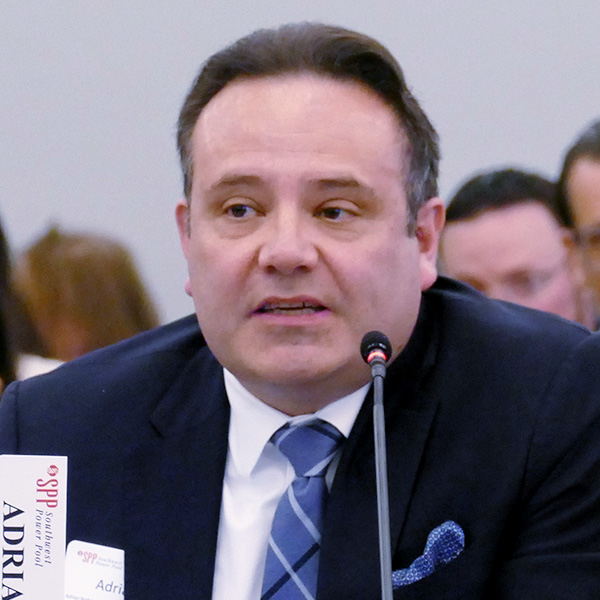
SPS President Adrian Rodriguez defended the project’s reliability status, saying that had it been in place in March, the utility would not have had to drop 122 MW of load for almost three hours. He welcomed the board’s attention, saying, “We need to get this right.” (See SPP Addresses 3rd Load Shed Since March 31.)
“The scrutiny is justified, and we’re committed to being part of our early engagement in assessing costs with the SPP staff and bringing this before the board,” he told directors. “It’s clear that the costs, I acknowledge, are different from the original estimate, but that comes with validation of uses. We’re excited about setting a strong precedent.”
Rodriguez promised SPS would continue to update the board and work with staff before November. He said the company has focused on keeping costs as low as possible, from competitively procuring engineering and construction services to holding slots for equipment in an uncertain supply chain.
Any further delays would only increase the project’s costs, Rodriguez said.
“The tradeoff that we’re always sensitive to is, in this case, delayed dollars. Every day that passes, these costs can increase,” he said. “I am very sensitive to moving quickly … but very concerned about any type of lengthy delay that could result in increased costs” for major transmission and distribution supplies.
“What I don’t want to do is to have a self-fulfilling prophecy that we come a couple of months later [and] there are some cost increases because of the additional delays, and then we are back in the same boat,” Rodriguez added. “At the end of the day, ultimately, it’s our customers that are impacted.”
Members agreed there’s a need to address how large loads are added to the system but raised concerns about maintaining reliability, cost-allocation equity and transparency. Views differed on how to balance speed with planning thoroughness; how to define qualifying load types; and whether existing processes could be adapted or new pathways were needed.
The discussions have continued since then. COO Antoine Lucas surveyed the audience for the board meeting and said he could see stakeholders he has had phone conversations with in recent weeks as he worked to “try to get people comfortable as quickly as we could,” he said.
He argued that the policy will help SPP integrate the large loads and their high impact.
“The high-impact portion of it is really based on our assessment that these loads have the ability to materially impact the reliable operations of the system,” he said. “For that reason, we felt that there was a need for pretty detailed and enhanced policy proposals to ensure that we were able to identify what those differences were and some of the risks that those posed.”
Lucas said staff will continue to engage with stakeholders until an MOPC call Aug. 21. The joint board and Regional State Committee meeting that follows will give staff additional input in bringing back the policy to the October and November meetings.
Based on the feedback already received, Lucas said SPP will focus on just two of the policy’s three paths: HILLs and high-impact large load generation interconnection assessments (HILLGAs). The latter are generation and load studied on the fast track and pairing generation with a HILL or a conditional HILL (CHILL).
Lucas proposed that SPP continue to work on CHILLs, which has received most stakeholder questions. These loads would be interconnected to the grid quickly but would be expected to transition to firm service within five years.
“We would have a little more time to work through that with stakeholders and make sure that they’re all comfortable with that,” Lucas said. “We think we have a pretty good product at the end of the day to make the SPP region more attractive for entities who are looking to … connect large loads.”
Board Vice Chair Ray Hepper, leading the meeting in place of Chair John Cupparo, reminded the board and stakeholders that it was an “executive order” from the chair in May that asked for staff to return in August with a large load integration policy.
“Not only did they bring us a proposal, they brought us tariff language; that is an incredible accomplishment,” Hepper said, not mentioning that the proposal is about 500 pages long. “Everybody agrees we need to move quickly. We don’t want to slow this proposal down, but a little more time is helpful. This is an important initiative for lots of the [load-responsible entities], and it’s important for lots of the states.”
FERC has approved an SPP tariff change that allows interconnection customers without a pending request to ask for interim service when the study cluster’s window is closed (ER25-2476).
In its Aug. 7 letter order, the commission found that SPP’s proposal would meet the agency’s independent entity variation standard, used to evaluate deviations from the pro forma large generator interconnection procedures and agreements established under FERC Order 845. The standard is designed to allow IC customers to obtain interim service sooner than otherwise would be possible.
FERC said the proposed tariff revisions “will provide additional flexibility” for interconnection customers by allowing them to submit requests that would enable a timelier IC service.
“Absent SPP’s proposed tariff revisions, interconnection customers without a pending interconnection request would not be able to request interim interconnection service until the next [study] cluster window, which could occur as late as April 1, 2026, potentially delaying the connection of needed generation,” the commission said.
The tariff revision also maintains existing financial and study requirements for an interim IC, FERC said. It noted the proposal includes limits such as requiring customers to submit a request in the next open study cluster window or have their interim GIA terminated, ensuring that a customer can’t have interim service indefinitely.
SPP submitted its proposal in June, saying that revisions to its definitive integration system impact study (DISIS) process will allow customers to ask for interim IC service on the condition it submits requests to the DISIS queue during the next open cluster window. Customers with pending requests also will be required to maintain that request for its interim service to remain valid.
The PJM Board of Managers has initiated a Critical Issue Fast Path process aimed at maintaining resource adequacy in the face of rising data center load growth, asking stakeholders to draft proposals to serve 32 GW of load growth expected by 2030.
“Recent increases in large load additions, mainly from data centers, present both opportunities and challenges for the regional grid,” the board wrote in an Aug. 8 letter announcing the initiation of the CIFP process. “PJM’s location, size, market opportunities and system reliability make it an attractive area for large load customers to locate, and we continue to see significant load interconnection activity at several of our utilities.” The board cited PJM’s 2025 load forecast, which estimates the system’s peak load will grow by 32 GW between 2024 and 2030, with 30 GW of that being attributed to data centers.
The letter identifies five areas for stakeholders to focus on: resource adequacy; reliability criteria for triggering any solutions with a temporary nature; changes to interconnection rules that may support resource adequacy; coordination between PJM, those party to large load contracts, member states and impacted customers; and a timeline for implementing solutions for the 2028/29 Base Residual Auction (BRA). The letter states the process will inform the contours of a proposal the board intends to file at FERC in December 2025. The process will begin with a pre-CIFP workshop Aug. 18.
The letter raises the possibility of adjusting the load used or cleared in BRAs if it’s not capacity-backed. It also encouraged improvements to existing resource adequacy tools, such as demand response or the ability for load to bring its own generation. Solutions also are encouraged to be market-based and could be either permanent, transitional or a combination of the two.
Changes to the rules for resource interconnections could allow new entries to meet some of the expected load growth. The board’s letter states that the 2022 shift to a cluster-based process for studying new service requests and allocating network upgrade costs has cleared more than 140 GW of resources in the queue, 46 GW of which have entered interconnection agreements with the RTO. The remaining queued resources are expected to be processed over the next 18 months. An additional 11 GW was added through the Reliability Resource Initiative.
Despite faster completion of interconnection studies, the board wrote that many of those projects have run into siting, permitting and supply chain challenges inhibiting their ability to enter commercial service.
This is the second CIFP focused on resource adequacy and capacity market design the RTO has initiated in recent years, with a February 2023 letter opening a process to address unrecognized reliability risks and the impact that “significant load growth” paired with generation deactivations outpacing new entry could have on “a healthy reserve margin.”
Another CIFP process was conducted in June 2025 to determine how to allocate the cost of keeping Constellation Energy’s two gas-fired units at the Eddystone Generating Station online under a Department of Energy emergency order. (See PJM Board Initiates CIFP Process for Eddystone Compensation.)
In the Aug. 8 letter, the board said a poll of stakeholder priorities found support for addressing the reliability risks posed by large loads in particular. The results were presented at the July 2025 Members Committee meeting. (See “PJM Presents Capacity Market Feedback Poll,” PJM MRC/MC Briefs: July 23, 2025.)
“A recent survey of PJM members and stakeholders reflected growing consensus that finding solutions to the potential resource adequacy challenges posed by rapidly interconnecting large loads should be one of PJM’s highest priorities,” the board wrote.
Board Overrides Stakeholder Rejection of Auction Parameters, Directs Hiring of Consultant
The board also has opened a process to explore changes to how PJM calculates the installed reserve margin (IRM) and forecast pool requirement (FPR), key parameters for determining the amount of supply that will be procured in capacity auctions. The Members Committee rejected staff’s recommended values for the 2027/28 BRA during its July 23 meeting, with stakeholders arguing the effective load-carrying capability (ELCC) modeling that serves as an input to the calculation lacks transparency. It also took issue with the endorsement being requested on the same day as the first read. (See PJM Stakeholders Reject 2027/28 Capacity Auction Parameters.)
In an Aug. 4 letter, the board nonetheless approved the parameters and directed staff to continue working with stakeholders in the ELCC Senior Task Force to draft changes to the model that could be implemented for the 2028/29 BRA. That work will be bolstered by a consultant the RTO will bring on to “identify additional recommended enhancements to discuss at the ELCCSTF or other similarly focused stakeholder group(s) for implementation after the 2028/29 BRA.” The letter also calls for a detailed description of the ELCC model to be published.
“Although the member vote is advisory, the PJM board discussed potential options for reengaging the stakeholders on this matter; however, the PJM board reflected on stakeholder feedback, including the short timeline, and is concerned about the possibility of auction delay for the 2027/2028 BRA,” the board wrote.
“Implementation of an alternative methodology to calculate the IRM and FPR would follow additional stakeholder discussion, a vote, an approved filing with the FERC, a recalculation of the IRM and FPR and a restart of the calculation of all other auction parameters currently being determined under the existing rules. This path would inevitably result in a delay of the auction, creating uncertainty in our marketplace during a period where we are in need of new supply,” the board wrote.
The approved parameters increase the IRM to 20%, up from 19.1% in the auction prior, while the FPR would increase from 0.9170 to 0.9260, effectively increasing the reserve margin and amount of capacity the RTO would aim to procure in the 2027/28 auction.
The Massachusetts Department of Energy Resources (DOER) and the state’s investor-owned electric utilities have issued a request for proposals to procure up to 1,500 MW of mid-duration energy storage, a key step toward the state’s goal of contracting 5,000 MW of energy storage by mid-2030. The procurement marks the largest energy storage solicitation issued to date in New England.
The state also outlined its expected timeline for future storage solicitations, noting that it plans to issue additional 1,000-MW mid-duration storage procurements by July 31, 2026, and July 31, 2027, and wrote that “all remaining energy storage systems capacity shall be procured by July 31, 2030.”
The Massachusetts Legislature in 2024 passed a law requiring electric distribution companies to enter long-term contracts for 5,000 MW of energy storage by mid-2030, including 3,500 MW of mid-duration storage (between four and 10 hours), 750 MW of long-duration storage (between 10 and 24 hours) and 750 MW of multi-day storage (greater than 24 hours).
The RFP is intended to procure projects “that have a strong likelihood of being financed and constructed and that will provide a reliable and cost-effective source of beneficial, reliable energy storage systems to the Commonwealth,” the DOER and the utilities wrote.
In the first solicitation, the state seeks only to procure the environmental attributes associated with storage projects. This includes credits for the state’s Clean Peak Standard, which incentivizes emissions reductions during peak demand periods.
The bid submission deadline is noon on Sept. 10, 2025. Bidders are allowed to propose projects at or above 69 kV that can supply between 40 and 1,000 MW and can propose long-term contracts running through the end of 2050.
The RFP requires projects to have a scheduled in-service date earlier than Jan. 1, 2030, and directs each bidder to “demonstrate that its proposal can be developed, permitted, financed and constructed within a commercially reasonable timeframe.”
Projects must commit to achieving capacity interconnection rights and qualifying for the ISO-NE capacity market. The RFP requires bidders to “include a realistic and specific plan to implement any transmission system upgrades or other work anticipated to be needed to achieve CCIS-equivalent interconnection.”
Developers also must provide a nonrefundable bid fee of $500/MW of proposed nameplate capacity, which is intended to cover the cost of evaluation.
Projects will be evaluated based on quantitative and qualitative criteria. They will be graded on a 100-point scale, with 80 points for direct and indirect costs to ratepayers and 20 points for qualitative factors, including project viability, climate and environmental benefits, grid reliability and resilience effects, and stakeholder engagement.
The DOER, working with an independent evaluator, will select winning bids. The utilities will be responsible for executing contracts, which will be subject to the approval of the Massachusetts Department of Public Utilities (DPU).
The DPU approved the procurement framework in late July, writing that it “represents a reasonable balancing of interests and demonstrates progress toward achieving the Commonwealth’s statutory energy storage systems requirement as well as seeking to contract for low-cost energy storage systems.”
Under the current solicitation timeline, winning bids are to be selected by Dec. 9, and long-term contracts are set to be executed by March 27, 2026.